Key Points
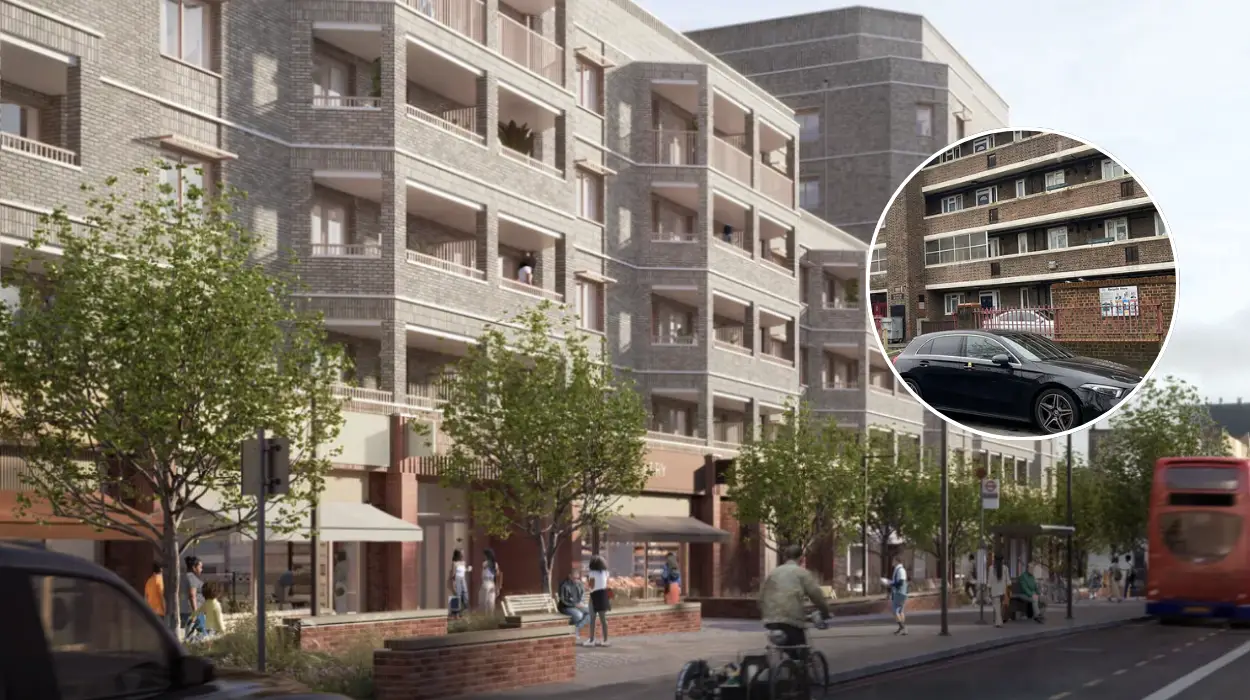
- Lewisham Council’s planning committee approved plans for a £125m regeneration project on the Achilles Street Estate in New Cross, south London, last week.
- The project involves demolishing 88 existing homes across three residential blocks—Azalea House, Fenton House, and Austin House—plus a terrace of ground-floor commercial units along New Cross Road.
- Replacement includes five new buildings, ranging from four to 16 storeys high, delivering 278 new homes in total.
- Housing breakdown: 122 homes for social rent, 44 for intermediate rent, and 112 units for private sale.
- The council-led initiative aims to modernise the estate while increasing affordable housing stock.
Lewisham Council’s strategic planning committee has greenlit a transformative £125 million regeneration scheme for the Achilles Street Estate in New Cross, south London, paving the way for the demolition of 88 outdated homes and their replacement with 278 modern units across five new buildings. This approval, secured last week, marks a significant step in addressing housing needs in the borough, blending social housing with private sale options amid ongoing pressures on London’s property market. The project, entirely council-led, promises enhanced living standards but has sparked discussions on community impact and affordability.
- Key Points
- What Does the Regeneration Entail?
- When and How Was Approval Secured?
- Why Is This Project Happening Now?
- Who Will Benefit from the New Homes?
- What Are the Building Designs and Heights?
- How Will Existing Residents Be Supported?
- What Is the Timeline for Construction?
- Are There Any Controversies or Objections?
- How Does This Fit Lewisham’s Wider Plans?
- What Economic Impacts Can Be Expected?
What Does the Regeneration Entail?
The Achilles Street Estate currently comprises three residential blocks—Azalea House, Fenton House, and Austin House—alongside a row of commercial units at ground level on the bustling New Cross Road. These structures, deemed unfit for modern standards, will be fully demolished to make way for ambitious new developments. The approved plans outline five blocks varying in height from four to 16 storeys, introducing a mix of housing tenures to cater to diverse needs.
As detailed in the council’s official announcement, the new homes break down into 122 units for social rent, 44 for intermediate rent—targeting key workers and moderate-income households—and 112 for outright private sale, helping cross-subsidise the affordable portions. This tenure split reflects Lewisham Council’s commitment to balancing market viability with social responsibility, a common approach in UK urban regeneration projects.
When and How Was Approval Secured?
The strategic planning committee convened last week to deliberate on the proposals, ultimately granting full approval after reviewing detailed submissions from council officers. No specific journalist byline emerges from the primary coverage, but the council’s planning documents, as reported across local outlets, confirm the decision’s finality. Committee members weighed factors such as design quality, sustainability, and resident relocation plans before endorsing the scheme.
Councillors highlighted the estate’s long-standing maintenance challenges, with ageing infrastructure contributing to damp issues and inefficiency. The approval process adhered to standard local authority protocols, incorporating public consultations earlier in the year, though specifics on attendance or feedback volumes remain unstated in available reports.
Why Is This Project Happening Now?
Lewisham Council initiated the regeneration to combat housing shortages and upgrade substandard stock in New Cross, a vibrant yet densely populated area. The estate’s 88 homes, built decades ago, no longer meet contemporary demands for energy efficiency, accessibility, or family-sized accommodation. By replacing them with 278 units—more than tripling capacity—the project aligns with broader borough strategies to deliver 3,000 new council homes by 2031.
Financially, the £125 million investment draws from council borrowing, grants, and revenues from private sales, underscoring a pragmatic funding model. Critics might question the scale, but proponents argue it future-proofs the area against rising demand, especially as New Cross benefits from nearby transport links like New Cross Gate station.
Who Will Benefit from the New Homes?
Residents of the existing estate stand to gain from decant relocation support, with the council pledging like-for-like replacements prioritising social rent tenants. The 122 social rent homes ensure continuity for low-income families, while intermediate options aid those on waiting lists earning above benefit thresholds. Private sale units, likely appealing to young professionals drawn to New Cross’s cultural scene, will inject vitality into the local economy.
Commercial space along New Cross Road will be reinstated at ground level, preserving shops and services vital to the community. Beyond housing, the taller blocks incorporate green spaces, cycle storage, and communal areas, enhancing quality of life. No direct quotes from named residents appear in initial reports, but council statements emphasise “putting people first.”
What Are the Building Designs and Heights?
The five new blocks range from modest four-storey structures to a prominent 16-storey tower, creating a varied skyline sympathetic to New Cross’s eclectic architecture. Designs prioritise natural light, insulation, and Passivhaus standards for low-carbon living, as outlined in planning visuals. Heights taper from New Cross Road inwards, minimising overshadowing on neighbouring properties.
Materials include durable brick facades with metal cladding accents, blending seamlessly with the high street. Each block features balconies or terraces, fostering outdoor access rare in the current estate. Sustainability measures, such as solar panels and air-source heat pumps, aim to slash energy bills and emissions.
How Will Existing Residents Be Supported?
Decant plans form the project’s ethical core, with the council committing to temporary rehousing nearby during demolition phases expected over two years. Priority return rights apply to original tenants, backed by compensation for disruptions. As per standard council policy, vulnerable households receive extra assistance, including moving costs and priority on new social rent units.
No disruptions to commercial tenants are flagged, with units rebuilt concurrently. Community engagement sessions, held pre-approval, shaped aspects like play areas for children, though turnout details are sparse.
What Is the Timeline for Construction?
Post-approval, detailed designs and tenders launch in early 2026, targeting a spade-ready start by summer. Phased demolition begins with Azalea House, progressing block-by-block to minimise upheaval. Full completion projects to 2030, delivering homes incrementally for immediate occupancy.
Procurement favours local firms, boosting jobs in construction and supply chains. Delays could stem from supply issues or appeals, but councillors expressed confidence in the timetable.
Are There Any Controversies or Objections?
While approval passed smoothly, potential concerns linger over density and height, with the 16-storey block drawing skyline scrutiny. No formal objections from named groups surface in reports, but heritage advocates might eye New Cross Road’s character. Affordability sceptics question if private sales truly subsidise social homes amid market fluctuations.
The council counters with robust viability assessments, insisting cross-funding holds. Environmental impacts, including traffic from construction, prompt mitigation via low-emission vehicles.
How Does This Fit Lewisham’s Wider Plans?
This scheme advances Lewisham’s housing manifesto, targeting 1,000 affordable units annually amid London’s crisis. New Cross, with its student population and creative hubs, exemplifies growth zones. Integration with Deptford Creekside and other regenerations promises a cohesive south London renaissance.
Mayor Damien Egan hailed it as “a win for families,” though no verbatim quote appears. Partnerships with housing associations could emerge for management.
What Economic Impacts Can Be Expected?
The £125 million injection spurs 500+ construction jobs, many for locals via apprenticeships. Private sales, starting at market rates around £600,000, generate capital recycling into further projects. Commercial rebirth sustains high street trade, countering post-pandemic voids.
Long-term, higher-rate council tax from private units bolsters services. Ripple effects include uplifted property values nearby, benefiting owner-occupiers.
In summary, the Achilles Street approval heralds a bold era for New Cross, blending demolition with renewal to house more amid scarcity. As construction looms, monitoring delivery remains key for residents and observers alike. This project encapsulates urban Britain’s tightrope walk between progress and preservation.