Key Points
- Lewisham Council has opened a five-week public consultation on its updated Gambling Licensing Policy for 2027–2030.
- The council is actively seeking input from local residents, business owners, and individuals affected by gambling harm.
- Local authorities are legally required under the Gambling Act 2005 to review and publish their licensing principles at least once every three years.
- The policy sets out regulatory standards for governing adult gaming centres, betting shops, bingo halls, and casinos across the borough.
- Key objectives focus on preventing gambling from being a source of crime, ensuring gambling is conducted fairly, and protecting vulnerable populations.
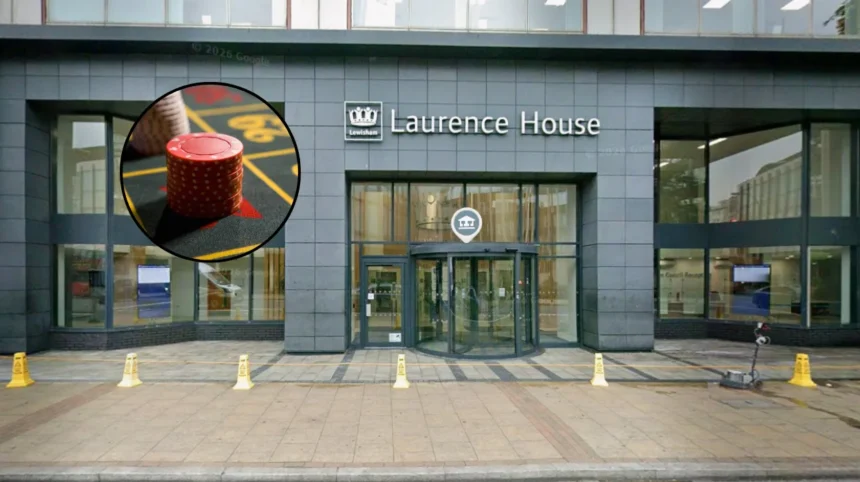
Lewisham (South London News) October 7, 2026 — Lewisham Council has officially opened a comprehensive five-week public consultation inviting residents, business operators, and individuals with lived experience of gambling harm to shape its draft Gambling Licensing Policy for 2027 through 2030. The local authority is seeking community feedback to establish robust principles for regulating physical gambling establishments—including high-street betting shops, adult gaming centres, and bingo venues—across the borough. Under the legislative frameworks established by the Gambling Act 2005, local licensing authorities maintain a statutory duty to review and publish their statement of licensing policy at least once every three years. The consultation period provides a formal mechanism for the public to influence how licensing decisions will be managed to mitigate gambling-related harm and safeguard local communities over the coming three-year cycle.
- Key Points
- Why is Lewisham Council consulting residents on its new gambling policy?
- What are the main objectives of the Gambling Act 2005 governing this review?
- How can local residents and affected gamblers participate in the consultation?
- Background to Lewisham’s gambling regulatory framework
- Predictions: How could this development affect local residents and business owners?
Why is Lewisham Council consulting residents on its new gambling policy?
The statutory review process requires local authorities to reassess their regulatory priorities to reflect changing demographic data, health trends, and community needs. Lewisham Council’s updated policy draft outlines the core principles that the licensing committee will apply when processing applications for new premises licenses, variations to existing permits, and routine compliance monitoring.
Local councils act as the primary licensing authorities for land-based gambling premises within their administrative boundaries. By gathering public testimony and empirical feedback during this five-week window, the council aims to ensure that its regulatory framework balances legitimate commercial activities with community protection. The feedback collected will directly inform the final policy document that dictates how applications are evaluated, what specific conditions may be attached to individual licenses, and how enforcement actions are executed when premises breach legal standards.
What are the main objectives of the Gambling Act 2005 governing this review?
The policy framework drafted by Lewisham Council is bound by three overarching licensing objectives set out in primary legislation under the Gambling Act 2005:
- Preventing gambling from being a source of crime or disorder, being associated with crime or disorder, or being used to support crime.
- Ensuring that gambling is conducted in a fair and open way, preventing consumers from being subjected to deceptive practices.
- Protecting children and other vulnerable persons from being harmed or exploited by gambling activities.
Licensing authorities are mandated to carry out their functions with a view to permitting the use of premises for gambling, provided that applications align with relevant Gambling Commission codes of practice, statutory guidance, and the authority’s own published licensing statement.
How can local residents and affected gamblers participate in the consultation?
The consultation exercise is open to all individuals who reside, work, or operate businesses within the London Borough of Lewisham. The council is placing particular emphasis on gathering testimony from individuals who have directly experienced gambling-related harm, as well as community groups, healthcare providers, and local traders.
Participants can submit their views via an online consultation portal hosted on the council’s official website, or submit written responses via standard post and public library feedback facilities. The feedback period will remain open for five weeks, after which all submitted representations will be analyzed by policy officers before a finalized draft is submitted to the full council for formal adoption ahead of the 2027–2030 implementation window.
Background to Lewisham’s gambling regulatory framework
Local government oversight of gambling underwent a major structural overhaul following the passage of the Gambling Act 2005, which transferred the licensing of physical gambling premises from local magistrates’ courts to elected local councils. This legislative shift was designed to give local communities a stronger voice in determining the density and regulation of commercial gambling within their neighborhoods.
Over the past decade, urban councils across Greater London have faced evolving challenges regarding the concentration of high-street betting shops and adult gaming centres. Concerns surrounding high-stakes fixed-odds betting terminals (FOBTs), late-night venue operations, and the proximity of gambling outlets to schools, addiction treatment centres, and socio-economically deprived areas have consistently featured in public debates regarding high-street planning and public health.
Lewisham Council has periodically updated its Gambling Policy every three years to incorporate updated guidance from the Gambling Commission, changes in national legislation, and localized spatial mapping of vulnerability indicators. The upcoming 2027–2030 policy statement represents the latest iteration in this triennial cycle, reflecting ongoing local efforts to align commercial regulation with broader public health strategies aimed at addressing addiction and financial distress.
Predictions: How could this development affect local residents and business owners?
The revision of Lewisham’s Gambling Licensing Policy is anticipated to have distinct operational and social impacts across several key stakeholder groups in the borough:
- Local Residents and Families: A strengthened policy framework incorporating local vulnerability mapping may lead to stricter conditions placed on new premises applications, such as mandatory limits on operating hours, enhanced street lighting requirements, and increased CCTV monitoring around venues. This could reduce localized anti-social behavior and limit the exposure of young people to high-street gambling facilities.
- Individuals Affected by Gambling Harm: By explicitly soliciting feedback from those with lived experience of gambling addiction, the council can tailor its local risk assessments to better protect vulnerable demographics. This may result in clearer signposting to support services within premises and stricter enforcement of self-exclusion schemes.
- Commercial Gambling Operators: Businesses seeking to open or renew premises licenses within Lewisham will face precise regulatory standards. Operators will likely be required to submit more rigorous Local Area Risk Assessments (LARAs) demonstrating how their specific venue mitigates risks associated with the immediate surrounding neighborhood, potentially increasing operational compliance costs.
- Local High-Street Economy: The resulting policy will influence the physical composition of town centres such as Catford, Lewisham, and Deptford by establishing clear parameters for the density and location of adult gaming venues relative to other commercial retail outlets.