Key Points
- Lewisham Council deferred its decision on plans for 45 new homes at Blackheath station car park in south London following criticism from campaigners, including actors Jude Law and Dominic Cooper.
- Developers, Acorn Property Group, proposed 25 flats in four- and five-storey blocks and a terrace of 20 three-storey townhouses.
- Campaigners, in an open letter, described the buildings as “overbearing, unsympathetic design” that “destroys rather than improves” the neighbourhood and risks ruining its “unique character”.
- On Tuesday, the council requested further information on parking, impact on commercial activity, and access for emergency services.
- Over 1,200 objections received, including from a local school and dozens of local businesses; 30 comments in support.
- Other public figures opposing: Jools Holland, Miranda (Sarah Hadland), Sir Terry Waite, and Manfred Mann.
- Dominic Cooper, who grew up in Blackheath and starred in Mamma Mia and The History Boys, stated objectors are not “anti-development” but demand “fair, responsible” development that “puts local people at the heart”.
- Sarah Hadland of BBC sitcom Miranda said the development “brings nothing positive to the area”.
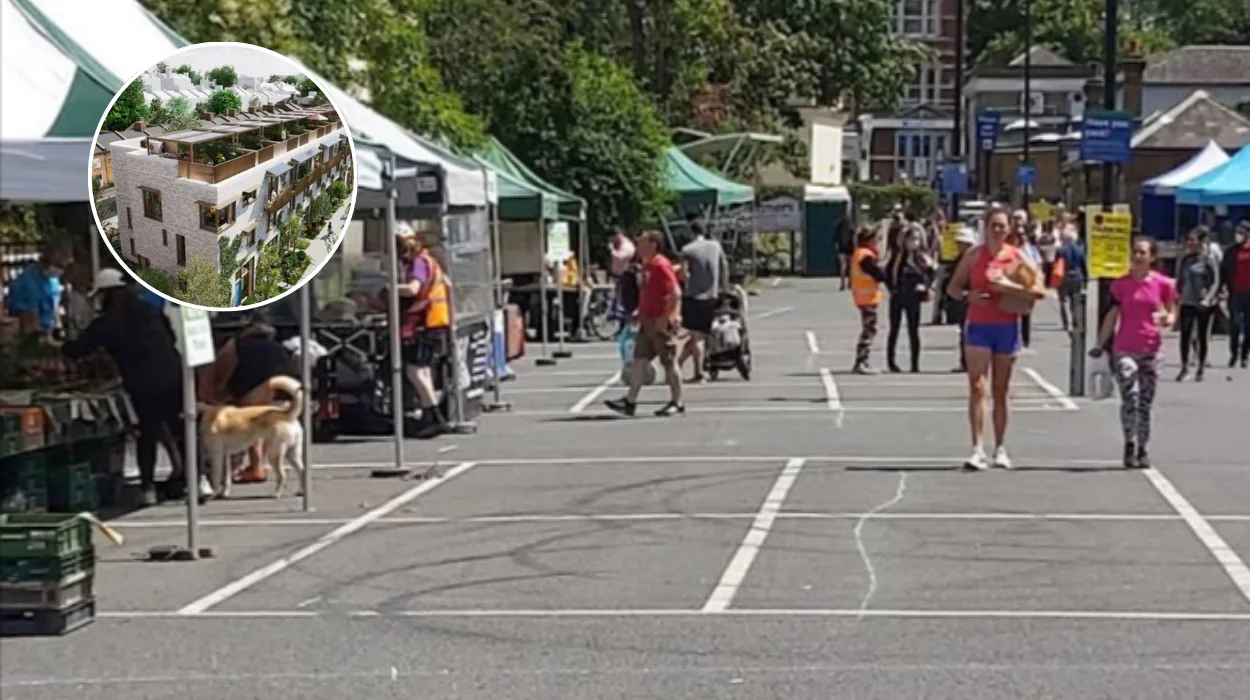
- Concerns include loss of light, car parking spaces, scale of development, and uncertainty for Blackheath Farmers’ Market.
- Acorn Property Group claims “substantial public benefits”, including 45 homes with 21% social rented (much-needed family homes), secure home for farmers’ market, improved pedestrian routes to school, and better parking.
- Planning officers recommended approval with 43 conditions.
- Councillor James Rathbone called it “extremely controversial” with “huge level of public interest” and more press than anything in his nearly eight years on council; stressed need for “reassurance” to thousands who commented.
- Blackheath Society and residents commissioned surveys objecting, per council documents.
- Letters of objection from 181 businesses and open letter from “notable individuals with a connection to Blackheath”.
- Next council meeting: 12 February.
- Additional reporting by Ruby Gregory, Local Democracy Reporting Service.
Blackheath (South London News) – Febuary 2, 2026 – Lewisham Council has deferred its decision on controversial plans to build 45 new homes at Blackheath station car park after fierce opposition from celebrities and locals. The proposal by Acorn Property Group, featuring 25 flats in four- and five-storey blocks alongside 20 three-storey townhouses, drew sharp criticism for its design and impact.
- Key Points
- Why Did Lewisham Council Defer the Decision?
- Who Are the Celebrities Opposing the Plan?
- What Specific Concerns Have Locals Raised?
- What Does the Developer Say in Defence?
- How Does This Fit the Inverted Pyramid?
- What Is the Planning Context in Blackheath?
- Why Is Public Engagement So High?
- What Happens Next?
Why Did Lewisham Council Defer the Decision?
The council’s strategic planning committee, meeting on Tuesday, requested more details on parking provisions, effects on nearby commercial activity, and emergency services access before proceeding. As reported by BBC News, this move came amid over 1,200 objections lodged against the scheme, far outnumbering the 30 supportive comments. Planning officers had initially recommended approval subject to 43 strict conditions, but the volume of public backlash prompted caution.
Councillor James Rathbone, speaking at the meeting, highlighted the application’s exceptional profile.
“It’s certainly attracted more press interest than practically anything else which has occurred at this council in my seven-and-three-quarters’ years on the council,”
he said, as covered by BBC News. He emphasised the need to reassure the thousands who engaged:
“I think it’s important we can turn around to the thousands of people who’ve commented on this application, far more than I’ve ever seen on any other planning application, and be able to give them reassurance that we did cross all the Ts and dot all the Is.”
The committee’s next session is scheduled for 12 February, leaving residents and developers in limbo.
Who Are the Celebrities Opposing the Plan?
High-profile figures lent their voices to the campaign, signing an open letter decrying the project. Actors Jude Law and Dominic Cooper led the charge, labelling the buildings an “overbearing, unsympathetic design” which “destroys rather than improves” the neighbourhood and could ruin its “unique character”, according to the letter published online.
Dominic Cooper, known for roles in Mamma Mia and The History Boys and a Blackheath native, clarified the sentiment in statements to BBC News. “Local people who objected were not ‘anti-development’,” he said.
“They are instead demanding development that is fair, responsible, and puts local people at the heart of decision-making.”
He warned:
“To plough ahead with a proposal of this size, that provides so little social and affordable housing, that prioritises developer profit, whilst ignoring overwhelming public opposition would amount to a devastating betrayal of the electorate.”
Sarah Hadland, star of the BBC sitcom Miranda, echoed this. “As it stands this development brings nothing positive to the area,” she stated, as reported by BBC News.
Other notables include musician Jools Holland, humanitarian Sir Terry Waite, and singer Manfred Mann, all signing the open letter from “notable individuals with a connection to Blackheath”.
What Specific Concerns Have Locals Raised?
Objections poured in from diverse quarters, painting a picture of community alarm. A local school and dozens of businesses voiced fears, with a collective letter signed by 181 businesses highlighting threats to the area’s vitality, per council records.
The Blackheath Society and resident groups commissioned surveys and consultant reports objecting to the scheme, as detailed in the council’s planning documents (accessible via councilmeetings.lewisham.gov.uk) and reported by the Local Democracy Reporting Service. Key worries included loss of daylight to neighbouring properties, drastic reduction in car parking spaces, the overbearing scale of the development, and uncertainty over the future of the Blackheath Farmers’ Market, which thrives every Sunday in the car park.
According to the Local Democracy Reporting Service, these representations underscored how the project could erode the village-like charm of Blackheath.
What Does the Developer Say in Defence?
Acorn Property Group robustly defended its vision, pointing to “substantial public benefits” that “outweigh the low level of harm identified”, as recognised in the officers’ report and stated in their response to BBC News. A spokesperson outlined the upsides: 45 new homes, with 21% wholly social rented—providing much-needed three- and four-bedroom family homes in a housing-starved borough.
Further benefits include a secure, permanent home for the farmers’ market on the site, enhanced pedestrian routes to a local school, and overall parking improvements. The developer positioned the scheme as a balanced contribution to Lewisham’s needs.
How Does This Fit the Inverted Pyramid?
Planning officers’ endorsement with 43 conditions reflected a professional assessment favouring the project, but public and celebrity pressure tipped the scales towards deferral. The open letter, available online (img1.wsimg.com/…/Blackheath%20Station%20Car%20Park%20Development%20Open%20L.pdf), amplified these voices, forcing the council to pause.
What Is the Planning Context in Blackheath?
Blackheath station car park sits in a conservation area prized for its historic, low-rise character. The proposal’s taller blocks—up to five storeys—clashed with this, fuelling “unsympathetic” claims. Council documents reveal the social housing quota (21% rented) fell short of some expectations for “fair” development, as Cooper noted.
Businesses feared commercial knock-ons, like reduced footfall if parking vanished. Emergency access queries underscore safety priorities. The farmers’ market’s Sunday staple adds cultural weight—its potential displacement loomed large.
Why Is Public Engagement So High?
Rathbone’s remarks capture the frenzy: unprecedented objections and media scrutiny. Over 1,200 submissions dwarf typical applications, per council data. This isn’t nimbyism, campaigners insist—it’s a call for responsible growth amid London’s housing crisis.
What Happens Next?
The 12 February meeting looms critical. Acorn must address the trio of concerns: parking, commerce, emergencies. Officers’ recommendation stands, but political winds may shift with continued pressure.
Additional reporting by Ruby Gregory of the Local Democracy Reporting Service enriched coverage, linking to primary documents.