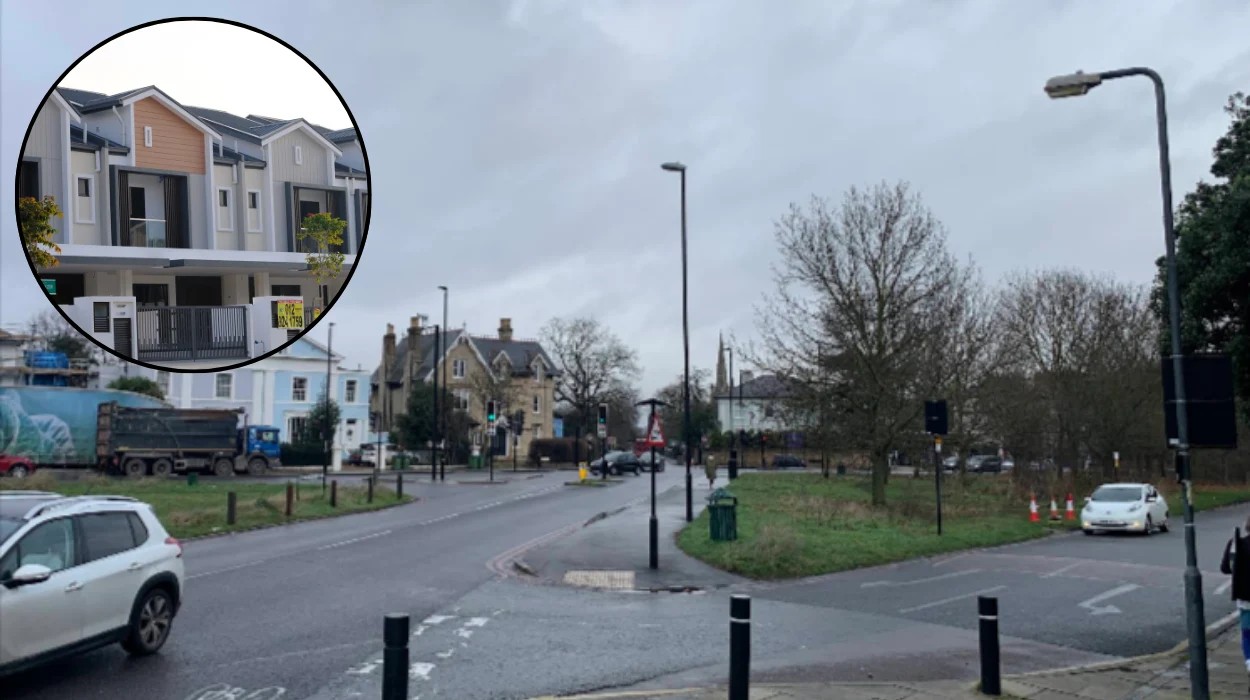
Key Points
- Lewisham Council deferred its decision on plans for 45 new homes at Blackheath station car park in south London following significant opposition.
- Developers Acorn Property Group proposed 25 flats in four- and five-storey blocks and a terrace of 20 three-storey townhouses.
- Campaigners, including actors Jude Law and Dominic Cooper, criticised the scheme in an open letter as an “overbearing, unsympathetic design” that “destroys rather than improves” the neighbourhood and risks ruining its “unique character”.
- On Tuesday, the council requested further information on parking, impact on commercial activity, and access for emergency services.
- Over 1,200 objections were received, including from a local school, dozens of local businesses, the Blackheath Society, and residents’ groups who commissioned surveys.
- Only 30 comments supported the plans.
- Other public figures opposing include Jools Holland, Miranda (Sarah Hadland), Sir Terry Waite, and Manfred Mann.
- Dominic Cooper, who grew up in Blackheath and starred in Mamma Mia and The History Boys, stated objectors are not “anti-development” but demand “fair, responsible” development prioritising locals.
- Sarah Hadland of BBC sitcom Miranda said the development “brings nothing positive” and should be amended to consider local opinion.
- Concerns include loss of light, car parking spaces, development scale, and uncertainty for Blackheath Farmers’ Market operating Sundays in the car park.
- Acorn Property Group highlighted “substantial public benefits” outweighing “low level of harm”, including 45 homes with 21% wholly social rented, family-sized units, secure home for the farmers’ market, improved pedestrian routes to a local school, and better parking.
- Council’s planning documents detail objections from Blackheath Society and residents’ surveys.
- 181 businesses signed letters of objection; open letter from “notable individuals with a connection to Blackheath”.
Blackheath, South London (South London News) January 29, 2026 – Lewisham Council has deferred a decision on controversial plans to build 45 new homes at Blackheath station car park after fierce backlash from campaigners, including high-profile actors Jude Law and Dominic Cooper. The proposal by Acorn Property Group, featuring 25 flats in four- and five-storey blocks alongside 20 three-storey townhouses, faced over 1,200 objections, prompting the council on Tuesday to seek more details on parking, commercial impacts, and emergency access. Despite developer claims of “substantial public benefits”, widespread local and celebrity opposition has stalled the scheme.
- Key Points
- Why Did Lewisham Council Defer the Decision?
- Who Are the Key Celebrity Opponents?
- What Specific Objections Were Raised by Locals and Businesses?
- How Does Acorn Property Group Defend the Proposal?
- What Is the Proposed Development in Detail?
- Why Is Blackheath’s ‘Unique Character’ at Risk?
- How Does This Fit Broader Housing Debates?
- What Happens Next for the Plans?
- Broader Community Impacts Examined
Why Did Lewisham Council Defer the Decision?
The council’s planning committee requested additional information during its Tuesday meeting, specifically on parking provisions, effects on nearby commercial activity, and arrangements for emergency services access. According to the council’s planning documents, this deferral reflects the volume of concerns raised in more than 1,200 objections submitted. Only 30 supportive comments were logged, underscoring the lopsided public response.
As detailed in the documents linked via councilmeetings.lewisham.gov.uk, the Blackheath Society and local residents commissioned surveys and consultant representations objecting to the scheme, as reported by the Local Democracy Reporting Service on BBC platforms. These objections highlighted multiple issues, contributing to the council’s cautious approach.
Who Are the Key Celebrity Opponents?
Actors Jude Law and Dominic Cooper led an open letter from campaigners decrying the buildings as an “overbearing, unsympathetic design” which “destroys rather than improves” the neighbourhood and could ruin its “unique character”. The letter, accessible via wsimg.com, was signed by
“notable individuals with a connection to Blackheath”.
Dominic Cooper, known for roles in Mamma Mia and The History Boys and a Blackheath native, clarified that local objectors are not “anti-development”. As quoted directly, he said:
“They are instead demanding development that is fair, responsible, and puts local people at the heart of decision-making.”
He further warned:
“To plough ahead with a proposal of this size, that provides so little social and affordable housing, that prioritises developer profit, whilst ignoring overwhelming public opposition would amount to a devastating betrayal of the electorate.”
Sarah Hadland, star of the BBC sitcom Miranda, echoed this sentiment:
“As it stands this development brings nothing positive to the area. All we are asking is that it’s amended further, taking local opinion into consideration.”
Other opponents include musician Jools Holland, humanitarian Sir Terry Waite, and singer Manfred Mann, all lending weight to the campaign.
What Specific Objections Were Raised by Locals and Businesses?
Objections flooded in from a local school, dozens of local businesses, and residents, totalling over 1,200. Key concerns encompassed loss of light to neighbouring properties, reduction in car parking spaces, the overall scale of the development, and uncertainty surrounding the future of the Blackheath Farmers’ Market, which uses the car park every Sunday.
Letters of objection signed by 181 businesses underscored commercial fears, as noted in coverage by the Local Democracy Reporting Service. The Blackheath Society’s surveys, commissioned alongside resident groups, amplified these points in formal representations to the council.
How Does Acorn Property Group Defend the Proposal?
Acorn Property Group maintains its scheme offers “substantial public benefits” that “outweigh the low level of harm identified”, as recognised in the officers’ report. A spokesperson stated:
“The proposals would deliver substantial public benefits, including 45 new homes, 21% of which would be wholly social rented, much needed three and four-bedroom family homes.”
The developer further promised a secure home for the Blackheath Farmers’ Market on the site, improved pedestrian routes to a local school, and enhancements to parking arrangements. These points aim to counter criticisms on community impact and infrastructure.
What Is the Proposed Development in Detail?
The plans call for 25 flats housed in a four-storey and a five-storey block, complemented by a terrace of 20 three-storey townhouses on the Blackheath station car park site. This density has been central to accusations of overbearing scale. Council documents outline these specifications, with 21% of units designated as wholly social rented, targeting family needs with three- and four-bedroom options.
Why Is Blackheath’s ‘Unique Character’ at Risk?
Campaigners argue the design fails to harmonise with the area’s historic appeal, potentially eroding its distinct identity. The open letter from Jude Law, Dominic Cooper, and others explicitly warns of a design that “destroys rather than improves” the neighbourhood. Local surveys reinforced fears over light loss and visual dominance from the taller blocks.
Sir Terry Waite and others’ involvement highlights broader worries about preserving community fabric amid London’s housing pressures. Businesses’ 181 signatures signal economic ripple effects if the character shifts unfavourably.
How Does This Fit Broader Housing Debates?
The deferral spotlights tensions between housing delivery and community preservation in south London. Acorn’s emphasis on affordable units—21% social rented—addresses shortages, yet critics like Cooper decry insufficient social and affordable housing overall. The council’s call for more data on parking and emergencies reflects standard scrutiny in such cases.
Supportive comments, though few at 30, likely align with developer benefits like market security and school access improvements. This balance mirrors national debates on responsible development.
What Happens Next for the Plans?
No firm timeline emerges post-deferral, but the council awaits developer responses on requested details. Further committee review will follow submissions. Objectors hope revisions address scale, parking, light, and market viability; Acorn may refine to tip the scales.
The open letter and business petitions remain public pressure tools. As Dominic Cooper put it, locals seek development “that puts local people at the heart”. Sarah Hadland’s call for amendments suggests room for compromise.
Broader Community Impacts Examined
The Blackheath Farmers’ Market’s Sunday operations face potential disruption, with Acorn pledging a secure site alternative. School pedestrian improvements offer a counterpoint, yet parking cuts worry parents and traders. Emergency access queries underscore safety priorities.
Over 1,200 objections dwarf 30 supports, painting a clear public mood. Consultant surveys by the Blackheath Society provide evidence-based heft.