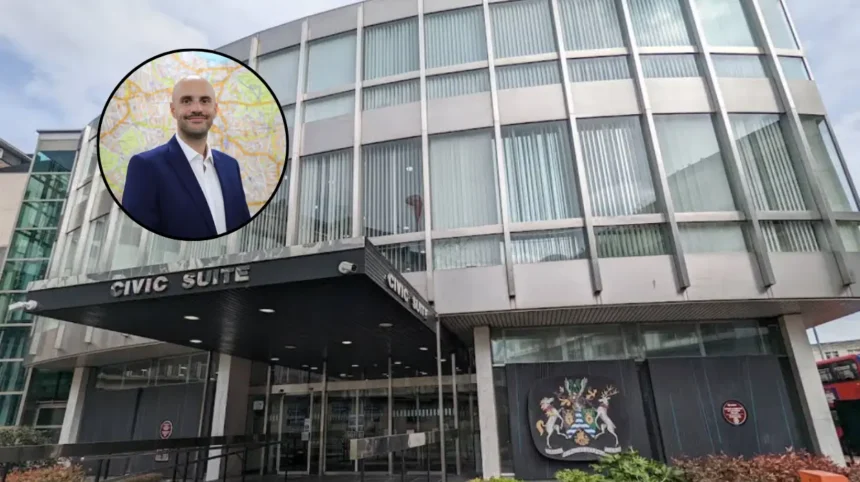
Key Points
- Political Turning Point: The appointment of Liam Shrivastava, who is a previous Labour Party Councillor, marked Lewisham’s transition into electing its first-ever Green Party Mayor in May 2026, whereby he leads a council where Green Councillors hold 40 council seats out of the 18 ward divisions out of 19 wards of the borough.
- Refusal to Help in Immigration Raids: The Council approved a motion where it will review its level of cooperation with Home Office operations with respect to its plan of refusing help in immigration activities whenever possible under law.
- Opposition Corridor: Lewisham seeks to collaborate with other neighboring local councils so as to establish a regional corridor for opposition against national immigration raids.
- Legal Challenge at the High Court: Lewisham Council together with Hackney and Tower Hamlets took up the issue with the Mayor of London in the High Court where they challenged a policy of lowering affordable housing provision percentage from 35% to 20%.
Lewisham (South London News) August 29, 2026 – The political landscape of the London Borough of Lewisham has undergone a significant transformation following the local elections in May 2026, marking a complete shift in local governance as Mayor Liam Shrivastava completes his first 100 days in office. Shrivastava, a former Labour councillor who made history by becoming the borough’s first Green Party Mayor, now oversees a council dramatically altered in its political composition. Green Party councillors occupy 40 seats across 18 of the borough’s 19 wards, consolidating executive and legislative authority under a single party banner. Over his first three months, Shrivastava has implemented a rapid series of policy changes focused on local autonomy, environmental management, and social justice. These early actions represent a formal departure from previous administrative priorities, placing the borough at odds with both regional planning authorities and national policy directives.
The initial three months of the administration have concentrated on re-evaluating how local government interacts with national government enforcement and London-wide development mandates. The council has set out to establish a framework prioritizing the protection of local residents and the preservation of affordable living spaces across South London. By questioning established norms of municipal cooperation, the new administration is actively working to reshape the physical and social infrastructure of the borough. This sudden transition from traditional political control to Green Party dominance has brought new topics to the forefront of local political debate, particularly regarding the limits of local council authority when confronting wider government bodies.
What is Lewisham’s New Policy on Home Office Immigration Raids?
Among the most significant policy shifts announced during the first 100 days is the council’s formal stance on national immigration enforcement operations within the borough. Lewisham Council has officially passed a motion to review its operational relationship with Home Office enforcement teams. Under this mandate, the local authority has declared its intention to decline administrative and practical assistance in immigration raids wherever it is legally possible to do so. The policy is designed to reframe community safety by prioritizing neighborhood stability and public trust over participation in national enforcement campaigns.
Beyond its own municipal borders, the administration is seeking to build a coordinated network with adjacent boroughs. The initiative aims to align local authorities across London to form what the council describes as a corridor of opposition to immigration raids. By formalizing this non-cooperation stance, Lewisham is attempting to test the boundaries of municipal self-determination, asserting local democratic control to insulate its resident population from national enforcement strategies.
Why is Lewisham Council Challenging the Mayor of London in the High Court?
In addition to its stance on immigration enforcement, the administration has taken direct action regarding regional housing policy. Lewisham Council has joined a joint High Court legal challenge alongside the East London boroughs of Hackney and Tower Hamlets. The judicial review targets a decision by the Mayor of London to lower the baseline requirement for affordable housing in new property developments from 35 per cent down to 20 per cent.
The three participating boroughs argue that lowering the affordable housing threshold severely compromises the ability of lower-income residents to remain in their existing communities. By filing the High Court challenge, Lewisham is seeking to compel regional planners to reinstate higher affordability quotas. This legal dispute highlights an escalating institutional conflict between individual borough councils fighting rising living costs and City Hall’s broader regional development strategies.
Background of the Particular Development
The political transformation in Lewisham reflects a broader realignment within inner London municipal politics during the May 2026 local elections. For decades, Lewisham functioned as a reliable Labour Party stronghold, characterized by strong party majorities that mirrored broader governance structures across inner London. However, shifting demographic trends, worsening housing affordability crises, and growing resident dissatisfaction with national policy approaches created the conditions for a major political realignment.
Liam Shrivastava’s personal political transition from Labour councillor to Green Party mayoral candidate mirrored a wider local appetite for alternative political strategies. The election outcome, which placed 40 Green Party councillors into 18 of the borough’s 19 wards, dismantled long-standing political alignments overnight. This overwhelming majority provided the incoming executive with an unusually strong mandate to enact radical policy shifts immediately upon taking office, setting the stage for the contentious policy decisions recorded in the administration’s first 100 days.
Explore More Lewisham News
Rogue Landlords Taskforce Launched by Council to Crackdown on Housing: Lewisham 2026
Lewisham Man Alan Saunders Misdiagnosed With Depression Has Dementia Lewisham 2026
How Will This Development Affect the Residents of Lewisham?
The political and legal directives established during Mayor Shrivastava’s initial 100 days will directly impact several key demographic groups within the borough:
- Local Renters and Low-Income Households: The outcome of the High Court challenge against the Mayor of London will directly shape the future supply of affordable housing in Lewisham. If the challenge succeeds, private developers will be legally mandated to dedicate 35 per cent of all new residential builds to affordable housing rather than 20 per cent. For local families and low-income renters facing displacement due to rising living costs, maintaining higher affordability targets provides a crucial mechanism to remain housed within their local community.
- Immigrant Communities and Foreign-Born Residents: The council’s formal policy to withhold local assistance from Home Office immigration operations fundamentally alters how local services interact with vulnerable populations. By seeking to establish a sanctuary environment and building a regional corridor of non-cooperation, foreign-born residents may experience reduced friction when accessing municipal services, housing support, and local public health facilities.
- Property Developers and Regional Housing Authorities: For property developers and urban planning bodies, Lewisham’s aggressive policy shift introduces substantial regulatory friction. Developers working within the borough face higher policy demands and potential planning delays as the council asserts its autonomy against regional planning targets. Furthermore, the High Court legal action creates strategic uncertainty for wider housing investment across London until the judiciary determines the validity of the regional housing threshold reduction.