Key Points
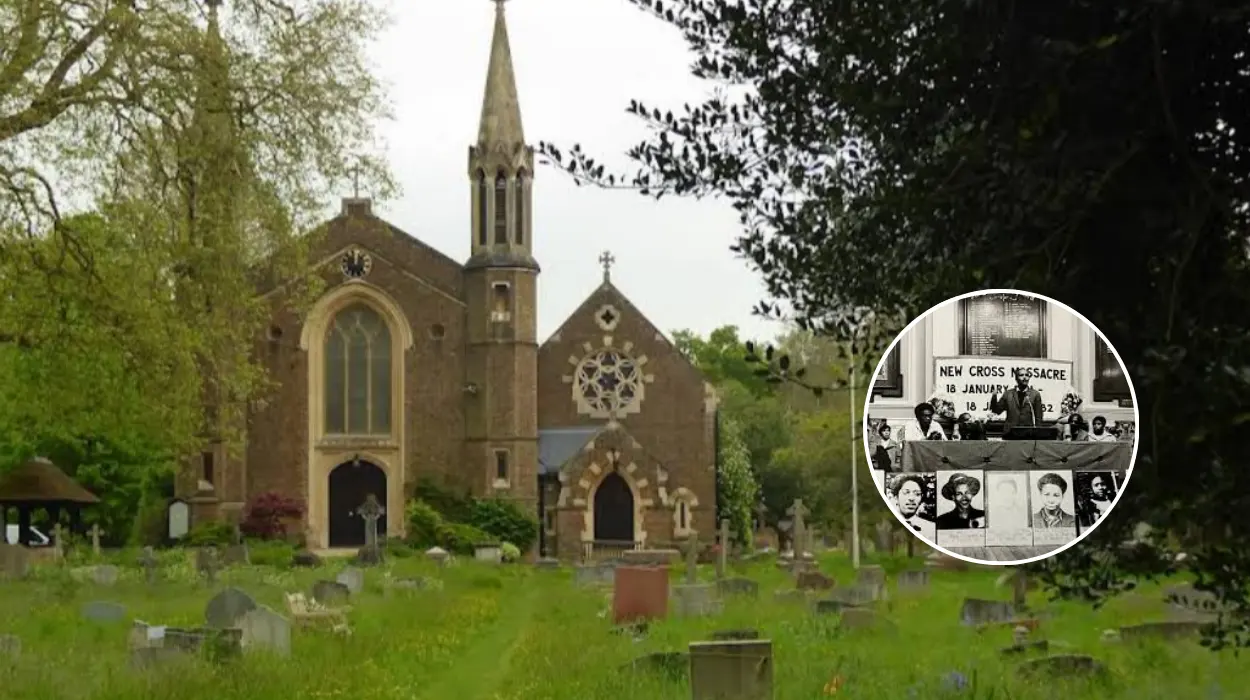
- The 45th anniversary of the New Cross fire was marked on January 18, 2026, with a memorial service at St Andrews Church, Brockley Road, London SE4, led by Revd John Grundy and Revd Steve Lawrence.
- On January 18, 1981, a fire at 439 New Cross Road during a joint birthday party for Yvonne Ruddock and Angela Jackson killed 13 young black people aged 14-22; 11 died at the scene, two later in hospital.
- The victims were: Patrick Cummings (16), Andrew Gooding (14), Peter Campbell (18), Gerry Paul Francis (17), Steve Collins (17), Patricia Johnson (15), Rosaline Henry (16), Lloyd Hall (20), Humphrey Geoffrey Brown (18), Owen Thompson (16), Yvonne Ruddock (16), Glenton Powell (15), and Paul Ruddock (22).
- Anthony Berbeck (20), a party attendee, died two years later on July 9, 1983, after falling from a balcony in south London, mentally disturbed by the loss of friends.
- Suspected arson amid racial tensions with the National Front active in New Cross; police initially thought it a bombing over noise complaints.
- Police investigations were slow, sparking outrage; no arrests or charges ever made.
- Two inquests (1981 and 2004) returned open verdicts despite fears of racist attack.
- New Cross Massacre Action Committee, led by John La Rose, Darcus Howe, Linton Kwesi Johnson, Leila Hassan, and Jean Ambrose, formed; organised 25,000-strong Black People’s Day of Action March in March 1981 from Lewisham to Hyde Park.
- Professor Gus John reflected on the event’s legacy, mobilising support from Manchester, Preston, Leeds, and Huddersfield; criticised state silence from Margaret Thatcher, William Whitelaw, and the Queen.
- The fire etched into black Britain’s collective memory, highlighting systemic racism, compared to Battle of Lewisham (1977) and Stephen Lawrence murder (1993).
Lewisham (South London News) January 18, 2026 – This week marked the 45th anniversary of the infamous New Cross fire, where 13 young black people aged between 14 and 22 perished in a blaze at a birthday party widely believed to be a racist arson attack. A sombre memorial service drew community members to St Andrews Church on Brockley Road, London SE4, to honour the victims, their families, and survivors. The tragedy, which unfolded in the early hours of January 18, 1981, continues to symbolise deep-seated racial tensions and institutional failures in Britain.
- Key Points
- What Happened During the New Cross Fire on 16 January 1981?
- Who Were the 13 Victims of the New Cross House Fire?
- Why Was the New Cross Fire Suspected to Be a Racist Arson Attack?
- How Did the Black Community Respond to the New Cross Fire Investigation?
- What Was the Outcome of Police Investigations and Inquests into the Fire?
- Who Led the 45th Anniversary Memorial Service?
- What Did Professor Gus John Say About the New Cross Fire Anniversary?
- Why Does the New Cross Fire Remain Relevant Today?
What Happened During the New Cross Fire on 16 January 1981?
The fire erupted at 439 New Cross Road during a joint birthday party for 16-year-olds Yvonne Ruddock and Angela Jackson. As detailed in reports from the Jamaica Gleaner, the three-floor building became engulfed in flames, killing 11 occupants immediately while two others succumbed to injuries in hospital days later. Racial tensions simmered in New Cross at the time, with the far-right National Front known to be active locally. Early police theories suggested the house had been bombed, possibly as revenge for noise complaints from the party.
No evidence of forced entry or external arson was conclusively found, yet suspicions of deliberate racist ignition persisted among the community. The Jamaica Gleaner coverage notes that the blaze’s ferocity trapped revellers inside, leading to the heartbreaking loss of an entire generation of young lives.
Who Were the 13 Victims of the New Cross House Fire?
The 13 youngsters who died were meticulously named in commemorative accounts: Patrick Cummings, aged 16; Andrew Gooding, 14; Peter Campbell, 18; Gerry Paul Francis, 17; Steve Collins, 17; Patricia Johnson, 15; Rosaline Henry, 16; Lloyd Hall, 20; Humphrey Geoffrey Brown, 18; Owen Thompson, 16; Yvonne Ruddock, 16; Glenton Powell, 15; and Paul Ruddock, 22. In addition to these, Anthony Berbeck, 20, who attended the party, died on July 9, 1983, after falling from a council flats balcony in south London. The Jamaica Gleaner reports he had become mentally disturbed following the deaths of his best friends.
These names remain etched in collective memory, representing not just individual losses but a communal wound.
Why Was the New Cross Fire Suspected to Be a Racist Arson Attack?
High racial tension in New Cross fuelled beliefs of deliberate arson. The Jamaica Gleaner highlights the National Front’s presence and noise complaints preceding the fire, which police initially linked to a possible bombing. Grieving families and activists suspected a racist motive, given the era’s far-right activities. Despite this, lengthy police probes yielded no charges, and two inquests – one in 1981 and another in 2004 – both delivered open verdicts.
The tardy police response ignited frustration, as noted across sources, transforming grief into widespread anger within the black community.
How Did the Black Community Respond to the New Cross Fire Investigation?
Outrage over police indifference birthed the New Cross Massacre Action Committee, led by John La Rose, Darcus Howe, Linton Kwesi Johnson, Leila Hassan, and Jean Ambrose, among others. The committee accused the London Metropolitan Police of a cover-up, suspecting arson. Three months later, in March 1981, they organised a monumental 25,000-strong Black People’s Day of Action March from Lewisham to Hyde Park – the largest mobilisation of black Britain against perceived injustice.
This protest, under the banner “13 Dead and Nothing Said,” amplified calls for accountability and marked a surge in black political activity.
What Was the Outcome of Police Investigations and Inquests into the Fire?
Despite exhaustive efforts, no one has ever been charged in connection with the blaze. The Jamaica Gleaner emphasises the 1981 inquest’s open verdict, echoed in 2004, leaving relatives’ fears of a racist attack unaddressed. Police deductions of a bombing never materialised into arrests, deepening community distrust.
Who Led the 45th Anniversary Memorial Service?
On January 18, 2026 – exactly 45 years on – Revd John Grundy and Revd Steve Lawrence led the memorial at St Andrews Church, Brockley Road, London SE4. Community members gathered to commemorate the victims, families, and survivors, as covered by the Jamaica Gleaner.
What Did Professor Gus John Say About the New Cross Fire Anniversary?
Human rights activist Professor Gus John, who in 1981 mobilised support from Manchester, Preston, Leeds, and Huddersfield for the Black People’s Day of Action, shared profound reflections. As reported by the Jamaica Gleaner, Professor John stated:
“The tragedy of the New Cross Massacre on 18 January 1981 is etched into the collective memory, not only of the survivors and relatives and peers of the 14 people who lost their lives, but of black Britain.”
He continued:
“At the time I was living in Manchester and I helped to mobilise people from there and other areas including Preston, Leeds and Huddersfield to join the ‘Black People’s Day of Action March’ in London under the banner ’13 Dead and Nothing Said’.”
Professor John decried the state’s silence:
“It was extraordinary for 13 young people under the age of 25 to lose their lives in such a tragedy, but the most devastating hate crime to happen in peace-time Britain was treated like a non-event in official circles. Prime Minister Margaret Thatcher said nothing, William Whitelaw, the Home Secretary said nothing, the Queen said nothing. Other tragedies with fewer deaths got more media coverage across the country than the New Cross fire.”
He critiqued marginalisation:
“It signalled on the part of the state that the black community was so marginalised and not part of the mainstream that an incident like the New Cross fire had to do with the black community and nobody else. The whole nation didn’t need to concern itself with it. This was a profound statement that the state and the government of the day made by not reacting to the New Cross fire tragedy.”
On historical omission, Professor John noted:
“Its historical significance is such that it should have long been a major component of the recorded history of Black post-war settlement in Britain. Yet, the generations born after the Battle of Lewisham in 1977 and the fire at 439 New Cross Road in 1981 have not been taught that history and what it says about Britain.”
Drawing parallels, he said:
“History has a way of repeating itself and the lessons the society and the police failed to learn from that fire, its relevance to the Battle of Lewisham, the systemic racism of the state and the institutional racism of the police, were all in full play again with the murder of Stephen Lawrence in 1993 and the police investigation of that racist murder. The New Cross Fire and the state and police response to it speak to the condition of being young and black in Britain, then and now. That history continues to shape the present and the challenges young people, black and white, face in building a more equitable and non-systemically racist future Britain.”
Finally, Professor John paid tribute:
“As we remember the layers of trauma that this tragedy induced in those involved, in their communities and in the wider society, let us pay tribute to those who refused to be defeated as victims, but built movements of resistance, giving support to one another, making sure that the state and the society took accountability and did not forget. We remember, too, at this time, the dedicated, ongoing service given by the late departed Dr Aggrey Burke, consultant psychiatrist and Black Mental Health activist, among others, to the survivors and relatives of the deceased, to aid healing and repair and to restore strength and hope.”
Why Does the New Cross Fire Remain Relevant Today?
The event underscores enduring issues of systemic racism and police accountability. Professor John’s words, as per the Jamaica Gleaner, link it to later cases like Stephen Lawrence’s 1993 murder, highlighting unlearned lessons. The absence of justice – no charges, open verdicts – fuels ongoing demands for historical reckoning in Britain’s black communities.