Key Points
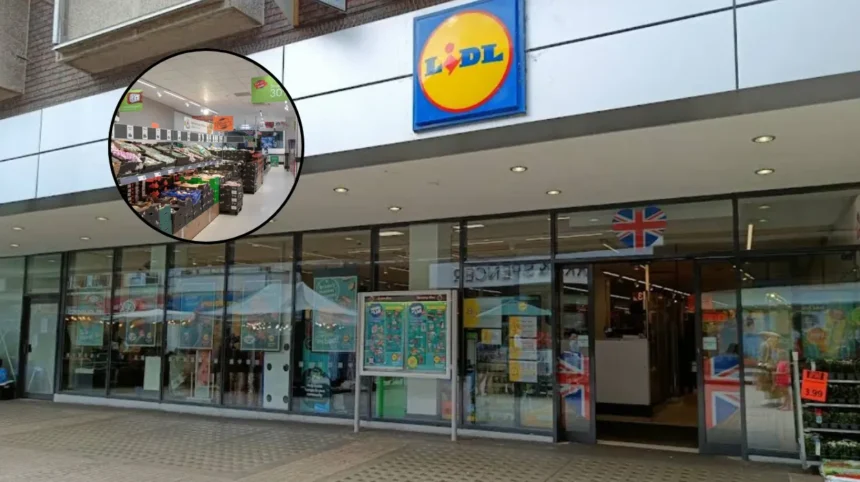
- Retail expansion: German supermarket giant Lidl has submitted proposals to build a new supermarket and up to 60 residential flats on a former British Gas gasholder site in Bromley.
- Site location: The 1.4-hectare plot is situated on Homesdale Road, located directly adjacent to an existing Tesco Superstore.
- History of refusal: Former owner Travis Perkins previously sought permission for six houses and a builders’ yard in 2019, which Bromley Council refused in 2021 due to insufficient housing density and contamination concerns.
- Severe contamination: Soil investigations conducted by Soiltechnics identified hazardous substances, including asbestos, cyanide, heavy metals, ammonium, TPHs, BTEX, PAHs, and VOCs.
- Lidl’s development strategy: Lidl has acknowledged the environmental risks and plans to position two four-storey residential blocks specifically on portions of the plot where the ground is not heavily contaminated.
- Infrastructure details: The development includes a 2,389-square-metre store, 93 customer parking spaces, electric vehicle charging points, bike spaces, and new road access from Homesdale Road.
Bromley (South London News) August 18, 2026 – German discount supermarket chain Lidl has formally targeted a former gasworks site in Bromley to erect a brand-new supermarket alongside dozens of residential apartments, despite long-standing environmental concerns regarding chemical contamination on the land. The proposed development, submitted via planning consultants Walsingham Planning Limited to Bromley Council, encompasses a 1.4-hectare vacant plot situated on Homesdale Road, situated next to a major Tesco Superstore. The scheme aims to bring a new retail facility to the area alongside two four-storey blocks containing up to 60 one- and two-bedroom flats.
- Key Points
- What is the history of the former gasworks site in Bromley?
- Why were previous planning applications for the land refused by Bromley Council?
- What environmental contaminants were discovered during ground investigations?
- How does Lidl plan to overcome the environmental and planning challenges?
- Background of the development
- Prediction: How this development could affect local stakeholders
The land was previously occupied by British Gas gasholders before being cleared and left disused following a major industrial fire in October 2018. Builders’ merchant Travis Perkins subsequently acquired the site before selling the property to Lidl three years ago. Prior to the sale, Travis Perkins brought forward a planning application in 2019 to construct six residential houses and a builders’ yard. However, as recorded in official local government proceedings, the Development Control Committee of Bromley Council refused planning permission in 2021. The committee cited the unacceptable lack of housing density and raised critical safety warnings regarding ground contamination.
As reported by local news outlets covering London planning matters, council members were advised at the 2021 meeting by the local authority’s own Health and Safety officers that the gasworks site was so heavily contaminated that residential housing might never be safely constructed there. During those proceedings, one elected councillor explicitly stated that they were “not convinced the site was developable at all” given the severity of the expert reports presented to the committee.
The extent of the chemical hazard was formally detailed in 2019 when ground investigation firm Soiltechnics was commissioned by Travis Perkins to evaluate prior site assessments. Soiltechnics concluded that “substantial contamination is present on site including asbestos, TPHs, BTEX, PAHs, VOCs, ammonium, cyanide and heavy metals”.
In its latest planning submissions, Lidl acknowledged the toxic history of the parcel. To mitigate safety risks, the retailer has resolved to construct the proposed 60 flats strictly on sections of the western portion of the plot “where the ground is not heavily contaminated”. The two proposed four-storey apartment blocks will have dedicated vehicular access established via Liddon Road, accompanied by designated amenity spaces and resident parking.
The proposed commercial element comprises a store with a gross external floor area of approximately 2,389 square metres, including a 1,529-square-metre sales floor. Operational plans detail a 93-space customer car park featuring accessible bays, parent-and-child parking, rapid electric vehicle charging stations, and 24 cycle parking spaces. Highways adjustments would require establishing a new vehicular entrance on Homesdale Road, replacing the current gated access point and necessitating the relocation of an existing roadside bus stop.
What is the history of the former gasworks site in Bromley?
The subject land on Homesdale Road served for decades as an active gas storage facility operated by British Gas, housing two large gas holders until operations ceased. The site’s industrial character changed dramatically in October 2018 when a major fire broke out, prompting emergency services to secure the zone. Following the blaze, the structures were demolished, leaving a vacant 1.4-hectare footprint.
Builders’ merchant Travis Perkins acquired the vacant land to expand its commercial footprint in South London. In 2019, the firm submitted a formal application to Bromley Council to build a trade yard paired with six residential dwellings. The application triggered thorough environmental reviews, which ultimately led to its outright rejection by local planning authorities in 2021. Travis Perkins subsequently elected to sell the land, liquidating its asset to Lidl three years ago.
Why were previous planning applications for the land refused by Bromley Council?
Bromley Council’s Development Control Committee turned down the 2019 proposal based on two core factors: inadequate housing delivery and severe environmental health hazards. Planning officers determined that allocating such a substantial land footprint for only six residential units represented an inefficient use of urban land.
More significantly, advice provided by the council’s internal Health and Safety team raised red flags regarding historic ground contamination. The presence of industrial pollutants from historical gas production created significant doubt over whether ground remediation could ever render the site safe for human habitation, prompting elected committee members to express deep skepticism about the site’s overall viability for development.
What environmental contaminants were discovered during ground investigations?
An extensive review conducted by environmental specialists Soiltechnics in 2019 confirmed severe subsurface pollution stemming from decades of gas production and storage. The investigation identified multiple classes of hazardous materials distributed across the footprint:
- Asbestos: Highly toxic mineral fibres historically used in industrial insulation, posing severe respiratory risks if disturbed.
- Cyanide and Ammonium: Chemical by-products of coal carbonisation during gas manufacture.
- Heavy Metals: Persistent elemental contaminants that do not degrade over time.
- Hydrocarbons (TPHs, BTEX, PAHs, VOCs): Complex organic compounds, volatile gases, and petroleum hydrocarbons known to pose significant soil, groundwater, and vapor intrusion risks.
How does Lidl plan to overcome the environmental and planning challenges?
To address the historical planning refusals, Lidl’s scheme significantly scales up the residential output from six units to up to 60 apartments, directly tackling the council’s previous critique regarding housing numbers.
Regarding environmental safety, Lidl and its planning representatives at Walsingham Planning Limited have adopted a targeted spatial strategy. Rather than distributing residential buildings across the entirety of the 1.4-hectare layout, the company plans to restrict residential construction strictly to the western zone, where ground testing indicates significantly lower contamination levels. The main supermarket building and associated surface car parking will occupy the remainder of the site, accompanied by extensive ground remediation works designed to safely isolate residual industrial contaminants.
Explore More Bromley News
2,200‑Home Green Belt Plan Divides Bromley Residents in 2026
Bromley Council backs Poverest Centre demolition for homes in Orpington 2026
Background of the development
The redevelopment of former gasworks sites across Greater London has become a central feature of urban brownfield regeneration strategies over the past decade. As land availability across London boroughs grows increasingly scarce, local authorities and private developers have increasingly targeted disused industrial plots to meet stringent housing targets set by the Mayor of London and local plan allocations.
However, gasholder sites present some of the most complex engineering and environmental challenges in urban planning. Coal gasification, the primary process used throughout the 19th and mid-20th centuries, left deep environmental footprints characterized by tar pits, heavy metal deposits, and complex chemical contamination. Modern remediation techniques—such as soil washing, thermal desorption, and engineered capping—have enabled developers to reclaim several high-profile gasworks sites across the capital, converting them into high-density mixed-use schemes.
In Bromley, the Homesdale Road site represents one of the few remaining large brownfield opportunities in the immediate vicinity of the town centre. The site’s location directly adjacent to an established retail corridor, bounded by existing residential neighborhoods and railway infrastructure, makes it highly attractive for commercial expansion. Nevertheless, the history of industrial contamination has repeatedly stymied development efforts, placing environmental safety at the absolute center of local planning debates.
Prediction: How this development could affect local stakeholders
If Bromley Council approves Lidl’s planning application, the project will generate notable impacts across several key local groups:
Local Residents and Homebuyers
For local residents, the addition of up to 60 new apartments will increase housing availability in the borough, offering new-build options for first-time buyers and small families. However, nearby homeowners on Homesdale Road and Liddon Road are likely to face increased traffic congestion during construction and daily operation. Concerns surrounding ground disturbance during the remediation phase may also prompt local demand for strict environmental monitoring to ensure hazardous dust or vapors are safely contained.
Supermarket Shoppers and Retail Competitors
The introduction of a mid-sized discount supermarket will provide local households with greater retail choice and lower-cost grocery alternatives. Conversely, the store’s position directly adjacent to the existing Tesco Superstore will create intense, localized grocery competition. This proximity could shift local shopping patterns, driving higher footfall to the Homesdale Road retail area while increasing pressure on local road infrastructure and nearby junctions.
Bromley Council and Local Infrastructure
For Bromley Council, approving the scheme would transform an eyesore brownfield site into an active economic asset, generating ongoing business rates and council tax revenues while contributing toward local housing quotas. However, council officers will face strict public scrutiny regarding safety enforcement, requiring extensive consultation with environmental agencies to ensure that all ground contamination risks are fully mitigated before any residential occupation begins.