
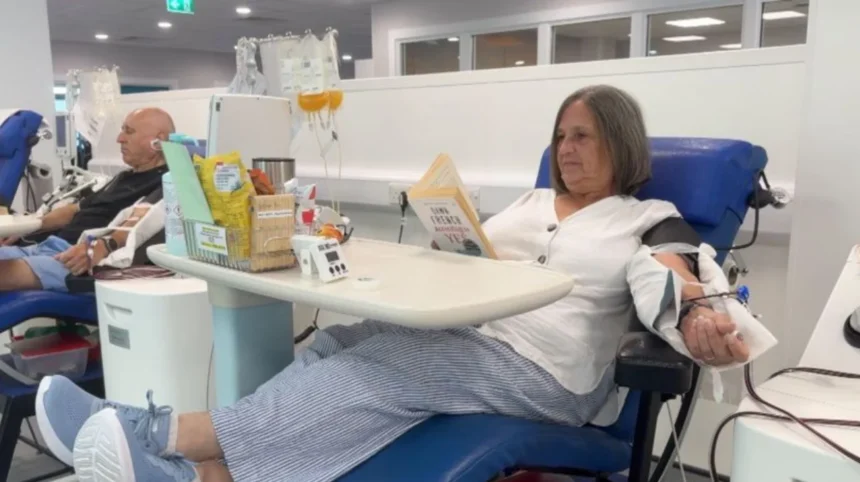
South London residents are being encouraged to donate blood as NHS Blood and Transplant (NHSBT) continues efforts to maintain supplies for hospitals across the capital.
The appeal comes as NHSBT reports pressure on supplies of O negative and B negative blood. O negative is particularly important during emergencies because it can be given to patients when there is not enough time to determine their blood group.
London recorded 68,456 new blood donor registrations and 37,114 first-time donations in 2024/25, according to NHSBT. Despite this increase, the organisation says more donors are needed to ensure hospitals have sufficient supplies when patients require transfusions.
The demand is particularly significant for people living with sickle cell disease. NHSBT says more than 250 blood donations are needed every day to treat people with the condition, compared with around 150 six years ago.
People of Black heritage are especially encouraged to donate because closely matched blood can be important for patients with sickle cell disease. NHSBT says people of Black heritage are more likely to have blood subtypes that are frequently needed for these patients.
Tracy Williams, Blood Donation Lead at the Sickle Cell Society, has highlighted the importance of ethnically matched blood for people living with sickle cell.
“Blood from people with the same ethnic background is vital to keeping those most severely affected by sickle cell alive and well, enabling them to lead fulfilling lives and pursue their goals,” she said.
The need for donations also extends to emergency care. London’s Air Ambulance, London Ambulance Service and London Fire Brigade have supported calls for more people to donate blood, highlighting its role in treating critically injured patients.
Jonathan Jenkins, Chief Executive of London’s Air Ambulance Charity, said donated blood had become crucial to the service’s operations.
“All the blood we use comes from one single source: donations from the general public. Without that generosity, so much of the work our trauma teams do on scene would simply not be possible. I would urge anyone who can to give blood. For many of our patients, it can make a life-saving difference,” he said.
NHSBT says donated blood is also used to support patients undergoing surgery and cancer treatment, as well as those experiencing serious injuries and other medical conditions. A single donation can potentially save or improve up to three lives.
Community engagement remains central to increasing donations. NHSBT is working with organisations including the Sickle Cell Society and African Caribbean Leukaemia Trust to encourage more Black donors to register.
For eligible South London residents, donating blood can provide hospitals with a vital resource before it is needed.
As the call for donations continues, health organisations hope more residents will register, attend appointments and help maintain the blood supply for patients across London.
For someone waiting for a transfusion, one donation could make a critical difference.