Key Points
- A network of underground caves and tunnels exist beneath South London, reportedly stretching up to 50 miles, possibly connecting London to the Brighton coastline.
- These caves have long been the subject of local tales involving pirates, smugglers, and illicit trade goods such as rum, tobacco, and lace.
- The Croydon Review and Timetable in 1880 referred to these caves as “shudderus” and identified a “robbers cave” near Plough Lane in Mitcham (now Beddington Caves).
- Local explorers in the 1960s and 1970s, like Sue Chester, confirmed the existence of tunnels large enough to include a ‘hall’ area but noted they were later sealed off for safety.
- Theories exist that the tunnels were used by Romans as escape routes from Beddington Villa and possibly linked to Tudor palaces and historic houses in the region.
- Folklore adds ghost stories to the caves, including claims that Sir Walter Raleigh’s spirit haunts the underground passages.
- Despite popular rumours of the caves extending to Brighton, explorations dispute there is nothing extraordinary about the tunnels themselves.
What are the hidden caves beneath South London streets?
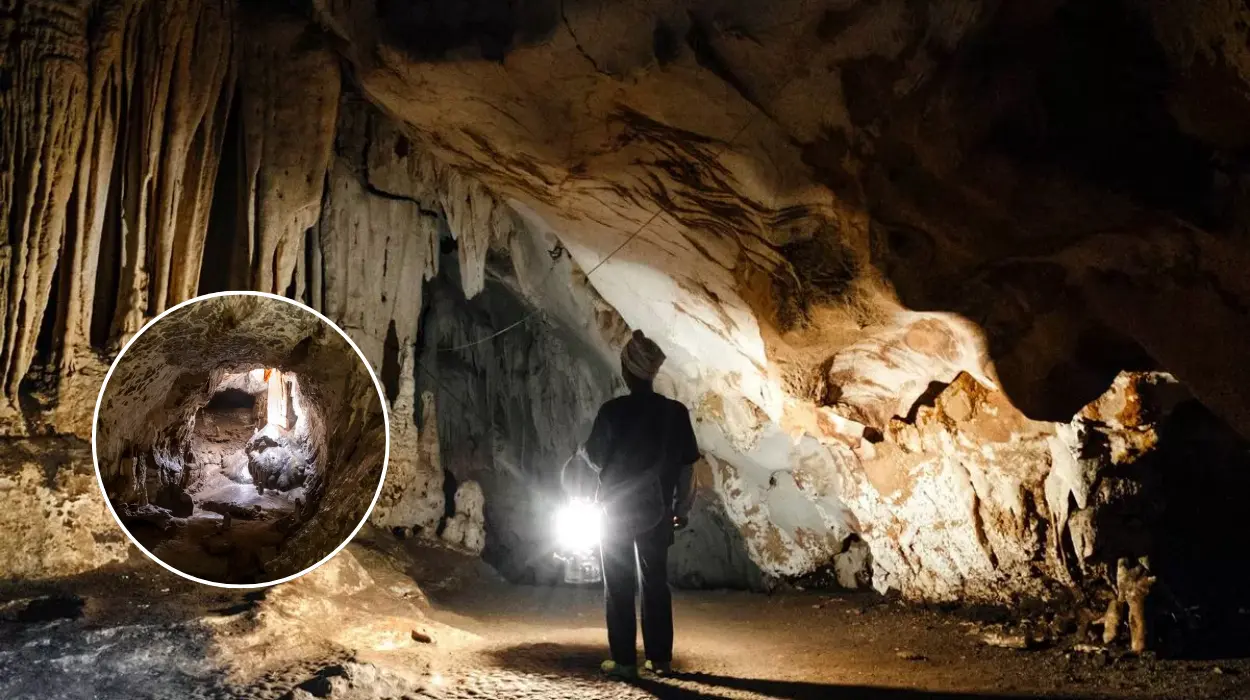
The mysterious network of caves beneath South London has fascinated locals and historians alike for over a century. As reported by an anonymous writer in the Croydon Review and Timetable in 1880, the caves were described as “shudderus,” suggesting an eerie and unsettling atmosphere. This early article mentioned “robbers caves” located near Plough Lane close to Bandon Hill in Mitcham, now known as Beddington Caves.
- Key Points
- What are the hidden caves beneath South London streets?
- How far do the tunnels stretch and what was their historical use?
- What do eyewitnesses and local residents say about the caves?
- What theories explain the origin or purpose of the tunnels?
- Are the legends of smuggling and piracy based on fact?
- How have the caves impacted local communities and urban development?
- What is the current status and future of the South London caves?
These caves have consistently been part of local lore, with residents describing their entrances as hidden among brambles near landmarks such as the Plough Inn pub on Plough Lane. Although the entrances have since been blocked off, old timers recall venturing into the tunnels during their youth.
How far do the tunnels stretch and what was their historical use?
The most captivating rumour surrounding these subterranean passages is their alleged reach—extending some 50 miles from the South London streets all the way to the Brighton coastline. Such an extensive system would have been ideal for smuggling operations, allowing pirates and smugglers to transport barrels of rum, boxes of tobacco, and even lace directly into London’s high society while avoiding import duties.
However, as the 1880 report and subsequent local explorations suggest, the tunnels themselves may not be unusually extensive or remarkable. An anonymous article’s author recounted hearing about the discovery of the caves when someone ploughing a field above fell into what was called a “robbers’ den,” indicating the caves’ historic association with outlaw activity but no confirmation of extraordinary length.
What do eyewitnesses and local residents say about the caves?
In the mid-20th century, local resident Sue Chester shared her experiences of accidentally stumbling upon the tunnel entrances during her teenage years (mid-1960s to early 1970s). In an interview recalled by MyLondon, Chester noted:
“If you go to the Plough public house and look across the road to where the back gardens of the houses come down to meet the road, there amongst the brambles, is the entrance to one of the many tunnels. As teenagers, we used to go ‘down the hole,’ just a hole no larger than a fox’s burrow. Inside, the tunnel expanded into a large hall big enough to host a small banquet. We used to play down there.”
Chester added that these tunnels were later sealed by the local council for safety reasons, thus limiting further exploration.
What theories explain the origin or purpose of the tunnels?
Steve Roud, author of London Lore, analyses the wide-ranging speculative theories linked to the caves. He mentions that some propose the tunnels were used by Romans as emergency escape routes from Beddington Villa during attacks. Others suggest connections to Tudor-era constructions such as Nonsuch Park and its associated palatial structures.
Folklore even supplements these ideas with supernatural tales, including reports that the ghost of Sir Walter Raleigh haunts the underground passages near Beddington Manor and Carew Lodge—both historic homes entwined with the caves’ mythology.
Are the legends of smuggling and piracy based on fact?
The notion that pirates and smugglers utilised these caves to transport contraband goods like rum, tobacco, and lace remains largely within the realm of legend. While it is true that smuggling was a significant problem in coastal regions historically, no definitive evidence confirms such use of the South London caves specifically.
The tales may have grown over generations from local folklore, augmented by the caves’ natural air of mystery and their location near known historic sites. Nonetheless, the 1880 Croydon Review and recent anecdotal accounts show the caves have been acknowledged physically, though their actual length and purpose remain debatable.
How have the caves impacted local communities and urban development?
The caves, while once accessible to adventurous local youths, are now blocked off due to safety concerns by local authorities. This has curtailed informal exploration and preserved the tunnels from further disturbance.
Their presence adds a layer of historic intrigue to the area, attracting occasional curiosity seekers and researchers interested in London’s subterranean history. Despite modern urbanisation, the caves stand as a reminder of the city’s layered past and the myths that grow around unseen places.
What is the current status and future of the South London caves?
Currently, the tunnels are inaccessible to the public and are sealed by the local council. While some local historians and archaeologists might be interested in studying the caves further, any exploration is constrained by safety regulations.
The folklore and curiosity around the caves continue to inspire stories, research, and media coverage, ensuring the caves’ place in London’s rich tapestry of history and legend.