Key Points
- Historic England confirmed to the Architects’ Journal (AJ) that the Department for Culture, Media and Sport (DCMS) has Grade II listed the Southbank Centre’s Queen Elizabeth Hall, Purcell Room, Hayward Gallery, terraced walkways, and stairs on its advice.
- This ends a 35-year battle for statutory heritage protection for the 1960s Brutalist landmark, previously refused on six occasions since 1991 despite Historic England’s repeated recommendations.
- The Twentieth Century Society (C20 Society), which launched the latest bid early last year, hailed the decision as a “victory over those who derided so-called ‘concrete monstrosities'”, describing the complex as a “post-war architectural masterpiece”.
- The riverside arts centre was designed by the London County Council (LCC) Special Works Group, including Warren Chalk and Ron Herron of Archigram, and opened in 1967; Daily Mail readers voted it “Britain’s ugliest building” at the time.
- It was the only post-war building on London’s South Bank to remain unlisted until now, unlike the Grade I-listed Royal Festival Hall and Grade II*-listed National Theatre.
- In 2018, DCMS refused listing, stating: “The building’s architecture is not unique or groundbreaking and is poorly resolved in terms of its relationship to the site, its coherence, and its accessibility in comparison to the Royal Festival Hall and the National Theatre.”
- Architectural historian Otto Saumarez-Smith tweeted then-culture secretary Matt Hancock that the 2018 decision was “absurd and disgraceful”; the Victorian Society accused the government of threatening the listing system’s integrity with its “absurd” decision.
- Heritage minister Fiona Twycross accepted Historic England’s reasons for listing almost 12 months after the latest bid, triggered by the expiry of a 2020 Certificate of Immunity (COI) in February 2025.
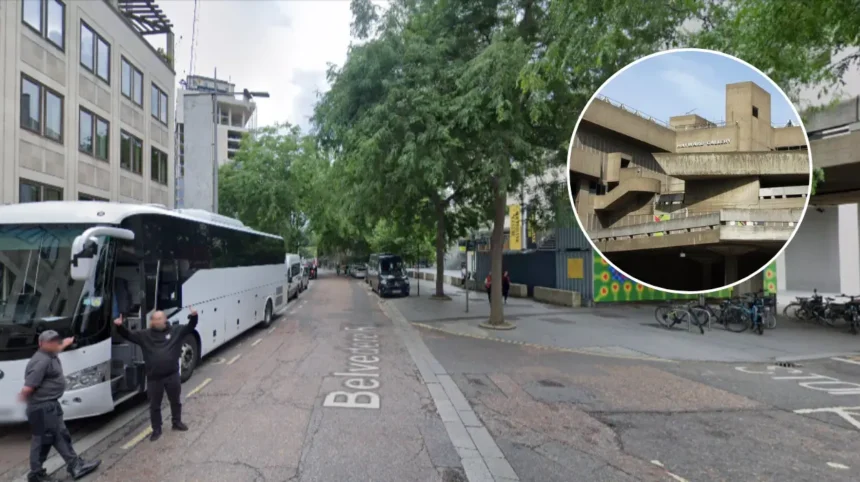
- Historic England praised the centre’s “bold geometric formations, clustered to sculptural effect with a correspondingly dramatic silhouette” and “use of exposed concrete in which the building’s monumental scale is countered by the fine texture and tactility of its surface finishes, executed with exemplary technical skill”.
- Previous refusals include four times by 2018, as noted by C20 Society’s Tess Pinto, who criticised reliance on consultants from Montagu Evans hired by Southbank Centre owners.
Southbank, London (South London News) February 10, 2026 – The government has finally listed London’s Southbank Centre, ending a 35-year battle to secure statutory heritage protection for the iconic 1960s Brutalist landmark, as confirmed yesterday by Historic England to the Architects’ Journal.
- Key Points
- Why Was the Southbank Centre Listed After Decades of Refusals?
- What Buildings at the Southbank Centre Received Protection?
- What Is the History of Listing Attempts for the Southbank Centre?
- Why Did DCMS Refuse Listing in 2018?
- Who Designed the Southbank Centre and What Makes It Architecturally Significant?
- How Did the Twentieth Century Society Campaign for This Victory?
- What Happens Next for the Listed Southbank Centre?
Why Was the Southbank Centre Listed After Decades of Refusals?
The decision marks a significant shift after successive culture secretaries rejected Historic England’s (formerly English Heritage) recommendations on six separate occasions since 1991.
As reported by the Architects’ Journal, Historic England advised the DCMS, leading to heritage minister Baroness Fiona Twycross accepting the listing for the Queen Elizabeth Hall, Purcell Room, Hayward Gallery, and associated terraced walkways and stairs at Grade II.
This came almost 12 months after the Twentieth Century Society submitted its latest bid, prompted by the expiration last February of a five-year Certificate of Immunity (COI) issued by DCMS in February 2020.
The C20 Society described the reinforced concrete complex as a “post-war architectural masterpiece” and celebrated the outcome as a
“victory over those who derided so-called ‘concrete monstrosities'”.
Designed by the London County Council Special Works Group, which included innovative architects Warren Chalk and Ron Herron of the avant-garde Archigram group, the centre opened in 1967 amid controversy—Daily Mail readers promptly voted it “Britain’s ugliest building”.
What Buildings at the Southbank Centre Received Protection?
Specifically, the Grade II listing covers the Queen Elizabeth Hall, Purcell Room, Hayward Gallery, and the integral terraced walkways and stairs.
These form the core of the Southbank Centre complex, built between 1963 and 1968 under chief architect Sir Hubert Bennett, with design teams headed by Norman Engleback for the gallery in collaboration with the Arts Council. Historic England highlighted the structures’
“bold geometric formations, clustered to sculptural effect with a correspondingly dramatic silhouette”,
noting how the “use of exposed concrete” balances monumental scale with
“fine texture and tactility of its surface finishes, executed with exemplary technical skill”.
This protection aligns the Southbank Centre with neighbouring landmarks: the Royal Festival Hall, Grade I-listed since 1988, and the National Theatre, Grade II*-listed in 1994. Until now, it remained the only unlisted post-war building on London’s South Bank.
What Is the History of Listing Attempts for the Southbank Centre?
Listing efforts date back to 1991, with Historic England recommending protection five or six times, only for DCMS to overturn each one. In 2012, as reported by the Twentieth Century Society, owners received a COI after another rejection, amid plans for refurbishment funded by Arts Council England. By 2018, it was the fourth refusal; C20 Society’s Senior Conservation Adviser Tess Pinto stated,
“The only criteria that should be taken into account when making a listing decision are historic and architectural interest. The Minister received a strong recommendation to list the building on these grounds from Historic England, and as far as we are aware the only advice received to the contrary was given by Montagu Evans, the paid consultants of the Southbank Centre who applied for the COI.”
Why Did DCMS Refuse Listing in 2018?
The 2018 DCMS refusal, detailed in Architects’ Journal coverage, argued:
“The building’s architecture is not unique or groundbreaking and is poorly resolved in terms of its relationship to the site, its coherence, and its accessibility in comparison to the Royal Festival Hall and the National Theatre.”
Architectural historian Otto Saumarez-Smith tweeted then-culture secretary Matt Hancock, calling the decision “absurd and disgraceful”. The Victorian Society echoed this, accusing the government of an “absurd” move that threatened the listing system’s integrity.
Hopes were low for success this time, given the history, but Fiona Twycross’s approval followed Historic England’s persistent advocacy.
Who Designed the Southbank Centre and What Makes It Architecturally Significant?
The complex was crafted by the LCC/Greater London Council’s Architects’ Department, led by Hubert Bennett, with Jack Whittle, F.G. West, and Geoffrey Horsefall contributing to the Queen Elizabeth Hall and Purcell Room. The Hayward Gallery was a joint effort with the Arts Council.
Notable involvement from Archigram’s Warren Chalk and Ron Herron underscores its forward-thinking Brutalist design.
As Europe’s largest arts centre, it pioneered facilities like the Hayward Gallery—the first major British purpose-built space for loan exhibitions with modern styling—and intimate venues for smaller ensembles and new music. C20 Society’s Croft, in a 2025 Concrete Connect interview, emphasised that listing would promote “the prestige and recognition of our brutalist heritage” without hindering maintenance.
How Did the Twentieth Century Society Campaign for This Victory?
The C20 Society launched its latest bid early last year after the 2020 COI expired on 5 February 2025, urging denial of an extension sought by owners.
Earlier campaigns faced setbacks, including a 2025 push amid an Oscar-spotlighted architecture film, as covered by The Guardian.[ (Guardian snippet)] Despite failed redevelopment schemes by Terry Farrell, Richard Rogers, and Rick Mather, and a 2018 restoration by Feilden Clegg Bradley Studios (£16.7m Arts Council funding), the society persisted.
What Happens Next for the Listed Southbank Centre?
Listing imposes statutory protection, requiring consent for alterations affecting special interest, but allows sustainable adaptation. In its 75th anniversary year (2026), the Southbank Centre hosts events like Skate Space 50 exhibitions celebrating its skateboarding heritage under the Queen Elizabeth Hall. Owners had opposed listing previously, citing maintenance needs, but C20 insists it encourages appreciation of Brutalist legacy.