Key Points
- Heritage at Risk status: Kirkaldy’s Testing Works in Southwark, south London, has been officially added to Historic England’s Heritage at Risk Register.
- Core threat: The historic structure suffers from severe water ingress and extensive damp in its basement, threatening further structural deterioration.
- Historical significance: Built in 1873, the Grade II* listed building is recognised as the world’s earliest purpose-built commercial materials testing laboratory.
- Engineering legacy: The premises were specially designed to house the famous Universal Testing Machine created by pioneering Scottish engineer David Kirkaldy.
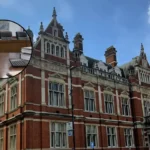
Southwark (South London News) November 10, 2026 – Historic England has officially designated Kirkaldy’s Testing Works in Southwark, south London, as an site “at risk”, placing the iconic Victorian facility on its Heritage at Risk Register due to structural threats stemming from extensive basement damp and water ingress.
Why Has Kirkaldy’s Testing Works Been Added to the Register?
The designation follows technical assessments revealing that water damage and rising damp in the basement levels present a serious threat of ongoing deterioration to the structure. The Grade II* listed property, located in Southwark, holds global architectural and industrial importance as the world’s earliest purpose-built commercial materials testing laboratory. Urgent conservation and damp mitigation measures are required to prevent structural compromise to the fabric of the building and safeguard its historical contents.
What Is the Historical Significance of David Kirkaldy’s Laboratory?
Constructed in 1873, the facility was custom-built by engineer David Kirkaldy to house his revolutionary Universal Testing Machine. Kirkaldy pioneered the standardized, independent scientific testing of construction materials, establishing modern quality-assurance protocols for iron, steel, and other structural components used in major Victorian civil engineering works. The surviving machinery and purpose-designed premises represent a foundational chapter in international structural engineering and industrial history.
Background of the Particular Development
The establishment of Kirkaldy’s Testing Works marked a critical juncture in the 19th-century Industrial Revolution. Prior to David Kirkaldy’s systematic interventions, structural failures in major infrastructure projects—such as rail bridges and marine vessels—were frequently caused by undetected flaws in manufactured iron and steel. Kirkaldy developed a massive 47-foot-long, hydraulic-powered Universal Testing Machine capable of applying pull, push, bending, twisting, and shearing forces to materials under controlled conditions.
To accommodate this massive apparatus, Kirkaldy commissioned the purpose-built laboratory at 99 Southwark Street in 1873. The motto inscribed on the building’s facade, “Facts, Not Opinions,” reflected Kirkaldy’s commitment to empirical scientific testing over speculation. The site retained its commercial testing operation for decades before transitioning into a preserved heritage location and museum, maintaining its unique machinery in working order. Grade II* listing status was assigned to ensure the preservation of its architectural features, industrial artifacts, and rare interior arrangements.
Prediction: How This Development Can Affect Structural Heritage Stakeholders, Local Conservationists, and Visitors
The inclusion of Kirkaldy’s Testing Works on the Heritage at Risk Register is expected to directly impact local heritage custodians, funding bodies, and the public:
- Funding and Conservation Priority: Registration opens pathways for specialist conservation grants from Historic England and partner heritage bodies. It will likely trigger immediate technical surveys to address the subterranean drainage and damp-proofing systems.
- Impact on Heritage Visitors and Educators: Restoration work may necessitate temporary restricted access or altered opening schedules for public tours, educational visits, and museum activities while structural repairs are underway.
- Increased Public Awareness: Highlighting the site’s vulnerable status focuses public attention on the ongoing maintenance challenges faced by specialized industrial heritage sites in urban environments, often accelerating community fundraising and volunteer support initiatives.