Key Points
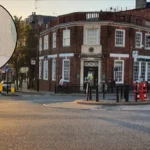
- Pat Hickson Garden is a pocket park located at the junction of Surrey Canal Road and Ilderton Road in Southwark, SE16, South London.
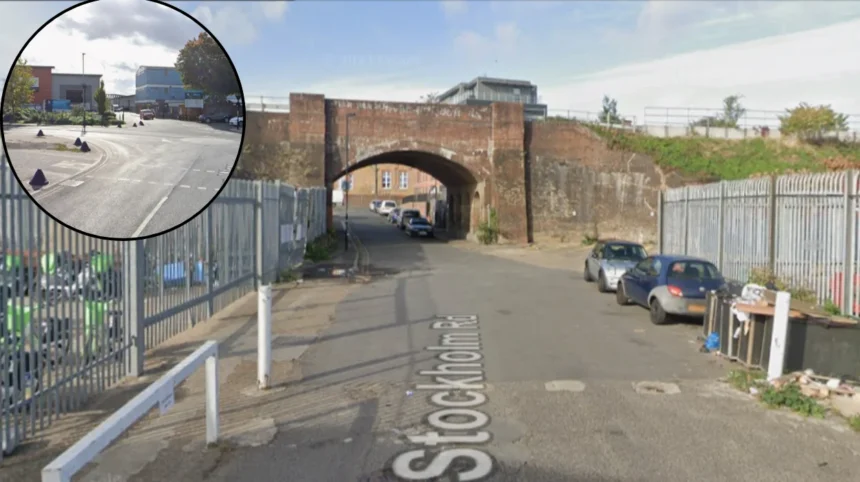
- The site was originally four houses built between 1895 and 1915 on the filled-in route of the Grand Surrey Canal, with a nearby bridge over the canal.
- The canal and bridge were filled in during the 1970s, houses demolished around the same time, leaving empty land nicknamed the “grassy knoll” by Network Rail.
- A major power failure on 28 August 2003 plunged most of South London into darkness, trapping 17,000 people on Tube trains; a review recommended Network Rail improve power supply security.
- Resulting tunnel runs from New Cross National Grid Substation to Rotherhithe Switching Station, feeding electricity to South Bermondsey railway station substation.
- Power tunnel requires cooling; ventilation shaft headhouse built on site, construction started 2017 (visible in Google Earth 2018), completed 2020 with landscaping into pocket park.
- Named after Pat Hickson MBE, South Bermondsey community activist who died 1 October 2019 aged 79; longstanding chair of Bonamy and Bramcote Tenants’ and Residents’ Association.
- Southwark Council landscaped the garden, adding paths linking Surrey Canal Road to Stockholm Street, 22 varied trees, 15 more near eastern edge, hedge along Ilderton Road for screening.
- Opened with councillors Richard Livingstone and Catherine Rose, Pat’s family attending; Cllr Catherine Rose called it a space to relax, adding to 130+ council green spaces.
- Pat Hickson remembered as “loving and caring” by daughter Joanne Mcalea: “She was the heart and soul of my family. She always cared about others more than herself.”
- Pat organised St George’s Day events at Ilderton Road Primary School raising funds for Help for Heroes, involved in Links Community Hall and Rotherhithe Community Council.
Southwark, SE16 (South London News) February 11, 2026 – Pat Hickson Garden, a modest corner pocket park at the junction of Surrey Canal Road and Ilderton Road, stands as a testament to layered urban history transformed by infrastructure needs and community spirit. Once residential plots overlooking a lost canal, the site became derelict before Network Rail’s engineering intervention created its modern form. Named for local champion Pat Hickson MBE, the green space now offers respite amid South London’s bustling railway corridors.
What Triggered the Park’s Transformation?
The park’s current layout owes its existence to a critical electricity tunnel beneath, born from the 2003 London blackout.
As detailed by Ian Mansfield of IanVisits, the tunnel carries power from the National Grid disconnector at New Cross National Grid Substation to Rotherhithe Switching Station, ensuring supply to the substation at nearby South Bermondsey station for railway operations.
This infrastructure followed a massive outage on 28 August 2003, affecting south London and north-west Kent. Wikipedia’s entry on the 2003 London blackout notes that a faulty protection relay at Wimbledon substation—incorrectly installed with a 1 ampere fuse instead of 5 amperes—tripped under overload after a transformer failure at Hurst substation, isolating New Cross and trapping around 17,000 on Tube trains.
A post-incident review urged Network Rail to bolster its south London power security, leading to the tunnel’s construction. According to Network Rail as cited by Ian Mansfield, the site—then the “grassy knoll”—hosted a ventilation shaft for cooling the tunnel, vital due to heat from high-voltage cables.
Construction began in 2017, with the shaft evident in Google Earth imagery from May 2018, and wrapped up in 2020 alongside the headhouse building and park landscaping.
Who Was Pat Hickson and Why the Name?
Pat Hickson Garden honours Pat Hickson MBE, a “pillar of the local community” who passed away on 1 October 2019 at 79. As reported by Southwark News, she chaired the Bonamy and Bramcote Tenants’ and Residents’ Association for years and earned her MBE for community services.
Her daughter, Joanne Mcalea, told Southwark News in 2019:
“I’ve had so many messages, and the things people have said about her has been amazing. We always knew she was amazing, but it’s nice to other people thought so too. People on the estate would call her up, and she would always help them whatever, any help at all. She was the heart and soul of my family. She always cared about others more than herself.”
Pat organised annual St George’s Day events at Ilderton Road Primary School, fundraising for Help for Heroes, and contributed to Links Community Hall on Rotherhithe New Road and the former Rotherhithe Community Council. The United Southwark Tenants and Residents Confederation (USTSC) paid tribute, calling her a
What Is the Site’s Historical Background?
The plot’s story traces to the Grand Surrey Canal, authorised in 1801 to link Rotherhithe on the Thames to Mitcham, primarily for timber to Surrey Commercial Docks. WikiShire’s entry explains it opened in stages: to Old Kent Road in 1807, Camberwell 1810, Peckham 1826, with a Rotherhithe basin and lock by 1807.
Surrey Canal Road follows the canal’s filled-in path, infilled in the 1970s. Ian Mansfield of IanVisits reports a bridge once crossed there; between 1895 and 1915, four houses rose on the current park site, demolished around the 1970s, yielding barren land.
Southwark Council’s services page confirms the garden’s position on former Lewisham Council land, repurposed by Network Rail before council landscaping.
How Was the Garden Developed and Opened?
Network Rail vacated in 2020, leaving the headhouse by the railway. Southwark Council then transformed it, as per their announcement: a new path connects Surrey Canal Road to Stockholm Street, with 22 varied trees centrally, 15 more eastward, and a hedge screening Ilderton Road traffic.
The opening drew Councillors Richard Livingstone and Catherine Rose, alongside Pat’s family. Cllr Catherine Rose, cabinet member for transport, parks and sport, stated:
“This new garden offers local people a space in which to relax and take a moment for themselves. It adds to more than 130 such spaces in our care and brings even more homes closer to wildlife and nature. Pat Hickson Garden has been transformed into a greener, more attractive and useful public space for the local community, of which Pat was a devoted advocate and member.”
Old Kent Road.org.uk noted residents can now enjoy the “newly reclaimed and landscaped park.”
Why Is the Power Tunnel Significant?
Power tunnels demand ventilation to dissipate cable heat. The shaft at Pat Hickson Garden services the short but crucial link preventing repeats of 2003’s chaos, powering rail at South Bermondsey amid denser urban demands. National Grid’s London Power Tunnels overview contextualises such projects, like LPT phases linking substations citywide, though this predates them.
Network Rail’s efforts align with wider green initiatives; a 2022 media release detailed planting 35 trees nearby at Bermondsey Dive Under to curb graffiti costing £150,000 over two years, with Sir Peter Hendy planting the last.
What Makes It a Pocket Park?
Pocket parks like this reclaim urban slivers for public good. IanVisits highlights its corner position, blending history, utility, and greenery—once houses and canal bridge, now a shaded nook by rail lines.
Southwark News emphasises community benefits: screening from roads, tree diversity for wildlife, paths enhancing connectivity. It joins over 130 council spaces, promoting nature access in dense SE16.
Future Prospects for the Area?
Surrey Canal’s legacy endures in regeneration; Salamander News discusses nearby development with 5,000 homes, cycle links, amid landmarks like SELCHP incinerator.
Pat Hickson Garden exemplifies resilient urban greening, securing power reliability while honouring locals like Pat, whose legacy blooms amid Southwark’s evolving landscape.