- £5 million funding package: Jointly provided by the Department for Transport, the Railway Heritage Trust, and Southwark Council.
- Phase one completed: Upgrades feature a wider gateline with a 50 per cent increase in ticket gates, alongside new passenger information screens and upgraded CCTV.
- Phased construction: Physical works commenced in May following the initial announcement in January, with full project completion projected for late summer.
- Targeted issue: Designed specifically to clear passenger bottlenecks at gatelines and exit staircases during peak operational hours.
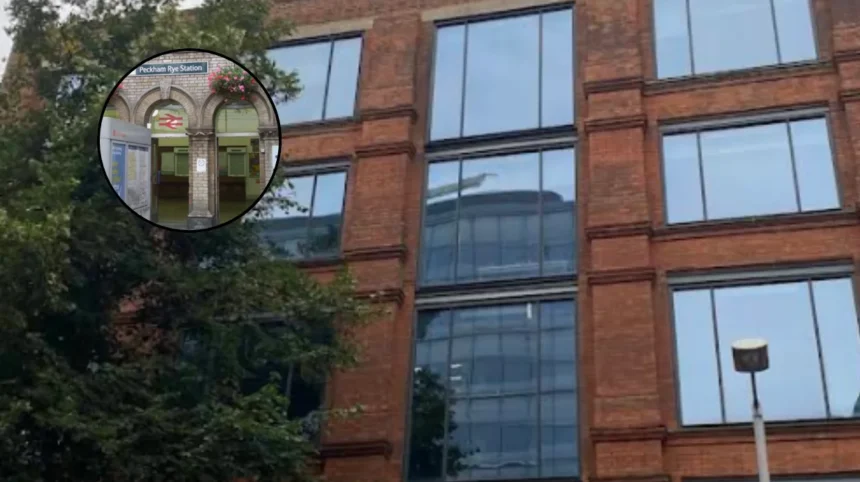
Peckham (South London News) September 25, 2026 — Peckham Rye station, a vital transport interchange hub in South London, has officially completed the initial phase of a major infrastructure overhaul designed to significantly ease severe daily overcrowding around its gatelines and exit staircases.
What specific upgrades have been completed at Peckham Rye station?
The initial stage of the enhancement scheme has introduced a broadened gateline equipped with 50 per cent more ticket gates, directly targeted at increasing passenger throughput during peak travel periods. Modernised high-definition CCTV systems have been installed alongside updated digital passenger information screens to improve security monitoring and real-time transit communication. These immediate adjustments address chronic bottlenecks where thousands of commuters previously faced severe delays attempting to tap out and exit onto the main concourse.
How is the £5 million funding package structured?
The £5 million transformation is being financed through a targeted collaborative funding model involving public bodies and local authorities. The Department for Transport provided primary capital backing, supported by contributions from the Railway Heritage Trust and Southwark Council. The multi-agency funding strategy ensures both operational rail capacity expansions and heritage conservation priorities are addressed, given the station’s Grade II listed architectural status.
What is the timeline for the remaining phases of the project?
Following the public announcement of the capital investment in January, contractor teams were formally deployed to begin structural works on-site in May. Construction activity is structured across distinct phases to minimise disruption to daily train operations across National Rail, London Overground, and Thameslink routes. The final phases of construction and station enhancements remain scheduled for full completion by late next summer.
Background of the Peckham Rye Station Development
Peckham Rye station opened in 1865 and stands as an architectural example of Victorian railway design, planned by architect Charles Henry Driver. Over recent decades, rapid population growth and shifting transit patterns turned the historic station into one of South London’s busiest suburban interchanges.
The physical constraints of its 19th-century layout gradually created substantial operational challenges. Passengers transferring between London Overground, Thameslink, and Southern services were routinely forced to navigate narrow stairwells and a restricted ticket hall. By the early 2020s, peak-hour queue lengths routinely extended back onto platform staircases, raising safety concerns and creating systemic delays across the local transport network. The current £5 million project represents a targeted effort to modernise passenger flow mechanics while preserving the structural heritage of the listed building.
Future Impact and Predictions for South London Commuters
The completed gateline expansion and ongoing site developments are expected to significantly alter daily travel conditions for thousands of daily passengers across South London.
Impact on daily commuter experience
Commuters using Peckham Rye are likely to experience reduced exit times during morning and evening rush hours. The 50 per cent increase in ticket barriers directly addresses the primary physical bottleneck, allowing incoming train loads to disperse onto the street level more rapidly. Clearer passenger information displays will also allow passengers to navigate service adjustments with less platform confusion.
Impact on local business and transport infrastructure
Improved station throughput is expected to enhance footfall movement into the surrounding retail corridors along Rye Lane. By reducing platform and concourse dwell times, the station capacity improvements will better support wider regional housing developments and transit-oriented development across the London Borough of Southwark.