Key Points
- Planning Appeal Lodged: Developer Hybrid Planning & Development has referred a residential application for 38 flats in Peckham to the Planning Inspectorate following Southwark Council’s failure to issue a decision within the statutory timeframe.
- Unanimous Council Refusal: Southwark Council’s Planning Committee voted unanimously on Monday evening, August 10, 2026, to refuse planning permission for the proposed scheme at 269–275 Rye Lane and 1A Philip Walk.
- Loss of Local Determination: Because the developer submitted an appeal against non-determination prior to the committee meeting, the council’s refusal vote now serves as a putative recommendation rather than a binding legal rejection.
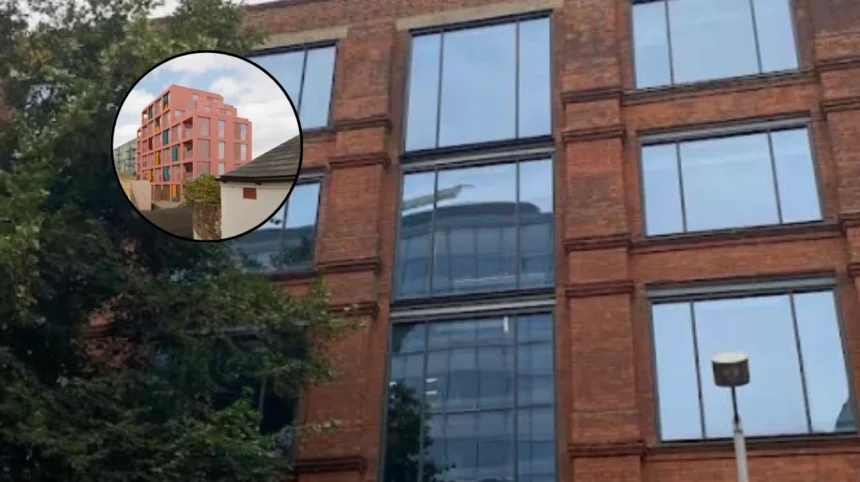
- Development Details: The proposed scheme comprises two blocks rising up to six storeys (19.5 metres) surrounding a central courtyard, delivering 38 residential apartments and 152 square metres of commercial floor space on Rye Lane.
- Final Authority: A government-appointed Planning Inspector will now make the binding decision on whether the development can proceed in the Rye Lane Conservation Area.
Peckham (South London News) August 12, 2026 – A controversial proposal to construct 38 residential flats and commercial space in the heart of Peckham has been escalated to central government after the developer lodged an appeal over Southwark Council’s missed decision deadline. Members of Southwark Council’s Planning Committee voted unanimously on Monday, August 10, 2026, to refuse planning permission for the scheme situated at 269 to 275 Rye Lane and 1A Philip Walk. However, because the developer’s agent, Hybrid Planning & Development, had already submitted an appeal for non-determination to the Planning Inspectorate, authority over the site’s future has officially transferred away from the local municipality.
- Key Points
- Why Was The Peckham Rye Lane Development Referred To The Planning Inspectorate?
- What Do The Proposed Plans For 269–275 Rye Lane And 1A Philip Walk Entail?
- What Were The Specific Reasons Southwark Council’s Planning Committee Rejected The Application?
- How Does Non-Determination Impact Local Authority Planning Decisions In London?
- What Is The Background Of This Particular Development?
- What Is The Prediction For How This Development Will Affect The Local Community?
Why Was The Peckham Rye Lane Development Referred To The Planning Inspectorate?
The referral to the Planning Inspectorate occurred as a direct consequence of statutory deadlines passing without a formal decision from local planning officers.
Under Section 78 of the Town and Country Planning Act 1990, applicants retain the legal right to appeal directly to the Secretary of State if a local authority fails to determine an application within the prescribed eight-week or 13-week statutory window, unless an extension has been mutually agreed in writing.
As reported by local planning monitoring records, Hybrid Planning & Development exercised this legal mechanism when Southwark Council exceeded the determination period without issuing a formal notice. By filing the appeal prior to Monday evening’s committee gathering, the developer effectively bypassed the local planning framework.
Consequently, while the committee’s unanimous vote to refuse the application registers Southwark Council’s official stance, it now functions strictly as a statement of case to be presented during the upcoming government appeal proceedings rather than an outright legal blocking of the development.
What Do The Proposed Plans For 269–275 Rye Lane And 1A Philip Walk Entail?
The application, referenced under local planning records as 24/AP/3834, outlines a residential-led mixed-use redevelopment on a prominent corner plot within Peckham’s vibrant commercial corridor. The project specifies the full demolition of existing vacant end-of-terrace structures positioned on the eastern side of Rye Lane and extending into Philip Walk.
In place of the current buildings, the plans propose a total of 38 residential flats, alongside 152 square metres of Class E commercial floorspace on the ground floor aimed at supporting local retail or business activity. Structurally, the development is designed as two distinct blocks set around an internal courtyard:
- Block A: Positioned directly on the Rye Lane frontage, rising to five storeys with a maximum height of 16.6 metres.
- Block B: Located behind the street-facing building, reaching six storeys with a overall height of 19.5 metres.
In alignment with Southwark Council’s sustainable transport guidelines, the proposed scheme is entirely car-free, excluding allocated spaces for disabled drivers, and incorporates dedicated cycle storage facilities for incoming residents.
What Were The Specific Reasons Southwark Council’s Planning Committee Rejected The Application?
Despite losing primary jurisdiction over the final approval, Southwark Council’s Planning Committee convened on August 10, 2026, to establish the authority’s official position. Planning officers presented a comprehensive evaluation detailing multiple areas of non-compliance with both local policy and broader London Plan standards.
During the committee proceedings, councillors expressed strong objections regarding the height, scale, and massing of the proposed structures, noting that a six-storey building measuring 19.5 metres would create an overbearing presence within the surrounding urban context.
Particular emphasis was placed on the site’s location within the Rye Lane Conservation Area, where streetscapes are predominantly characterised by lower-rise 19th-century commercial frontages and residential terraces. Committee members concluded that the proposed visual bulk would cause undue harm to the architectural integrity and historic character of the conservation area.
Furthermore, concerns were raised regarding the quality of the residential accommodation, daylight access for neighboring properties along Philip Walk, and whether the proposed mix of housing fulfilled local policy requirements for genuinely affordable homes.
The committee voted unanimously to endorse officer recommendations for refusal, establishing the council’s formal grounds to fight the developer’s appeal.
How Does Non-Determination Impact Local Authority Planning Decisions In London?
When a development application moves to the Planning Inspectorate under non-determination, the procedural dynamic shifts substantially for all parties involved:
This procedural mechanism highlights a recurring operational friction faced by local planning departments across London, where high application volumes and resource constraints frequently lead to statutory delays. When developers choose to appeal, the council loses its discretionary power to negotiate amendments directly with the applicant.
Instead, both parties must present technical evidence before an independent Planning Inspector, who will assess the proposal against national planning policies, the London Plan, and Southwark’s local development framework before issuing a final, binding decision.
Explore More Southwark Council News
Southwark Council’s New Seven Priorities and Manifesto Delivery Plans Southwark 2026
Is Southwark Council Displacing Working Class Communities in Old Kent Road 2026?
What Is The Background Of This Particular Development?
The site spanning 269 to 275 Rye Lane and 1A Philip Walk has been a subject of long-standing redevelopment interest in Southwark. Located approximately 600 metres from Peckham Rye Overground Station, the plot occupies a strategic position along one of South London’s busiest shopping districts.
Historically, the property featured a low-rise 1960s commercial building and vacant units that gradually fell into disrepair. In August 2018, Southwark Council originally granted planning permission (under reference 16/AP/1896) for a smaller residential-led scheme on the site, which authorized 29 residential apartments alongside ground-floor commercial space. That original permission included nine designated affordable housing units located across Block A and Block B.
However, subsequent changes in market conditions and site ownership led to revised proposals. The applicant subsequently sought to maximize residential density on the plot, submitting the expanded 38-unit scheme across ground-to-fifth-floor levels.
This increase in unit count and building height triggered mounting concern from local heritage groups and residents regarding urban density, overshadowing, and the preservation of Peckham’s distinct streetscape, setting the stage for the current statutory deadlock.
What Is The Prediction For How This Development Will Affect The Local Community?
The outcome of the Planning Inspectorate’s forthcoming decision carries significant implications for the local Peckham community, residents, and business owners along Rye Lane:
- Impact of Scheme Approval: Should the Planning Inspector overturn Southwark Council’s position and grant planning permission, the construction of 38 new flats will increase housing density and footfall in the town centre. Local retail businesses on Rye Lane could benefit from increased customer trade generated by the new commercial ground floor and residents. However, neighboring residents along Philip Walk could experience reduced natural light and a noticeable shift in visual privacy due to the six-storey rear block.
- Impact of Scheme Dismissal: If the Planning Inspector upholds Southwark Council’s grounds for refusal, the site is likely to remain vacant in the near term. This would require the developer to either revert to the previously approved 29-unit design or submit a reduced scheme that sits more comfortably within the conservation area’s height guidelines.
- Precedential Impact on Local Planning: A decision by central government to override a unanimous council refusal in a designated conservation area could set an influential precedent for neighboring redevelopment sites along Rye Lane and across Southwark. It emphasizes the delicate balance local authorities must maintain between meeting ambitious London housing targets and safeguarding established neighborhood heritage.