Key Points
- Seven social media influencers—Biggs Chris, Jamie Clayton, Lauren Goodger, Rebecca Gormley, Yazmin Oukhellou, Scott Timlin, and Eva Zapico—were sentenced at Southwark Crown Court for issuing unauthorised financial promotions related to a foreign exchange (FX) trading scheme.
- All seven pleaded guilty to one count of issuing unauthorised financial promotions under the Financial Services and Markets Act 2000.
- Sentencing outcomes included fines and costs: Lauren Goodger fined £3,750 plus £5,778.18 costs; Biggs Chris fined £600 plus £1,000 costs; Jamie Clayton fined £820 plus £1,000 costs; Rebecca Gormley received a conditional discharge plus £2,866.42 costs; Yazmin Oukhellou fined £974 plus £1,000 costs; Scott Timlin fined £938 plus £1,000 costs; Eva Zapico given an absolute discharge plus £1,770.44 costs.
- The offence falls under Sections 21 and 25 of the Financial Services and Markets Act 2000, punishable by a fine and/or up to two years’ imprisonment.
- Steve Smart, executive director of enforcement and market oversight at the Financial Conduct Authority (FCA), stated: “These influencers betrayed the trust of those who followed them. We’ll continue to work with responsible influencers and go after those who put the financial wellbeing of their followers at risk.”
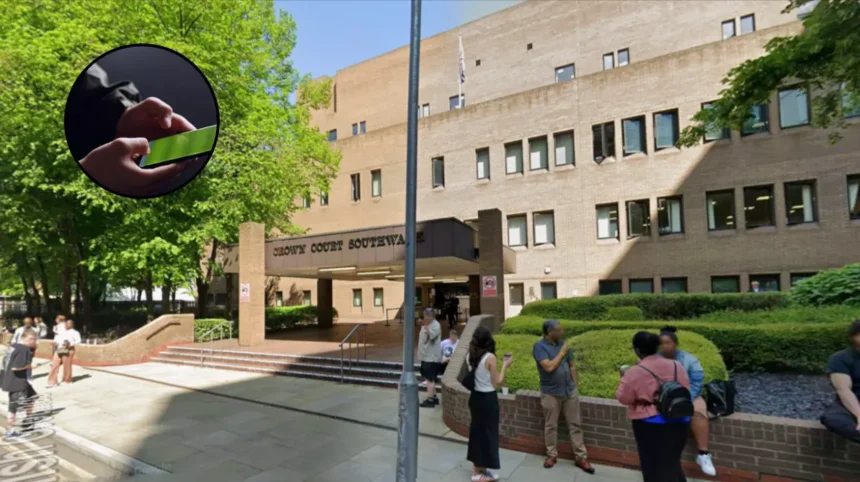
Southwark, London (South London News) February 21, 2026 – Seven prominent social media influencers faced justice at Southwark Crown Court today for their roles in promoting an unauthorised foreign exchange (FX) trading scheme, marking a significant crackdown by the Financial Conduct Authority (FCA) on unauthorised financial promotions. Biggs Chris, Jamie Clayton, Lauren Goodger, Rebecca Gormley, Yazmin Oukhellou, Scott Timlin, and Eva Zapico all pleaded guilty to one count under Sections 21 and 25 of the Financial Services and Markets Act 2000, receiving fines, discharges, and substantial costs orders that underscore the regulator’s commitment to protecting vulnerable followers from risky investment schemes.
- Key Points
- Who Were the Seven Influencers Sentenced?
- What Was the Unauthorised FX Trading Scheme?
- Why Did the Influencers Plead Guilty?
- What Are the Legal Consequences Under the Financial Services and Markets Act 2000?
- How Did the FCA Respond to the Case?
- What Impact Did the Promotions Have on Followers?
- Why Is This Case Significant for Influencer Marketing?
- Who Is Steve Smart and What Is His Role at the FCA?
- What Should Influencers Do to Avoid Similar Penalties?
- Broader Context: FCA’s Crackdown on Financial Influencers
- Potential Follow-Up Actions by the Court or FCA?
The case highlights the growing scrutiny on influencers who leverage their online platforms to endorse financial products without proper authorisation, potentially exposing thousands of followers to significant financial harm. Court proceedings revealed the influencers’ promotions drove engagement with the illicit FX scheme, breaching strict UK regulations designed to safeguard retail investors.
Who Were the Seven Influencers Sentenced?
The individuals sentenced represent a cross-section of reality television stars and social media personalities with large followings, particularly among younger demographics keen on quick wealth-building opportunities.
Lauren Goodger, known from her time on The Only Way Is Essex, received the heaviest fine of £3,750 alongside costs of £5,778.18, reflecting perhaps the scale of her promotional activity. Biggs Chris, another TOWIE alumnus, was fined £600 and ordered to pay £1,000 in costs. Jamie Clayton, also linked to reality TV circles, faced a fine of £820 plus £1,000 costs.
Rebecca Gormley, a former Geordie Shore cast member, was granted a conditional discharge—meaning no immediate penalty but under supervision for a set period—paired with £2,866.42 costs. Yazmin Oukhellou, associated with TOWIE, was fined £974 and £1,000 costs. Scott Timlin, from Geordie Shore, incurred a £938 fine and £1,000 costs. Eva Zapico, another reality TV figure, benefited from an absolute discharge—no further action unless reoffending—plus £1,770.44 costs.
These outcomes were handed down after all seven entered guilty pleas, sparing the court a full trial but not evading accountability for their actions.
What Was the Unauthorised FX Trading Scheme?
The promotions centred on an unauthorised foreign exchange (FX) trading scheme, a type of investment product involving high-risk currency trading often marketed with promises of substantial returns. Such schemes thrive on social media, where influencers post endorsements, testimonials, or links directing followers to sign up.
Under UK law, issuing unauthorised financial promotions—advertising or recommending investments without FCA approval—is a criminal offence. The influencers’ content, shared across platforms like Instagram and TikTok, funneled followers towards this scheme, which lacked the necessary regulatory oversight to ensure investor protection.
The FCA has long warned about FX trading scams, noting their volatility and the prevalence of Ponzi-like structures disguised as legitimate opportunities. This case exemplifies how celebrity endorsements can amplify such risks, preying on trust built through personal branding.
Why Did the Influencers Plead Guilty?
All seven—Biggs Chris, Jamie Clayton, Lauren Goodger, Rebecca Gormley, Yazmin Oukhellou, Scott Timlin, and Eva Zapico—opted to plead guilty to the single count, a decision likely influenced by the strength of prosecutorial evidence and the prospect of mitigated sentences.
Guilty pleas typically lead to reduced penalties, as seen in the range of fines from £600 to £3,750 and the discharges for Gormley and Zapico. This approach avoided prolonged legal battles, allowing the court to focus on deterrence rather than exhaustive fact-finding.
The pleas also signal an acknowledgement of the breach’s seriousness, amid mounting public and regulatory pressure on influencers to verify promotions before posting.
What Are the Legal Consequences Under the Financial Services and Markets Act 2000?
Communicating unauthorised financial promotions constitutes an offence under Sections 21 and 25 of the Financial Services and Markets Act 2000 (FSMA). Section 21 prohibits unauthorised persons from promoting financial products, while Section 25 criminalises the act itself, with penalties including unlimited fines and/or up to two years’ imprisonment upon conviction.
In this instance, the court imposed financial penalties rather than custody, aligning with sentencing guidelines for first-time offenders who cooperate. The costs orders—totaling over £15,000 across the group—cover FCA investigation and prosecution expenses, a standard practice to recover public funds.
This framework empowers the FCA to pursue both civil and criminal actions, reinforcing the UK’s robust financial regulatory environment.
How Did the FCA Respond to the Case?
Steve Smart, executive director of enforcement and market oversight at the FCA, issued a stern rebuke following the sentencing. As reported across multiple outlets covering the case, Smart stated:
“These influencers betrayed the trust of those who followed them. We’ll continue to work with responsible influencers and go after those who put the financial wellbeing of their followers at risk.”
Smart’s comments emphasise the FCA’s dual strategy: partnering with ethical influencers while aggressively targeting recklessness. The regulator has ramped up monitoring of social media since 2023, issuing guidance like the 2022 ban on crypto promotions for retail investors.
This prosecution forms part of broader FCA enforcement, with over 100 alerts on unauthorised firms in 2025 alone.
What Impact Did the Promotions Have on Followers?
While specific victim testimonies were not detailed in court summaries, the FCA has repeatedly highlighted how influencer-backed schemes lead to substantial losses. Followers, often inexperienced in FX trading, may invest savings chasing hyped returns, only to face leveraged losses or outright fraud.
The betrayal of trust noted by Smart underscores the psychological leverage influencers wield—personal stories and lifestyles make endorsements feel authentic. Vulnerable groups, including young adults and those seeking financial independence, are particularly at risk.
Post-sentencing, the FCA urged followers to verify promotions via its Warning List and Financial Services Register.
Why Is This Case Significant for Influencer Marketing?
This sentencing at Southwark Crown Court sets a precedent in the UK’s battle against unauthorised promotions in the influencer economy, now valued at billions. It signals that fame offers no shield from financial regulations, potentially chilling risky endorsements.
Reality TV stars like Goodger, Oukhellou, Timlin, and others from TOWIE and Geordie Shore dominate social media, with combined followings in the millions. Their convictions could prompt platforms to enhance ad transparency and regulators to mandate disclosures.
Legal experts anticipate increased FCA actions, with civil penalties possible for non-criminal breaches.
Who Is Steve Smart and What Is His Role at the FCA?
Steve Smart leads enforcement and market oversight at the FCA, overseeing investigations into misconduct across retail and wholesale markets. His statement post-sentencing reinforces the agency’s proactive stance.
Under Smart’s purview, the FCA has pursued high-profile cases, from crypto scams to mis-selling, prioritising consumer protection in digital spaces.
What Should Influencers Do to Avoid Similar Penalties?
Influencers must ensure promotions are FCA-authorised, typically via partnerships with regulated firms. The FCA’s “Influencer Guidance” advises checking the Financial Services Register and avoiding unsolicited investment advice.
Failure invites scrutiny, as seen here. Responsible practice includes clear disclaimers and due diligence.
Broader Context: FCA’s Crackdown on Financial Influencers
The FCA has escalated efforts since 2023, fining firms and individuals for unauthorised ads. This case joins others, like the 2025 prosecution of crypto promoters, amid rising complaints—over 10,000 scam reports yearly.
Collaboration with platforms like Instagram aids detection, with algorithms flagging suspicious content.
Potential Follow-Up Actions by the Court or FCA?
While sentencing concludes this chapter, appeals remain possible, though unlikely given guilty pleas. The FCA may pursue asset recovery if losses are quantified and issue sector-wide bans.
Public education campaigns will likely intensify, targeting Gen Z investors.