Key Points
- The United Kingdom government has performed an official U-turn by allowing pubs and bars across England and Wales to remain open until 5:00 am on Monday, 6 July 2026, for England’s FIFA World Cup Round of 16 match against Mexico.
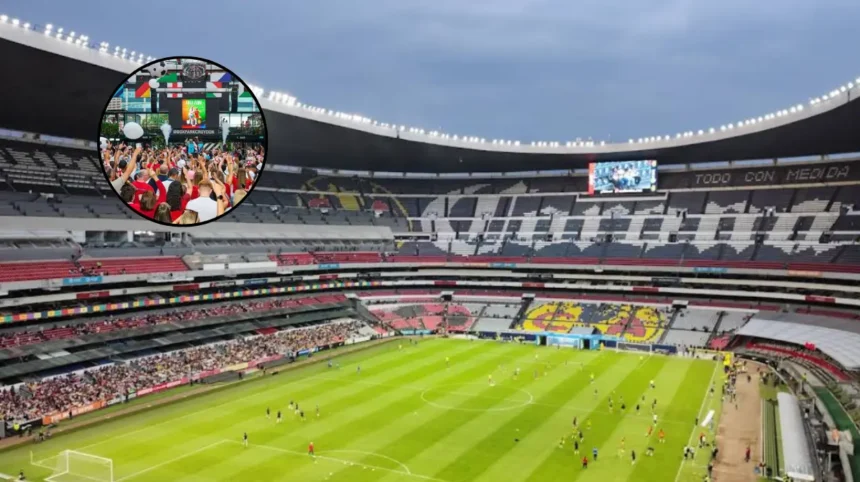
- The match is scheduled to kick off at 1:00 am British Summer Time (BST) on Sunday night / Monday morning, originating from the Azteca Stadium in Mexico City.
- Prime Minister Sir Keir Starmer announced the blanket extension via a statutory instrument, removing the bureaucratic red tape that required individual venues to apply for Temporary Event Notices (TENs) five working days in advance.
- Industry bodies, including the British Beer and Pub Association (BBPA), UKHospitality, and the Night Time Industries Association (NTIA), have strongly welcomed the decision, predicting a substantial financial boost to a struggling hospitality sector.
- Public safety organisations and employer federations have issued warnings regarding the potential risks of overnight drinking, driver fatigue, and widespread workplace absenteeism or low productivity on Monday morning.
Southwark (South London News) July 3, 2026 — Football fans across the London Borough of Southwark are preparing for an unprecedented all-night screening experience following an emergency licensing law relaxation enacted by the government. The high-stakes FIFA World Cup Round of 16 encounter between England and tournament co-hosts Mexico, which kicks off at 1:00 am BST on Monday morning, threatened to leave thousands of supporters stranded mid-match due to restrictive operating hours. However, a midnight-oil policy reversal from Downing Street will now allow licensed premises to keep their taps running and screens active until 5:00 am, ensuring fans can watch the entire fixture—including potential extra time and penalty shootouts—without facing early closure.
- Key Points
- Which Southwark venues are confirmed to open late for the match?
- What did the Prime Minister say about the 5:00 am licensing extension?
- How did the government shift from its initial refusal to a full U-turn?
- What is the financial and operational reaction from the hospitality industry?
- What public safety and health warnings have been issued?
- How are corporate employers responding to potential Monday absenteeism?
- Background of the particular development
- Prediction
Which Southwark venues are confirmed to open late for the match?
Gabriel Stewart reports on the top locations across the borough where fans can take advantage of the 5:00 am extension. In the heart of London Bridge, major sports bars and traditional public houses are adjusting their operational rotas to accommodate the late-night influx. Establishments around Borough Market, Elephant and Castle, Bermondsey, and Peckham are preparing large-screen displays.
Venues such as Belushi’s London Bridge, the Greenwood near London Bridge station, and local independent establishments across Dulwich and Camberwell are finalizing security and staffing structures to handle the 1:00 am crowds.
As reported by Gabriel Stewart of South London News, individual venue capacities are expected to be stretched to their absolute limits, making advance booking essential for those planning to stay up through the early hours.
What did the Prime Minister say about the 5:00 am licensing extension?
The policy change represents a direct intervention from the highest levels of government. As reported by the Prime Minister’s Office on GOV.UK, Sir Keir Starmer stated:
“Football might be coming home but we’re making sure fans don’t have to. Pubs staying open till the final whistle is good news for supporters and good news for the pubs and venues that bring our communities together. The whole country will be backing the team. Come on England!”
The Prime Minister’s announcement followed a period of intense political pressure from backbench MPs, local authorities, and hospitality trade leaders who argued that forcing fans onto the streets at 2:00 am in the middle of a major international knockout match would create significant public order and safety challenges.
How did the government shift from its initial refusal to a full U-turn?
The road to the 5:00 am extension was marked by sharp administrative division within the government. As reported by political correspondents for The Guardian, business minister Kate Dearden had initially insisted on Thursday morning that the government would “unfortunately” not relax the standard licensing rules to cover the late-night encounter for publicans who had failed to apply for temporary permits in time.
Dearden noted that while normal extensions allowed adjustments for matches starting earlier in the evening, the 1:00 am start fell outside the pre-approved scope.
This initial refusal triggered immediate pushback from municipal leaders. As reported by The Guardian, a spokesperson for the Mayor of London, Sadiq Khan, stated that the mayor was actively
“urging local authorities in the capital to work closely with the hospitality industry to allow pubs to stay open into the early hours of Monday morning, so that Londoners can back our pubs and cheer on England.”
Following this intervention and complaints from backbench MPs who called the initial stance “hopeless,” Sir Keir Starmer reversed the decision on Thursday afternoon, instructing the Home Secretary to utilise legislative powers reserved for occasions of
“exceptional international, national or local significance.”
What is the financial and operational reaction from the hospitality industry?
The sudden regulatory relaxation has been met with widespread acclaim from hospitality representatives, alongside a degree of frustration regarding the timeline.
As reported by the financial editorial team of the Financial Times, Emma McClarkin, chief executive of the British Beer and Pub Association (BBPA), stated:
“Pubs and fans will be over the moon about this decision, because we all know the best place to watch the match is down the local. This tournament is massively important for our sector, and so far we’ve poured approximately 10mn extra pints off the back of the England and Scotland games, which is a £50mn boost for pubs.”
Similarly, as reported by industry trade journals via Mirage News, Michael Kill, chief executive of the Night Time Industries Association (NTIA), declared that the move was
“fantastic news and will be hugely welcomed by operators,”
adding that
“this pragmatic approach allows venues to focus on what matters most—bringing communities together to support the national team.”
Kate Nicholls, chair of UKHospitality, also endorsed the decision, noting that the announcement allows millions of fans to safely gather and cheer on the national squad.
However, some independent operators noted the logistical strain caused by the late notice. Dom Jacobs, managing director of the Ardent Pub Group, told the Financial Times that there was “kind of an annoyance” because he had already spent time and resources applying for individual Temporary Event Notices for his venues. Jacobs noted,
“I don’t know why they couldn’t have planned that beforehand… But we obviously welcome any form of support.”
What public safety and health warnings have been issued?
While football fans and business owners celebrate the extension, safety organisations are urging caution regarding overnight alcohol consumption and lack of sleep. As reported by the BBC, public health officials and motoring groups have raised concerns about the physical toll of an all-night sporting event.
Rod Dennis, a spokesperson for the automotive services company RAC, stated that a combination of overnight fatigue, dehydration from summer weather, and alcohol could lead to hazardous conditions on the roads on Monday morning. As reported by the BBC, Dennis stated:
“Tiredness, dehydration and alcohol can be a lethal combination behind the wheel,”
and strongly advised fans against driving anywhere on Monday morning until they are completely rested and sober.
How are corporate employers responding to potential Monday absenteeism?
The prospect of millions of workers watching a football match until 3:30 am or 4:00 am on a workday has forced major employers to review their operational policies.
As reported by employment experts for the Financial Times, a wide divergence in corporate flexibility has emerged.
Steve Fine, chief executive of the investment bank Peel Hunt, stated to the Financial Times that he would allow his staff to come into the office late or work from home on Monday, provided they obtained line manager approval. Fine noted that working from home would provide a
“big benefit to our traders—they can wake up to be ready for 7am announcements rather than getting in early, especially if it goes to penalties.”
In contrast, other major institutions are maintaining strict attendance policies. Representatives for the supermarket chain Sainsbury’s stated that their corporate office staff would be expected to report for duty as normal, out of respect for their frontline shop workers who must open stores on regular schedules. The National Westminster Bank (NatWest) similarly confirmed that its standard working location and hours arrangements would remain in force.
The Chartered Institute of Personnel and Development (CIPD) issued guidance stating that while businesses are under no legal obligation to alter shifts, proactive communication regarding expectations is essential to mitigate the risk of employees unexpectedly calling in sick.
Background of the particular development
The emergency legislative intervention to extend pub opening hours across England and Wales is rooted in the statutory framework of the Licensing Act 2003. Under Section 172 of the Act, the Home Secretary possesses the explicit authority to order a blanket relaxation of licensing hours for specific periods if the occasion is deemed to be of
“exceptional international, national or local significance.”
This power has historically been deployed sparingly, typically reserved for major constitutional events such as Royal Weddings, the Diamond and Platinum Jubilees of Queen Elizabeth II, the Coronation of King Charles III, or the final stages of major international football tournaments, such as the UEFA European Championship finals.
The current conflict arose due to the unique geographical and temporal logistics of the 2026 FIFA World Cup, which is being co-hosted across North America by the United States, Mexico, and Canada. Because matches are being played across multiple North American time zones, kick-off times for UK viewers vary wildly from standard broadcasting slots.
Prior to the Round of 16 stage, the government had already instituted a baseline relaxation model for the tournament: pubs were permitted to remain open until 1:00 am for games kicking off between 5:00 pm and 9:00 pm, and until 2:00 am for games starting after 9:00 pm.
However, England’s progression to the knockout phase—secured via a 2-1 victory over the Democratic Republic of Congo following two late goals by captain Harry Kane—matched the team against regional heavyweights Mexico at the historic Azteca Stadium in Mexico City.
Because the match is scheduled for a local evening slot in Mexico, the resulting time difference pushes the UK broadcast into a 1:00 am BST start on a Monday morning. Under the prior emergency framework, venues would have been forced to close their doors at 2:00 am—precisely at half-time.
This legislative mismatch prompted the sudden political lobbying campaign from municipal leaders, the hospitality sector, and the public, culminating in the Prime Minister ordering a full statutory extension until 5:00 am to prevent structural and public order disruptions across the night-time economy.
Prediction
The implementation of the 5:00 am licensing extension is expected to have an immediate and measurable impact on Southwark’s local night-time economy, its emergency services, and the broader professional community on Monday morning.
For the hospitality industry within Southwark, the extension will convert a traditionally quiet Sunday night into one of the highest-grossing trading sessions of the summer quarter. V
enues around high-density transit and entertainment hubs like London Bridge, Bermondsey, and Peckham will experience a significant revenue surge, driven by late-night beverage sales and food orders lasting deep into the early hours of Monday morning. This targeted economic injection will help offset ongoing operational pressures within the local food and beverage sector.
Conversely, the development will place an acute operational strain on Southwark’s public infrastructure and corporate ecosystems.
Local transport networks, including night bus routes and regional taxi services, will face unprecedented demand between 3:30 am and 5:00 am as thousands of fans leave venues simultaneously.
Emergency service providers, including the Metropolitan Police and the London Ambulance Service, will likely reallocate resources to monitor major commercial thoroughfares to manage public order and safety risks associated with sustained, overnight alcohol consumption.
For the local corporate and professional audience, Monday morning is highly likely to see a substantial drop in workplace productivity and a spike in short-term absenteeism.
With data from consumer research indicators showing that up to 80% of London-based football fans intend to watch the match live, businesses throughout Southwark—ranging from corporate offices in the More London development to local retail operations—will have to contend with a fatigued workforce.
Companies that do not offer flexible start times or remote working options can anticipate operational disruptions, as a significant portion of their staff navigates the logistical aftermath of an all-night sporting event.