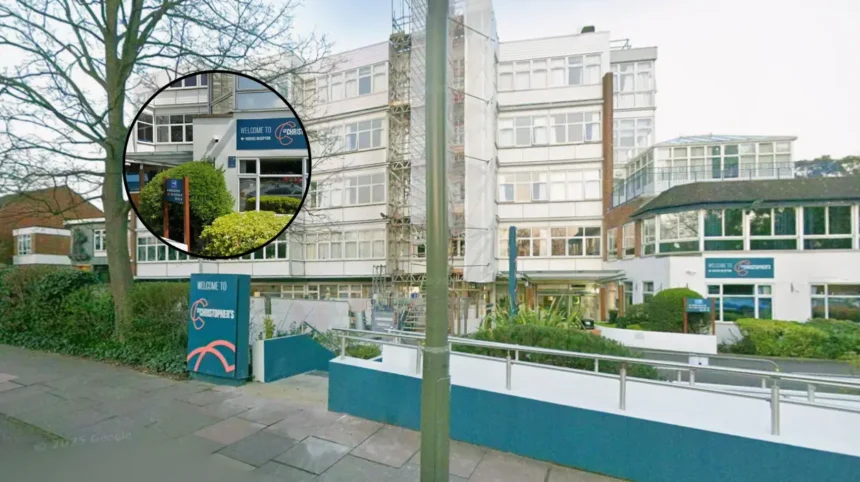
Key Points
- Highest Rating Retained: St Christopher’s Hospice in Sydenham, South London, has maintained its overall rating of “Outstanding” following an unannounced regulatory inspection.
- Trigger for Inspection: The Care Quality Commission (CQC) carried out the unannounced visit on June 24 after receiving specific safeguarding notifications that raised concerns regarding patient safety.
- Official Findings Published: A formal report published by the CQC on August 19 confirmed that the hospice met the necessary high standards, maintaining its top-tier status, though specific details regarding the initial safeguarding alerts were omitted.
- Scope of Review: Regulators examined four clinical case files, scrutinised recruitment records and safeguarding logs, and held detailed interviews with 20 members of staff.
- Commendation for Open Culture: Inspectors praised the facility for maintaining an “open culture” where staff felt empowered to raise concerns without fear of blame, retaliation, or victimisation.
- Strategic Priorities: The hospice established a three-year safeguarding strategy encompassing six key pillars: safe people, confident workforce, learning and improvement, equity and person-centred safeguarding, partnership working, and governance and assurance.
- Identified Area for Improvement: Regulators highlighted a deficiency in patient welcome packs, noting that the materials failed to explain how patients or families could directly identify and report safeguarding concerns.
South London (South London News) August 28, 2026 – As reported by Ruby Gregory of MyLondon, the Care Quality Commission (CQC) carried out an unannounced inspection of St Christopher’s Hospice in Sydenham on June 24 after receiving “safeguarding notifications” that raised concerns regarding care standards. The unannounced visit was prompted directly by these external alerts, forcing regulators to inspect the healthcare facility without prior notice to verify patient safety practices.
- What did the Care Quality Commission find during their site visit?
- How did hospice leadership and staff react to the regulatory report?
- What long-term safeguarding strategy has the hospice established?
- What operational improvements did the CQC instruct the hospice to make?
- Background of the Particular Development
- Prediction: How This Development Can Affect Patients, Families, and the Healthcare Sector
Despite the initial concerns that triggered the regulatory visit, a comprehensive report released by the CQC on August 19 confirmed that the healthcare provider has successfully retained its overall “Outstanding” rating—the highest evaluation obtainable under the UK health regulator’s framework. The published document did not outline the specific details or nature of the original safeguarding notifications that led to the unannounced site visit.
What did the Care Quality Commission find during their site visit?
According to reporting by Ruby Gregory of MyLondon, officials from the Care Quality Commission evaluated multiple aspects of operational safety, focusing heavily on clinical practices, staff awareness, and institutional protocols. During the unannounced review, regulators examined four complete sets of patient clinical records, reviewed internal recruitment documentation, and scrutinized historic safeguarding incident logs.
In addition to documentation reviews, CQC inspectors conducted structured interviews with 20 members of staff across various departments. The final regulatory report noted that the evidence demonstrated a “good standard” of care, adding that the hospice worked closely with patients and external healthcare partners to establish what being safe meant to individuals and how best to deliver that protection.
Staff members interviewed by inspectors demonstrated a clear understanding of how to identify individuals at risk of, or currently suffering from, significant harm or abuse. Furthermore, workers provided concrete examples of protocols used to protect vulnerable patients from harassment and discrimination, including specific measures tailored for individuals with protected characteristics under the Equality Act.
How did hospice leadership and staff react to the regulatory report?
As reported by Ruby Gregory of MyLondon, Amanda Mayo, Care Director at St Christopher’s, expressed immense pride in the institutional outcome following the rigorous review process. Mayo stated:
“We are incredibly proud to have retained our Outstanding CQC rating following an inspection that focussed on safeguarding practices, which reflects the dedication, expertise and compassion our teams bring to their work every day.”
Mayo further noted that the positive conclusions reached by the regulatory body served as a direct reflection of the workforce’s daily standards, adding:
“This feedback is a testament to the commitment of everyone across St Christopher’s to delivering exceptional care and support for the people and communities we serve.”
Inspectors specifically commended the internal working environment, highlighting an “open culture” within the Sydenham facility. Employees informed the CQC that they felt confident raising operational concerns or logging potential safety incidents without experiencing fear of blame, victimisation, or professional retaliation.
What long-term safeguarding strategy has the hospice established?
According to details outlined by Ruby Gregory of MyLondon, St Christopher’s Hospice has published a formal three-year safeguarding strategy designed to structure safety priorities across the entire organisation. The CQC noted that this strategic framework ensures patients, family members, staff, volunteers, and visitors remain protected, respected, and heard.
The organizational plan outlines six fundamental strategic priorities:
- Safe people
- Confident workforce
- Learning and improvement
- Equity and person-centred safeguarding
- Partnership working
- Governance and assurance
To ensure these objectives are met, the healthcare facility implemented clear assurance mechanisms. These include ongoing reviews of safeguarding activity and recurring themes, training compliance checks, clinical audits, evidence tracking for structural improvements, and regular feedback collection from patients, families, and carers.
What operational improvements did the CQC instruct the hospice to make?
As reported by Ruby Gregory of MyLondon, while the hospice retained its overall top rating, inspectors identified a specific gap in how information was communicated to incoming patients and their families. Upon admission to the in-patient unit, individuals receive formal welcome packs containing general guidance about hospice services and an email address dedicated to patient feedback.
However, CQC inspectors pointed out that these welcome packs failed to include explicit instructions on how patients or their relatives could raise formal safeguarding concerns. Inspectors stated:
“We did not see this information displayed anywhere else in the hospice. It was unclear how the service supported people to understand safeguarding and personal safety, or how it empowered them to recognise and report concerns for themselves or others.”
The hospice is expected to address this communication deficiency by updating its literature and physical signage to clearly inform patients of their rights and reporting pathways.
Background of the Particular Development
The Care Quality Commission operates as the independent regulator of health and social care services throughout England. Under its regulatory framework, providers are monitored continuously through public feedback, whistleblowing reports, and statutory notifications sent by local authorities and healthcare partners. When a notification raises potential safeguarding issues, the CQC retains the authority to execute unannounced inspections, bypassing routine review schedules to inspect a facility immediately.
St Christopher’s Hospice, situated in Sydenham, South London, holds a historic position within modern healthcare as a pioneer of the contemporary hospice movement. Founded in 1967 by Dame Cicely Saunders, the facility provides specialized palliative care, end-of-life support, and complex symptom management both in its residential unit and across the local community. Given its status as a flagship palliative institution, its CQC inspection ratings serve as a key benchmark for end-of-life care standards across the National Health Service (NHS) and independent hospice sectors.
Maintaining an “Outstanding” rating requires a provider to demonstrate exceptional practices across key domains, including safety, effectiveness, caring, responsiveness, and leadership. An unannounced inspection triggered by safeguarding alerts carries significant institutional risk; an adverse finding can result in formal warning notices, mandatory enforcement actions, or an immediate rating downgrade.
Prediction: How This Development Can Affect Patients, Families, and the Healthcare Sector
The retention of St Christopher’s Hospice’s “Outstanding” rating following an unannounced safeguarding review carries significant implications for multiple stakeholders across the healthcare ecosystem.
Reassurance for Patients and Families
For current patients and their families, the CQC’s findings offer strong validation during a highly vulnerable period. Safeguarding concerns in palliative care settings can severely erode public trust. The independent confirmation that staff possess strong safeguarding awareness, clear reporting channels, and an open institutional culture ensures that families can continue placing trust in the facility’s inpatient and community services.
Impact on Clinical Staff and Institutional Culture
The outcome reinforces an “open culture” within the workforce. When healthcare staff see that raising safety concerns leads to constructive regulatory validation rather than punitive institutional measures, it reinforces transparent reporting practices. This encourages employees to continue logging incidents early, reducing systemic risk over the long term.
Administrative Action on Patient Empowerment
The CQC’s criticism regarding the lack of clear safeguarding information in welcome packs will force an immediate operational update. St Christopher’s Hospice will need to revamp its patient orientation materials, ensuring that physical signage and welcome packs contain clear, accessible instructions on how to spot and report safety issues. This change will directly empower patients and carers to act as active participants in their own safety.
Industry-Wide Regulatory Benchmarking
For the broader hospice and end-of-life care sector, this outcome illustrates the strict scrutiny regulators apply to safeguarding notifications, even for top-performing providers. Other palliative care facilities are likely to review their own safeguarding strategies and patient intake communications to ensure their reporting pathways match the rigorous criteria demanded by the CQC.