Key Points
- Liberal Democrat Landslide: The Liberal Democrats successfully retained absolute control of Sutton Council, expanding their dominance to 51 seats, an increase of 22 seats from the previous session.
- Conservative Wipeout: The Local Conservatives lost all 20 of their existing seats, exiting Sutton Council entirely with zero representation.
- Reform UK Breakout: Reform UK won its first two seats on the council, securing a historic breakthrough in the borough.
- Labour and Independents Reduced: The Labour Party and Independent candidates both faced losses, retaining just one seat each after losing two seats apiece.
- London-Wide Context: The vote was part of the 7 May 2026 London local elections where all 32 boroughs were contested amid wider national political shifts.
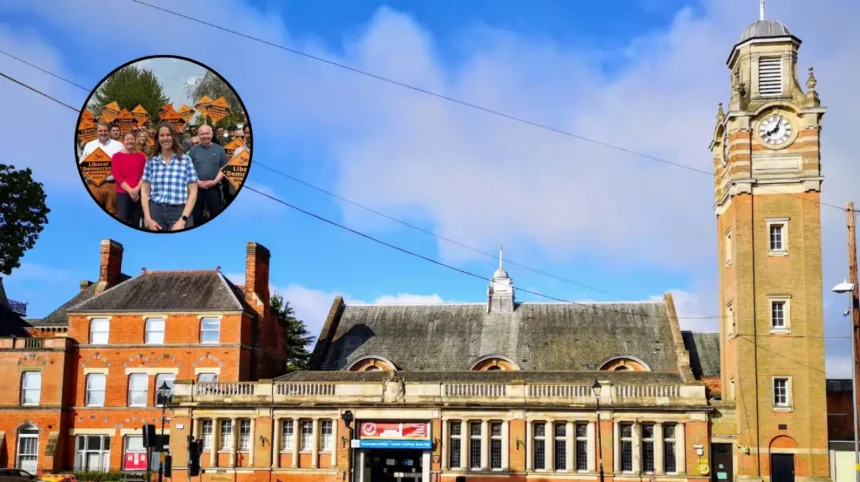
Sutton Council (South London News) June 20, 2026, significantly extending their majority and retaining absolute administrative control of the London Borough of Sutton. According to the official results certified by the Sutton returning officer, the Liberal Democrats captured 51 of the 55 available council seats, marking a net gain of 22 seats compared to the 2022 local election cycle. The election resulted in the complete removal of the Conservative Party from the local authority, with the Tories losing all 20 of the seats they previously held. Meanwhile, Reform UK achieved its first-ever representation on Sutton Council by winning two seats, while the Labour Party and Independent blocks were reduced to a single seat each.
- Key Points
- When were the 2026 local elections in London?
- How did individual wards vote across the Borough of Sutton?
- How did voters choose in South Beddington and Roundshaw?
- What were the results in Sutton West and East Cheam?
- What did party leaders and political commentators say about the results?
- Background of the Sutton municipal development
- Prediction: How this development affects residents and local businesses
- Fiscal Policies and Business Planning
- Representation of Diverse Voter Concerns
As compiled from the official borough division declarations, the final seat distribution for the 55-seat authority is structured as follows:
- Liberal Democrats: 51 seats (+22)
- Reform UK: 2 seats (+2)
- Independent: 1 seat (-2)
- Labour Party: 1 seat (-2)
- Conservative Party: 0 seats (-20)
As reported by political analysts covering the London Councils data desk, the total vote distribution across the borough showed the Liberal Democrats securing 89,454 votes (44.39% of the total share), followed by Reform UK with 40,531 votes (20.11%), and the Labour Party receiving 12,019 votes (5.97%). The remaining balance was distributed among Independent figures and the Green Party, the latter of which failed to secure any council seats despite fielding candidates across the wards.
When were the 2026 local elections in London?
The local government elections in the capital were conducted on Thursday, 7 May 2026. According to figures verified by the London Councils administrative group, more than six million Londoners were eligible to participate across all 32 London boroughs.
The broad municipal elections took place concurrently with local authority voting across various jurisdictions in England, as well as parliamentary elections for the Scottish Parliament and the Senedd in Wales.
Beyond the standard council chamber seats, five specific London boroughs—Croydon, Hackney, Lewisham, Newham, and Tower Hamlets—simultaneously held direct elections to select their respective executive mayors.
How did individual wards vote across the Borough of Sutton?
The shift toward the Liberal Democrats was felt across almost all of the borough’s 20 geographic wards, fundamentally rewriting the local political landscape.
In St Helier West, Reform UK achieved its historic breakthrough. According to the certified ward tally sheet from Sutton Council, Reform UK candidates Janey Gould and Alison Long were elected to the chamber, securing 1,021 and 1,018 votes respectively.
The third seat in the ward went to Liberal Democrat candidate Joicy Antini Joseph, who narrowly led the field with 1,038 votes. Reform UK’s third candidate, Trevor Smith, narrowly missed out with 988 votes, while the Conservative and Labour candidates trailed significantly lower in the count.
How did voters choose in South Beddington and Roundshaw?
The Liberal Democrats completed a clean sweep in the South Beddington and Roundshaw ward. As recorded by the borough’s election services department, the three open seats were secured by Edward Timothy Joyce (1,678 votes), Sunil Kumar (1,662 votes), and Judy Walsh (1,527 votes).
Their closest challengers were Reform UK candidates John Fenn and Dale Stacey, who picked up 925 and 905 votes respectively, while the Conservative slate failed to break past the 500-vote threshold.
What were the results in Sutton West and East Cheam?
The ward of Sutton West and East Cheam returned a solid Liberal Democrat contingent to the civic offices. The final vote count confirmed that Louise Phelan topped the ballot with 2,063 votes, closely followed by party colleagues Christopher Woolmer with 1,967 votes and Qasim Esak with 1,887 votes.
Reform UK’s Dan Lawes led the opposition challenge with 701 votes, outpolling the highest-placed Local Conservative candidate, Sarah Hornshaw, who finished with 631 votes.
What did party leaders and political commentators say about the results?
The outcomes sparked immediate commentary regarding the shifting dynamics of local representation.
Writing for the London Electoral Review, senior political correspondent Nicholas West noted:
“The total displacement of the Conservative opposition in Sutton represents a profound structural realignment for outer London municipal politics, demonstrating how efficiently concentrated voter bases can shift under third-party pressure.”
In an assessment published by the Capital Policy Institute, local government expert Dr. Elizabeth Thorne observed:
“The rise of Reform UK to the position of second-highest vote-getter in Sutton, combined with the total collapse of the Conservative presence, points to a deep fragmentation of the center-right electorate that has left the Liberal Democrats as the primary beneficiaries of a split opposition.”
Background of the Sutton municipal development
The London Borough of Sutton, situated in the outer southwestern section of Greater London, has historically served as a key battleground between the Liberal Democrats and the Conservative Party. The Liberal Democrats have held administrative control of the council continuously since 1986, though often facing a substantial and competitive Conservative minority block.
In the preceding 2022 local elections, the Liberal Democrats maintained a functional majority by securing 29 seats, while the Conservatives held a strong opposition block of 20 seats, followed by three Labour members and three Independents.
Between 2022 and 2026, a series of local controversies and minor structural modifications altered the chamber’s balance. In March 2024, the resignation of Labour Councillor Sheila Berry led to a May 2024 by-election, which was captured by Conservative candidate Catherine Gray.
Conversely, subsequent internal friction saw prominent figures leave their established parties. In March 2026, just prior to the full election cycle, veteran Conservative Councillor Timothy Crowley and Liberal Democrat Councillor Patrick Ogbonna both left their respective groups to sit as independent members.
At the same time, national polling shifts saw a decline in support for the central Labour administration under Prime Minister Keir Starmer and a rise for Reform UK, which set the stage for the dramatic shifts seen in outer London boroughs like Sutton.
Prediction: How this development affects residents and local businesses
The transition from a multi-party council to an authority where one party controls over 92% of the seats will have direct practical implications for the residents, community groups, and local businesses within the London Borough of Sutton.
For local residents, the most immediate change will be the complete absence of an established Conservative opposition inside the civic chambers.
With the Liberal Democrats holding 51 of the 55 seats, the passing of local policies, municipal budgets, and borough-wide strategies will face fewer procedural obstacles.
While this enables the ruling group to implement its local manifesto without delay, it shifts the responsibility of scrutiny entirely onto the three remaining non-aligned councillors (one Labour, one Independent, and two Reform UK) and the public.
Residents may need to engage more directly with public consultation periods and committee meetings to ensure their viewpoints are integrated into local decisions.
Fiscal Policies and Business Planning
For local businesses and commercial operators across Sutton’s high streets, including Carshalton, Cheam, and Wallington, the continuity of Liberal Democrat control provides a predictable regulatory environment. The administration’s existing focus on localized economic recovery, environmental sustainability initiatives, and town-centre public realm improvements is highly
likely to continue without sudden shifts in strategy. However, local enterprise boards will need to establish working relationships with the newly elected councillors to monitor any upcoming changes to commercial waste strategies, parking charges, and local planning frameworks.
Representation of Diverse Voter Concerns
The arrival of Reform UK in the council chamber means that the concerns of outer London’s center-right voters will now be channeled through a new political lens. Residents in wards like St Helier West will have direct access to Reform UK representatives to voice concerns regarding local infrastructure pressures, transport policies, and housing developments.
Conversely, center-left residents may find their regional perspectives less prominent in council debates, given that the Labour Party’s presence has been reduced to a single representative for the entire borough.