Key Points
- Plans have emerged to build six new homes on agricultural land east of Suton Street in Sutton, near Wymondham.
- A formal bid has been submitted to Broadland District Council for approval of the development.
- The proposed site lies opposite an existing group of houses along Suton Street.
- The land is currently used for farming purposes.
- Proponents highlight the site’s connectivity to the public transport network.
- Approximately 25 dwellings in the surrounding area could benefit from public transport access.
- Residents currently walk a short distance along a straight road without dedicated pavement to reach transport links.
- The development aims to address local housing needs in the rural area.
Sutton, near Wymondham (South London News) January 26, 2026 – Plans to develop six new homes on farmland east of Suton Street in Sutton have been submitted to Broadland District Council, sparking interest in potential changes to the local rural landscape.
- Key Points
- What Are the Details of the Proposed Development?
- Where Exactly Is the Land Located?
- Why Is Public Transport Connectivity Highlighted?
- Who Has Submitted the Plans to Broadland District Council?
- What Does the Current Site Look Like?
- How Might This Affect Local Residents?
- What Is the Planning Process for Such Bids?
- Why Build on Farmland Near Wymondham?
- Are There Similar Developments Nearby?
- What Challenges Does the Lack of Pavement Pose?
- How Does This Fit Broader Norfolk Housing Plans?
- What Happens Next in the Approval Process?
- Who Benefits from the Public Transport Links?
- Could Environmental Concerns Arise?
The proposal targets agricultural land directly opposite an existing cluster of houses along the road, as detailed in the planning application. Supporters argue that the location offers strong public transport links, benefiting nearby residents. This move comes amid ongoing discussions about housing expansion in Norfolk’s countryside areas.
What Are the Details of the Proposed Development?
The plans specify the construction of six new homes on the designated farmland site. As outlined in the submission to Broadland District Council, the development would transform the agricultural plot into residential space. The site’s positioning east of Suton Street places it in close proximity to established housing, potentially integrating seamlessly with the local community.
The planning documents emphasise practical benefits for future occupants. “The site is well connected to the public transport network,” states the application, highlighting accessibility as a key advantage. This connectivity is seen as a solution to transport challenges in the area.
Where Exactly Is the Land Located?
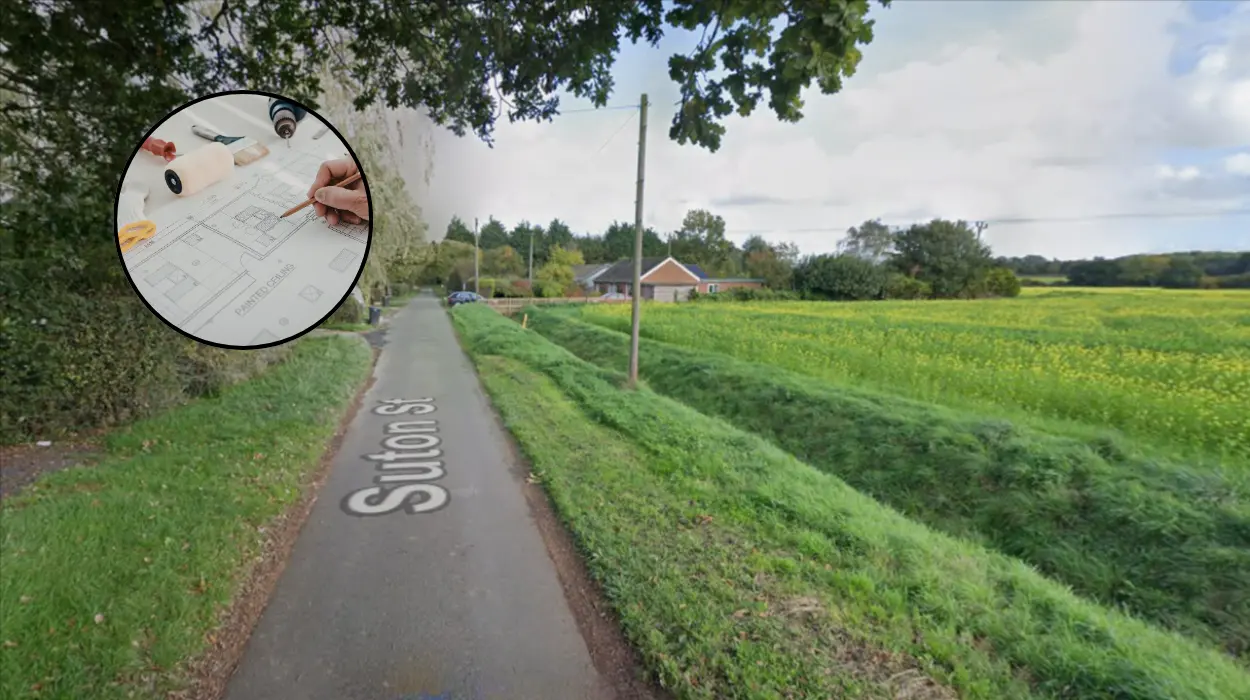
The farmland lies east of Suton Street in the village of Sutton, just outside Wymondham in Norfolk. This rural spot is characterised by its agricultural use and scattered residential properties. Opposite the proposed site stands another group of houses along the same road, providing a glimpse of the mixed land use in the vicinity.
Sutton itself is a small parish near the larger town of Wymondham, known for its historic charm and proximity to Norwich. The location balances countryside appeal with accessibility to urban amenities. No specific boundaries or exact acreage were detailed beyond the eastern edge of Suton Street, but the focus remains on its opposition to existing dwellings.
Why Is Public Transport Connectivity Highlighted?
A core argument in the plans revolves around improved access to public services. The application notes that around 25 dwellings in the area already rely on the public transport network but require residents to walk a short distance along a straight road without dedicated pavement. This setup, while functional, lacks formal infrastructure like footpaths.
By developing the site, planners suggest the new homes would enhance utilisation of these links. “There are around 25 dwellings in this area all which can benefit from the public transport,” the plans state, implying broader community gains. Such emphasis addresses common rural concerns over isolation and mobility.
Who Has Submitted the Plans to Broadland District Council?
The bid has been formally lodged with Broadland District Council, the local planning authority overseeing such applications in the region. No individual applicant or developer was named in the initial reports, but the council will review the submission as standard procedure. Public consultation typically follows for proposals of this scale.
Broadland District Council handles numerous housing bids annually, balancing growth with preservation of green spaces. This application fits into wider Norfolk efforts to meet housing targets without urban sprawl. Residents and stakeholders can expect notifications if consultations proceed.
What Does the Current Site Look Like?
Currently, the land serves agricultural purposes, typical of Sutton’s farmland landscape. It sits opposite houses on Suton Street, creating a direct visual and spatial contrast between fields and homes. The straight road linking these areas lacks pavements, as noted, which shapes daily life for locals.
This setup reflects broader rural Norfolk, where farming dominates but housing pressures mount. The absence of dedicated walkways underscores infrastructure gaps often cited in countryside developments. Visualising the site involves open fields backing onto roadside properties, a common sight near Wymondham.
How Might This Affect Local Residents?
Local residents could see both opportunities and concerns from the six-home project. On one hand, added housing might support community vitality in Sutton. On the other, the loss of farmland raises questions about preserving rural character.
The plans’ transport focus suggests minimal disruption, given the short walking distances involved. However, without pavement, any increase in foot traffic could heighten safety issues along Suton Street. Broader impacts on wildlife, drainage, or traffic remain unaddressed in initial details.
What Is the Planning Process for Such Bids?
Broadland District Council follows standard protocols for residential applications on greenfield sites like this farmland. Submissions undergo validation, followed by public advertisement and consultation periods. Officers assess against local plans, national policy, and neighbour feedback.
For six homes, the process might span weeks to months, culminating in a decision by planning officers or committee. Appeals are possible if refused. This case aligns with policies promoting sustainable rural housing, per the council’s adopted strategy.
Why Build on Farmland Near Wymondham?
Norfolk faces housing shortages, driving bids on agricultural edges like Suton Street. Wymondham’s growth as a commuter hub amplifies demand, with Sutton offering affordable expansion sites. Proponents frame it as sustainable, leveraging existing transport without major new infrastructure.
Critics often argue farmland loss threatens food security and aesthetics. Yet, small-scale projects like six homes rarely trigger large-scale opposition unless environmental red flags arise. This proposal positions itself as a modest, connected infill development.
Are There Similar Developments Nearby?
Sutton and Wymondham have seen prior housing expansions, though specifics on Suton Street are limited. Norfolk’s planning records show steady approvals for rural homes, often opposite existing clusters. The 25 nearby dwellings indicate gradual densification along such roads.
Comparable bids in Broadland highlight transport as a frequent justifier. Past approvals suggest viability if pavement or access pledges materialise. No direct precedents on this exact plot emerged, but the area’s evolution supports the trend.
What Challenges Does the Lack of Pavement Pose?
The straight road without dedicated pavement presents pedestrian risks, especially for the 25 dwellings’ residents. Walking to transport involves roadside paths, potentially unsafe amid traffic. The plans imply new homes would share this, prompting calls for upgrades.
Infrastructure like pavements often becomes a planning condition. Councils may require developer contributions via Section 106 agreements. Addressing this could elevate the bid’s chances while benefiting all locals.
How Does This Fit Broader Norfolk Housing Plans?
Norfolk County Council targets thousands of new homes yearly, with Broadland contributing via its local plan. Small sites like Suton Street help meet quotas without overdeveloping towns. Sustainability criteria, including transport, are paramount.
Wymondham’s master plan emphasises balanced growth, protecting farmland where possible. This six-home bid tests boundaries, weighing connectivity against agricultural preservation. Success could inspire similar rural proposals.
What Happens Next in the Approval Process?
Broadland District Council will validate the bid shortly, posting details online for scrutiny. Neighbours receive notices, and a consultation window allows objections or support. Planning officers then recommend approval or refusal.
Public meetings occur for contentious cases, though six homes may proceed officer-delegated. Decisions consider material factors like transport and design. Applicants can amend plans pre-decision.
Who Benefits from the Public Transport Links?
The 25 existing dwellings stand to gain indirectly, per the application, through potentially bolstered services. New residents would access buses or trains without long treks. Rural Norfolk relies on such networks, making connectivity a planning plus.
Operators might see viability in higher ridership. Councils promote this to cut car dependency, aligning with net-zero goals. The short walk, sans pavement, remains the sticking point.
Could Environmental Concerns Arise?
Farmland development invites biodiversity and drainage queries, standard in Norfolk’s wet climate. Flood risk, soil quality, and habitats fall under scrutiny. The plans omit specifics, but ecology surveys are likely required.
Broadland mandates net gain in biodiversity. Small sites often comply via native planting or wildlife corridors. No red flags surfaced yet, but locals may raise them.