Key Points
- Escalating Repair Costs: St Helier Hospital spent £505,537 on temporary repairs in the first three months of 2026 alone, with annual maintenance expenditure soaring following a 73 per cent increase to £1.75 million in 2023, followed by £1.79 million in 2024 and £1.88 million in 2025.
- Massive Maintenance Backlog: The South London hospital currently faces an estimated £142.1 million maintenance backlog, ranking as one of the largest physical infrastructure deficits in the national healthcare system.
- Day-to-Day Upkeep: Figures obtained via Freedom of Information requests reveal that more than £7.9 million has been expended on routine property maintenance across the site since 2021.
- Rising Equipment and Material Expenses: The spike in expenditure was primarily driven by building and engineering equipment repairs, which jumped from £275,783 in 2022 to £729,576 in 2023, alongside a 50 per cent increase in basic building material costs to £362,338.
- Local Authority Warnings: Sutton Council officials have warned that the hospital is “literally falling to pieces” and have publicly called for an immediate end to the current “patch-and-mend” approach.
- Delays to New Facility: Despite an announced £57 million investment in Accident and Emergency (A&E) and urgent care services, construction of a replacement hospital in Sutton has been delayed until at least the 2030s, with total estimated costs rising from £500 million to between £1.5 billion and £2 billion.
- Clinical Disruptions: Ongoing structural decay has forced operational shifts, including plans announced to temporarily relocate the entire women’s health block away from the main building.
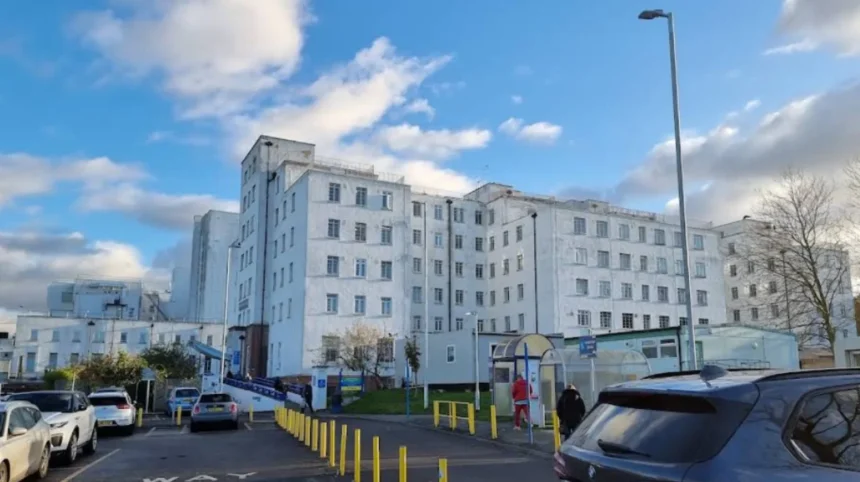
Sutton (South London News) August 22, 2026 – Annual repair costs at St Helier Hospital have continued to climb, with new figures showing that over £500,000 was spent on temporary patch-up work in the first three months of this year alone. The South London healthcare facility, parts of which are older than the NHS itself, is currently struggling under a maintenance backlog estimated at £142.1 million—one of the largest facility care deficits in the United Kingdom.
- Why Are Maintenance Costs Soaring At St Helier Hospital?
- What Is The Impact Of Infrastructure Failure On Local Healthcare Delivery?
- How Are Local Leaders And Government Responding To The Crisis?
- What Happened To The Promised New Hospital Build?
- Background Of The Particular Development
- Prediction: How This Development Can Affect Patients And The Local Community
According to official data obtained through Freedom of Information disclosures, maintenance expenditure at the site jumped by 73 per cent to £1.75 million in 2023. Since then, spending has continued to mount, reaching £1.79 million in 2024 and £1.88 million in 2025, before hitting £505,537 in the first quarter of 2026. Local authority representatives at Sutton Council have expressed strong concern over the condition of the ageing infrastructure, warning that elements of the estate are “literally falling to pieces”.
Why Are Maintenance Costs Soaring At St Helier Hospital?
As reported by Harrison Galliven of the Local Democracy Reporting Service, figures retrieved from Epsom and St Helier University Hospitals NHS Trust demonstrate that the trust has spent over £7.9 million on day-to-day property maintenance across the site since 2021. Detailed analysis of the account records reveals that the principal driver behind this spending surge was a massive rise in building and engineering equipment repairs.
Between 2022 and 2023, expenditure in this specific category more than doubled, increasing from £275,783 to £729,576. Simultaneously, outlays for fundamental building materials experienced a rise of over 50 per cent, climbing to £362,338.
As detailed by Harrison Galliven of the Local Democracy Reporting Service, representatives for Epsom and St Helier NHS Trust stated that they could not identify any single incident or isolated operational factor behind the sharp financial increase. Instead, officials attributed the sustained costs directly to the structural challenge of preserving an ageing estate that originally opened in 1941.
As reported by Harrison Galliven of the Local Democracy Reporting Service, an official spokesperson for Epsom and St Helier NHS Trust stated that
“St Helier is older than the NHS itself and our crumbling estate is deteriorating faster than we can repair it, despite spending £60 million in the past five years”.
What Is The Impact Of Infrastructure Failure On Local Healthcare Delivery?
The physical degradation of the site has created direct operational impacts for clinical staff and patients. As reported by Harrison Galliven of the Local Democracy Reporting Service, the consequences of the site’s physical decline were highlighted when the hospital confirmed plans to temporarily relocate its entire women’s health block away from the main complex.
As reported by Dave Burton of Inside Croydon, Dr James Marsh, deputy chief executive officer of the St George’s, Epsom and St Helier NHS Trust, previously warned of the structural challenges facing the healthcare provider. As noted by Dave Burton of Inside Croydon, Dr James Marsh stated that
“many parts of our estate are already crumbling”
and added that “every year we delay adds up to £150 million to the cost of a new hospital and keeping the current buildings safe to provide care”.
As further highlighted by Dave Burton of Inside Croydon, Dr James Marsh observed that “we’ve already had to condemn and demolish one of our wards” and cautioned that health officials were having to “prepare for the catastrophic failure of our estate”.
The mounting structural backlog across the site includes exposed brickwork, deteriorating plaster, and windows that fail to seal properly, forcing staff to deliver care in increasingly difficult physical environments.
How Are Local Leaders And Government Responding To The Crisis?
As reported by Harrison Galliven of the Local Democracy Reporting Service, local authority representatives have voiced strong frustration with the current state of the facilities. While acknowledging recent capital allocations—including a £57 million package designated for the hospital’s Accident and Emergency (A&E) and urgent care departments—representatives insist that capital injections focused purely on acute care fail to address systemic structural defects.
As reported by Harrison Galliven of the Local Democracy Reporting Service, a spokesperson for Sutton Council stated that the council remains
“extremely concerned about the poor physical state of St Helier Hospital and its ability to provide high-quality services for our residents”.
As further reported by Harrison Galliven of the Local Democracy Reporting Service, the Sutton Council spokesperson added that
“the recent promise of £57 million investment for the A&E and urgent care services is great news, however, this cannot be the end of the story. We have all seen and heard how other parts of the hospital are literally falling to pieces and this ‘patch-and-mend’ approach to St Helier needs to end”.
Political leaders representing the surrounding constituencies have similarly raised the issue in Parliament. As reported by Luke Taylor, Member of Parliament for Sutton and Cheam, local parliamentary representatives issued a joint statement regarding emergency refurbishment grants, noting that
“this funding is just a drop in the ocean compared to what our area needs”.
As reported by Luke Taylor MP, the joint parliamentary statement asserted that
“the repairs backlog is enormous – and this money will barely touch the sides. We need full repairs at St Helier now, and the new specialist care hospital for Sutton to be delivered as soon as possible”.
What Happened To The Promised New Hospital Build?
The long-term resolution for St Helier Hospital’s physical decline was initially linked to national healthcare infrastructure programs. As reported by Harrison Galliven of the Local Democracy Reporting Service, the Conservative-led government under Boris Johnson promised £500 million in 2019 to construct a new specialist facility in Sutton as part of the nationwide New Hospital Programme (NHP), which originally aimed to deliver 40 new hospitals across England by 2030.
However, projected costs for the Sutton development escalated rapidly from the original £500 million estimate to between £1.5 billion and £2 billion.
Following a national review of the infrastructure pipeline, Health and Social Care Secretary Wes Streeting announced that the initial delivery targets were unfunded and unachievable within the original timeframes, leading to significant construction delays that pushed the anticipated start of building work back to 2032 or later.
As reported by Harrison Galliven of the Local Democracy Reporting Service, a spokesperson for the NHS Trust expressed deep frustration over these delays, stating: “We were hugely disappointed when the new hospital was pushed back another 12 years or more – we warned that we would be unlikely to continue providing safe services and it’s becoming increasingly clear that we, or our patients, cannot wait until 2037″.
Background Of The Particular Development
The structural difficulties at St Helier Hospital stem from its historic construction and design. Commissioned in the late 1930s and officially opened in 1941, the building pre-dates the founding of the National Health Service in 1948.
Constructed using pre-war architectural layouts, the site features sprawling multi-story blocks that rely heavily on specialized engineering systems, piping, and structural materials that have long exceeded their intended operational lifespan.
Over the past two decades, successive NHS trust executives and local health boards have attempted to secure long-term capital funding to comprehensively modernize or rebuild the facility.
However, changing national capital spending priorities and shifting health board boundaries led to a series of partial interventions rather than a complete overhaul. Consequently, the maintenance deficit expanded year-on-year, growing from tens of millions in the early 2010s to the current £142.1 million figure.
To keep the hospital operational, engineers have relied on emergency repair interventions—fixing major pipe leaks, replacing broken machinery components, and reinforcing crumbling masonry piece-by-piece.
This continuous expenditure on emergency upkeep has diverted funds that might otherwise have supported routine capital improvements, creating a compounding cycle of degradation where physical structures decay at a rate faster than maintenance teams can complete necessary repairs.
Prediction: How This Development Can Affect Patients And The Local Community
The ongoing deterioration of St Helier Hospital and the multi-year delay in delivering replacement facilities will directly impact patients, clinical personnel, and the broader South West London healthcare network in several distinct ways:
- Increased Operational Disruptions and Ward Closures: As structural components continue to age past their operational viability, emergency maintenance closures will likely become more frequent. The temporary relocation of the women’s health department serves as an early indicator of wider spatial reconfigurations. Patients can expect occasional service redirections, sudden department closures, or temporary structural relocations as engineers address localized infrastructure failures.
- Longer Wait Times and Capacity Constraints: When specific wards or clinical areas are closed for structural repairs, overall bed capacity within the hospital is reduced. This loss of usable floor space places extra pressure on emergency admissions, potentially increasing A&E wait times and leading to instances where patients must be cared for in temporary holding areas or corridors during peak demand periods.
- Spillover Pressure on Neighbouring NHS Hospitals: As St Helier operates under physical space constraints, patient care demands will inevitably spill over into adjacent healthcare facilities. Surrounding hospitals—such as St George’s Hospital in Tooting, Epsom Hospital, and Croydon University Hospital—are likely to experience increased emergency attendances and routine referrals from patients residing in Sutton and surrounding areas.
- Escalating Financial Drain on Public Funds: Without a comprehensive structural rebuild, the routine maintenance budget will continue to absorb millions of pounds annually simply to keep the facility legally compliant and safe. This ongoing financial requirement diverts essential operational capital away from elective care initiatives, staffing expansions, and medical equipment updates, keeping local healthcare finances under tight constraints for the next decade.