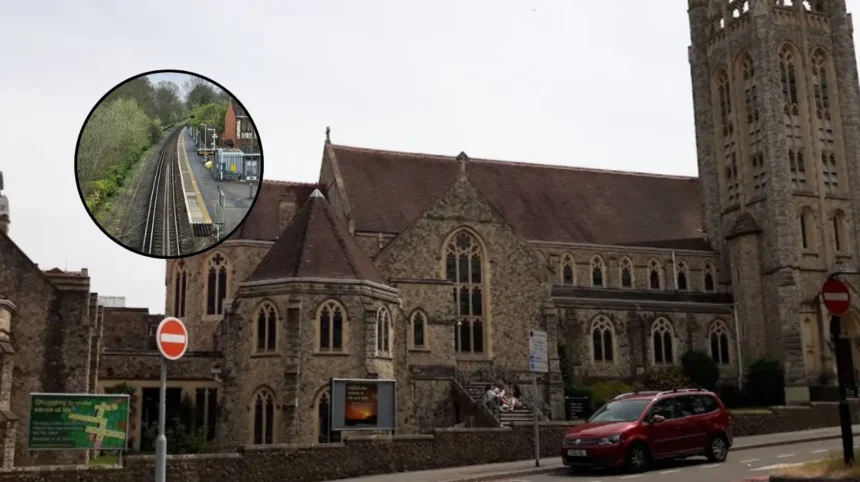
Key Points
- Sutton Council has agreed to cover a £3.98 million funding gap for the Belmont railway upgrade after construction costs rose sharply due to inflation.
- The project aims to double train services between Sutton and Belmont stations, increasing capacity from two to four–six trains per hour.
- The scheme was originally backed by £14 million in Levelling Up Fund funding awarded in 2023, with Network Rail as delivery partner.
- The upgrade supports the wider London Cancer Hub regeneration and improved connectivity for south-west London commuters.
- Council officers described the additional funding as necessary to prevent delays and secure the levelling-up investment.
- A decision to approve the extra contribution was taken by the council’s cabinet in early July 2026, with works progressing through Network Rail’s PACE 2 design stage.
Sutton (South London News) July 28, 2026 – The move follows a sharp increase in construction and materials prices since the scheme secured £14 million in government Levelling Up Fund backing in 2023, with Network Rail acting as delivery partner.
- How much extra money is Sutton Council providing and why?
- What will the railway upgrade deliver for passengers?
- Which areas and developments will benefit from the improved rail link?
- How was the project originally funded and who is delivering it?
- What have council officials and partners said about the funding gap?
- When is the work expected to progress and what stage is it at now?
- Background: How did the Sutton–Belmont upgrade develop over time?
- Prediction: How could this development affect commuters, residents and local businesses?
How much extra money is Sutton Council providing and why?
Sutton Council has agreed to contribute an additional £3.98 million to cover an inflationary deficit on the Belmont Station Rail Enhancement project, according to a cabinet decision record published in early July 2026.
Council officers said the extra funding was required because cost estimates for the twin-tracking and signalling works had increased substantially since the original business case, driven by higher prices for labour, track materials and electrical systems.
Without the top-up, the project risked stalling after the initial Levelling Up Fund award, potentially jeopardising the wider investment and planned improvements to the line between Sutton and Belmont.
What will the railway upgrade deliver for passengers?
The scheme is designed to twin-track the single-line section between Sutton and Belmont, enabling a doubling of services from roughly two trains per hour to between four and six trains per hour in each direction, as outlined in the original Levelling Up Fund bid.
Passengers should benefit from more frequent services, reduced crowding at peak times and improved reliability on the branch, which currently operates with limited capacity due to the single-track constraint.
The upgrade also includes associated signalling and platform work to support the increased frequency, according to Network Rail’s PACE 2 design stage documentation referenced in council papers.
Which areas and developments will benefit from the improved rail link?
The line serves commuters from Sutton town centre and surrounding neighbourhoods heading towards Belmont and beyond, with connections into central London via the mainline network at Sutton.
A key beneficiary of the improved connectivity is the London Cancer Hub, a major life-sciences and research campus being developed in the borough, which relies on better public transport links to attract workers and support growth.
Local businesses and residents in Sutton and Belmont are also expected to gain from reduced journey times and more flexible travel options, according to the council’s original funding application.
How was the project originally funded and who is delivering it?
The railway upgrade was initially supported by a £14 million grant from the UK government’s Levelling Up Fund, awarded to Sutton Council in May 2023 to help twin-track the line and increase services.
Network Rail has been appointed as the delivery partner, with the council entering into a service agreement to progress the project through Network Rail’s PACE 2 design and development stage, as set out in council contract award documents.
The original bid, submitted in 2021, sought around £32 million in total investment, with the Levelling Up award forming a core part of the funding package alongside council and partner contributions.
What have council officials and partners said about the funding gap?
As reported by council documentation, officers recommended the additional £3.98 million contribution to avoid delays and protect the Levelling Up Fund investment, warning that cost inflation had eroded the original budget.
The cabinet decision record notes that the extra funding is essential to keep the project on track and ensure the promised increase in train frequency is delivered, rather than seeing the scheme scaled back or deferred.
Media summaries have described the move as the council “plugging” a multimillion-pound deficit to keep the Belmont station expansion on schedule, particularly in light of its role in supporting the London Cancer Hub.
When is the work expected to progress and what stage is it at now?
Following the approval of the additional funding, the project is moving forward through Network Rail’s PACE 2 stage, which covers detailed design and development ahead of construction, according to council contract award notices.
Exact start and completion dates for on-site works have not been publicly finalised in the available reports, but the recent funding decision is intended to prevent slippage and allow the next delivery phases to proceed without interruption.
The council’s 2025–28 Medium Term Financial Plan and budget papers also reference the Belmont rail enhancement as an ongoing capital commitment, indicating it remains a priority within the borough’s transport programme.
Background: How did the Sutton–Belmont upgrade develop over time?
The idea to twin-track the Sutton–Belmont railway emerged in the early 2020s as part of wider efforts to improve south-west London’s transport capacity and support local regeneration.
In 2021, Sutton Council submitted a bid to the newly created Levelling Up Fund for around £32 million to upgrade the line, proposing to increase services from two to four–six trains per hour and improve reliability on the single-track section.
The bid emphasised the strategic importance of the route for commuters, local businesses and the emerging London Cancer Hub development, arguing that better rail capacity was essential for economic growth.
In May 2023, the project secured £14 million in Levelling Up Fund funding, with Sutton Council announcing that the award would enable work to double train services between Sutton and Belmont stations.
Network Rail was brought in as delivery partner, and the council began progressing the scheme through the railway industry’s PACE governance process, which structures major rail enhancements into defined design and delivery stages.
By 2025–26, however, national inflation pressures on construction and rail infrastructure had pushed up cost estimates, creating a shortfall between the original budget and the projected out-turn cost.
In response, council officers prepared a business case for additional funding, leading to a cabinet decision in early July 2026 to allocate a further £3.98 million to cover the inflationary gap (Sutton Council, July 2026). Local and specialist news outlets reported that the council was effectively “plugging” a multimillion-pound deficit to keep the Belmont station expansion on track and protect the Levelling Up investment.
Ian Visits, July 2026). With the extra funding approved, the project is continuing through Network Rail’s PACE 2 design stage, positioning it to move towards construction once detailed designs and approvals are finalised.
Prediction: How could this development affect commuters, residents and local businesses?
If the upgraded line is delivered as planned, commuters using Sutton and Belmont stations are likely to experience more frequent and reliable services, reducing wait times and overcrowding during peak periods.
Residents in Sutton and nearby neighbourhoods may benefit from improved access to jobs, education and healthcare across south-west and central London, potentially making public transport a more attractive option compared to driving.
Local businesses, particularly those linked to the London Cancer Hub and Sutton town centre, could see stronger footfall and a wider labour pool as the improved rail capacity makes the area more accessible. However, the extent of these benefits will depend on how quickly the works progress, whether further cost pressures emerge, and how the enhanced service pattern is integrated into wider timetables on the network.