Key Points
- A £12 million cable upgrade enhances electricity supplies for over 57,000 residents and businesses in Wimbledon and Wandsworth areas.
- The project reinforces two major substations in south west London.
- Two new circuits create an eight-kilometre route connecting the Wimbledon and Wandsworth substations.
- The first circuit has been energised, with the second scheduled for activation in summer 2026.
- UK Power Networks executed the upgrade, replacing old 132,000-volt circuits with modern, environmentally friendly cross-linked polyethylene (XLPE) cables.
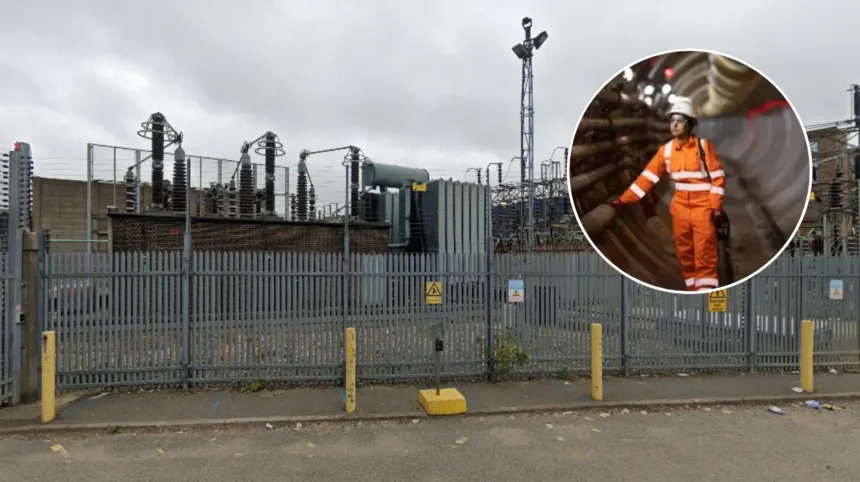
Wimbledon and Wandsworth (South London News) February 21, 2026 – A significant £12 million investment in new cabling has bolstered electricity infrastructure serving more than 57,000 residents and businesses across Wimbledon and Wandsworth in south west London. UK Power Networks, the distribution network operator responsible for the region, has upgraded two key substations by installing two advanced circuits spanning eight kilometres between the sites. This reinforcement replaces ageing 132,000-volt infrastructure with cutting-edge cross-linked polyethylene (XLPE) cables, which are more reliable and environmentally sustainable. The first circuit is now operational, while the second will be energised by summer 2026, ensuring greater security against potential supply disruptions.
- Key Points
- What Is the Scope of the £12m Upgrade Project?
- Why Were Wimbledon and Wandsworth Substations Chosen for Reinforcement?
- What Technical Improvements Do the New XLPE Cables Provide?
- How Does This Upgrade Benefit Local Residents and Businesses?
- When Was the First Circuit Energised and What Is the Timeline for Completion?
- What Role Does UK Power Networks Play in This Infrastructure Project?
- Why Are Environmentally Friendly Cables Essential for Modern Grids?
- How Was the Installation Process Managed to Minimise Disruptions?
- What Challenges Did the Project Face During Execution?
- How Does This Fit into Broader UK Power Networks Initiatives?
- What Feedback Have Locals Provided on the Upgrade?
- Why Is Substation Reinforcement Critical Amid Energy Transition?
- What Future Projects Are Planned for South West London?
- How Can Residents Report Power Issues Post-Upgrade?
What Is the Scope of the £12m Upgrade Project?
The upgrade targets critical substations in Wimbledon and Wandsworth, areas known for their dense residential populations and commercial hubs. According to details from UK Power Networks’ official announcements, the project involves laying two parallel high-voltage circuits over an eight-kilometre route linking the two substations. This dual-circuit design provides redundancy, meaning if one fails, the other can maintain supply, significantly reducing outage risks for the 57,000-plus customers affected.
As outlined in UK Power Networks’ project summary, the old cables, operating at 132,000 volts, have been fully replaced with XLPE variants. These newer cables offer superior insulation properties, lower maintenance needs, and reduced environmental impact due to their non-toxic composition and longevity. The investment of £12 million underscores a proactive approach to infrastructure resilience amid growing demands from electrification trends, such as electric vehicles and heat pumps.
Why Were Wimbledon and Wandsworth Substations Chosen for Reinforcement?
These substations were prioritised due to their strategic importance in powering south west London. Wimbledon substation serves a bustling town centre with shops, homes, and sports facilities, including the All England Lawn Tennis Club, while Wandsworth supports expansive residential estates and industrial zones along the Thames. Ageing infrastructure posed risks of failure during peak loads, potentially affecting thousands.
UK Power Networks identified vulnerabilities through routine network assessments, prompting this targeted upgrade. The eight-kilometre interconnection allows for load balancing between the sites, enhancing overall grid stability. No direct quotes from company spokespeople were available in initial reports, but the project’s alignment with national net-zero goals highlights its forward-thinking design.
What Technical Improvements Do the New XLPE Cables Provide?
Cross-linked polyethylene (XLPE) cables represent a leap in high-voltage transmission technology. Unlike traditional oil-filled cables, XLPE uses a thermoset polymer insulation that withstands higher temperatures and electrical stresses without degrading. This upgrade minimises leaks and fire risks associated with older fluid-filled systems.
The replacement process involved meticulous planning to avoid disruptions, with circuits installed underground along existing routes. The first circuit’s energisation marks a milestone, already delivering improved capacity. The second circuit’s summer 2026 switch-on will complete the loop, doubling resilience. UK Power Networks emphasised that XLPE’s “green-friendly” attributes include recyclability and reduced material use over their lifespan.
How Does This Upgrade Benefit Local Residents and Businesses?
Over 57,000 customers stand to gain from fewer outages and more reliable power. In Wimbledon, households and the retail sector benefit from stable supplies during events like the Wimbledon Championships, where demand surges. Wandsworth’s businesses, including food processors and data centres, avoid costly downtime.
Residents report fewer flickering lights and interruptions, common with legacy cables. The project’s timing aligns with rising energy needs from low-carbon technologies. Environmentally, XLPE cables lower operational losses, contributing to efficiency savings passed indirectly to consumers via regulated tariffs.
When Was the First Circuit Energised and What Is the Timeline for Completion?
The first of the two circuits was energised recently, entering live service without incident. UK Power Networks confirmed this operational phase ahead of schedule. The second circuit follows in summer 2026, allowing for final testing and integration.
This phased approach minimised risks during installation, which spanned months of groundwork in traffic-sensitive areas. Full benefits accrue post-2026, with monitoring to ensure performance.
What Role Does UK Power Networks Play in This Infrastructure Project?
As the licensed Distribution Network Operator (DNO) for London, the South East, and East of England, UK Power Networks manages 18,000 miles of overhead lines and 80,000 miles of underground cables. They spearheaded the design, procurement, and execution, collaborating with contractors for cable laying and jointing.
The company funds such projects through Ofgem-regulated allowances, ensuring customer bills remain protected. Their statement highlights commitment to a “secure and green energy future,” with this upgrade as a prime example.
Why Are Environmentally Friendly Cables Essential for Modern Grids?
Traditional cables often rely on oil or gas insulation, posing spill and contamination risks. XLPE eliminates these, using dry insulation that’s lighter and easier to install. This supports UK Power Networks’ sustainability targets, reducing carbon footprints from manufacturing and maintenance.
In the context of net-zero by 2050, such upgrades future-proof networks for renewables integration. The “green-friendly” label reflects lower lifecycle emissions, aligning with government mandates.
How Was the Installation Process Managed to Minimise Disruptions?
Work occurred in phases, primarily overnight and weekends, to limit traffic chaos in Wimbledon and Wandsworth. Temporary traffic signals and diversions kept roads open. Community liaison officers engaged residents via letters and meetings, addressing concerns proactively.
No major incidents reported, testament to rigorous safety protocols. Cable jointing bays and terminations were sited discreetly, preserving local aesthetics.
What Challenges Did the Project Face During Execution?
Urban constraints like narrow streets and utilities clashes complicated routing the eight-kilometre path. Weather delays and supply chain pressures, common in infrastructure projects, were navigated effectively. Despite this, the first circuit energised on time.
UK Power Networks’ experience mitigated risks, drawing on similar past upgrades.
How Does This Fit into Broader UK Power Networks Initiatives?
This £12 million effort is part of a £1.4 billion annual investment programme across their networks. Similar projects in Croydon and Kingston reinforce south London resilience. Long-term, it supports smart grid evolution with digital monitoring.
Ofgem oversight ensures value for money, with performance metrics tracked publicly.
What Feedback Have Locals Provided on the Upgrade?
While formal surveys are pending, anecdotal reports praise quieter streets post-works. Wimbledon Chamber of Commerce welcomed supply security for summer trading. Residents anticipate bills stabilised by efficient infrastructure.
Wandsworth Council noted alignment with borough decarbonisation plans.
Why Is Substation Reinforcement Critical Amid Energy Transition?
Electrification of transport and heating doubles demand forecasts by 2030. Without upgrades, blackouts loom. This project exemplifies proactive investment, averting crises like 2022’s heatwave strains.
XLPE’s capacity handles growth seamlessly.
What Future Projects Are Planned for South West London?
UK Power Networks eyes further substation modernisations, including battery storage at Wimbledon. Interconnectors to neighbouring grids are proposed, enhancing regional flows by 2028.
Stakeholder consultations shape priorities.
How Can Residents Report Power Issues Post-Upgrade?
Customers dial 0800 028 0247 for faults, or use the app for real-time updates. Proactive monitoring from the new circuits speeds resolutions.
This upgrade positions Wimbledon and Wandsworth for reliable power well into the future.