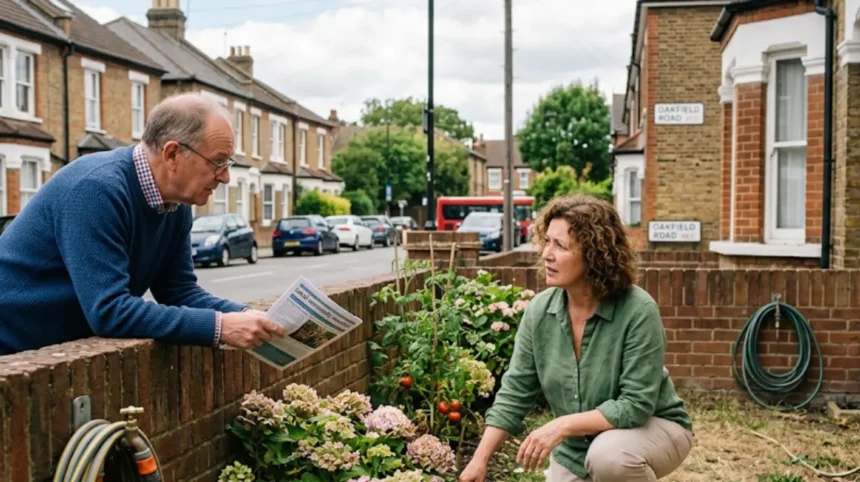
An Anglian Water hosepipe ban does not apply to South London because Anglian Water does not supply that area. South London is served by Thames Water and Southern Water, so any hosepipe ban there would come from those companies, not from Anglian Water. This article explains what an Anglian Water hosepipe ban is, why it happens, what it prohibits, and how South London residents should respond to water restrictions in their own area.
- What is an Anglian Water hosepipe ban?
- Does Anglian Water supply South London?
- Is there currently a hosepipe ban in South London?
- When has Anglian Water imposed hosepipe bans historically?
- How does a hosepipe ban work legally?
- What activities are allowed or banned under an Anglian Water hosepipe ban?
- Prohibited uses
- Allowed uses
- What should South London residents do about hosepipe bans?
- Check your supplier and postcode
- Reduce water use now
- Prepare for possible future bans
- Why do hosepipe bans happen and what triggers them?
- How can South London households adapt to hosepipe restrictions?
- Garden watering
- Car and surface cleaning
- Rainwater collection
- Behavioural changes
- What are the consequences of breaking a hosepipe ban?
What is an Anglian Water hosepipe ban?
An Anglian Water hosepipe ban is a temporary use ban that stops customers in Anglian Water’s region from using hosepipes for non-essential tasks such as watering gardens, washing cars, or filling pools. It is a legal restriction under the Water Industry Act 1999, enforced when water supplies are at risk from drought or high demand.
Anglian Water is a water supplier operating in the East of England, covering parts of Bedfordshire, Buckinghamshire, Cambridgeshire, Essex, Hertfordshire, Norfolk, Northamptonshire, Suffolk, and small areas of Lincolnshire, Leicestershire, and County Durham. It does not supply water to South London boroughs such as Lambeth, Southwark, Wandsworth, Richmond, Kingston, Merton, Sutton, or Croydon.
When Anglian Water announces a hosepipe ban, it is called a “temporary use ban” (TUB). The ban prohibits domestic customers from using hosepipes or sprinklers for:
- Watering gardens, patios, or boats
- Washing cars, motorbikes, or domestic vehicles
- Filling swimming pools, paddling pools, or ornamental water features
- Cleaning driveways, paths, or external surfaces with hosepipes
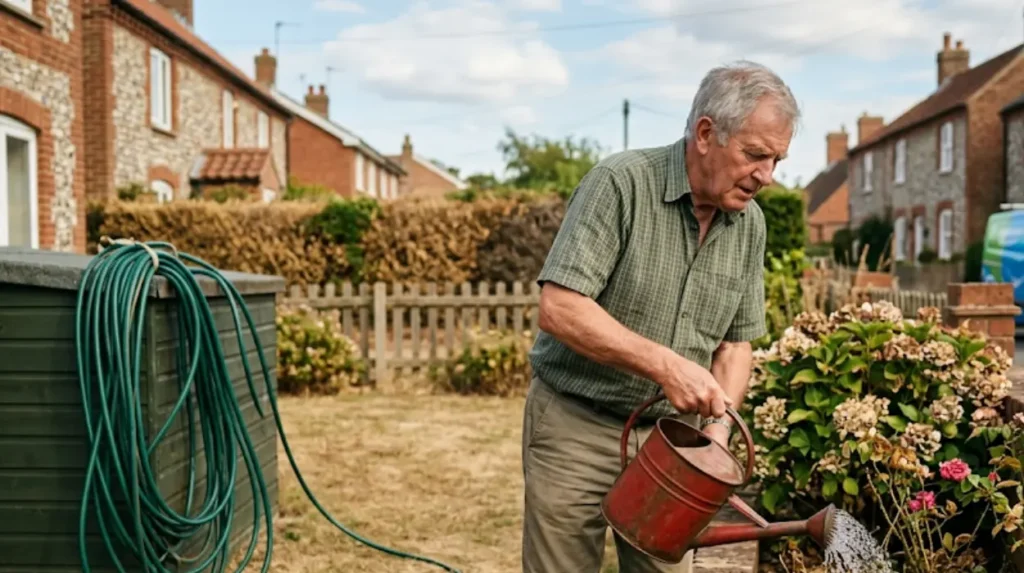
Customers may still use buckets, watering cans, or manual cleaning methods, which use far less water.
Does Anglian Water supply South London?
Anglian Water does not supply South London, so an Anglian Water hosepipe ban does not apply to South London households or businesses. South London is served by other water companies, mainly Thames Water and Southern Water, depending on the specific borough and postcode.
Anglian Water’s coverage area is centred on the East of England and does not extend into Greater London. Its operational region includes counties such as Norfolk, Essex, Cambridgeshire, and parts of Hertfordshire, but excludes London boroughs entirely.
In South London, the main water suppliers are:
- Thames Water: covers most of inner and outer South London, including Lambeth, Southwark, Wandsworth, Richmond, Kingston, Merton, Sutton, and parts of Croydon and Ealing.
- Southern Water: supplies some areas on the southern edge of Greater London and overlaps into parts of south-west Surrey and Hampshire close to the London boundary.
Because Anglian Water does not operate in South London, any hosepipe ban it introduces affects only its own customers in the East of England, not residents in South London boroughs.
Is there currently a hosepipe ban in South London?
As of July 2026, there is no official hosepipe ban in place for South London, but Thames Water and Southern Water are urging customers to avoid using hosepipes during heatwaves. Anglian Water has introduced a ban in its own region, but that does not extend to South London.
In early July 2026, Anglian Water announced a temporary use ban (hosepipe ban) for its 5+ million customers in the East of England, effective from 1 am on 11 July 2026, with advice to “live within the spirit of these restrictions immediately.” Southern Water also has a TUB in place for parts of Hampshire and the Isle of Wight, and South East Water issued a ban for Kent from 3 July 2026.
Thames Water has not imposed a formal hosepipe ban on South London as of mid-July 2026, but it has issued strong advisories:
- Customers are urged not to use hosepipes or sprinklers during heatwaves.
- The company encourages using watering cans, buckets, and drip irrigation instead.
- These are not legal restrictions, but they are part of Thames Water’s drought response measures.
Southern Water’s TUB does not currently cover South London boroughs, but it covers areas in Hampshire and the Isle of Wight, and some southern fringe locations near London may be affected depending on exact postcode.
South London residents should check their postcode on their water supplier’s website (Thames Water or Southern Water) to confirm whether a formal ban applies to their address.
When has Anglian Water imposed hosepipe bans historically?
Anglian Water has imposed hosepipe bans in several past droughts, including notable bans in 2012, with the most recent formal ban before 2026 introduced around 2016. Historically, these bans were triggered by prolonged dry periods, low groundwater levels, and high summer demand.
In 2012, Anglian Water joined multiple water companies in introducing hosepipe bans across southern and eastern England after two dry winters and a hot spring. The ban in Anglian Water’s region affected millions of customers and was lifted in June 2012 after heavy rainfall restored groundwater supplies.
In 2016, Anglian Water announced a hosepipe ban for parts of its region following another hot, dry summer. The ban was lifted later in the year once rainfall improved reservoir and groundwater levels. This was described as Anglian Water’s first ban in a decade at that time, indicating no formal ban had been imposed between roughly 2006 and 2016.
In 2025, Anglian Water warned it would “not rule out” a summer hosepipe ban, citing uncertain weather patterns and dry spring conditions, but it ultimately did not impose a region-wide ban in 2025 despite heatwaves. By June 2026, Anglian Water stated it did not intend to impose a hosepipe ban, urging careful water use instead, but then introduced a formal ban in July 2026 as drought conditions worsened.
These historical bans show that Anglian Water uses hosepipe bans as a reactive measure during severe drought stress, typically when groundwater and reservoir levels fall below safe thresholds and demand remains high.
How does a hosepipe ban work legally?
A hosepipe ban is a “temporary use ban” (TUB) under the Water Industry Act 1999, made legally enforceable by the water supplier with approval from the Secretary of State. It gives water companies the power to prohibit specific non-essential uses of water, including hosepipe use, during periods of supply risk.
Under the Water Industry Act 1999, water suppliers can apply to the Secretary of State for Environment, Food and Rural Affairs for a temporary use ban. The ban must:
- Be necessary to protect water supplies during drought or high demand
- Cover clearly defined areas of the supplier’s region
- Specify the prohibited uses (e.g., hosepipes for gardening, car washing, pool filling)
- Include exceptions for essential uses such as animal welfare, health needs, and certain commercial activities
Once approved, the ban becomes a legal restriction. Households and businesses that violate it can be fined up to £1,000 on conviction. Water companies typically enforce bans through public education, monitoring, and, if necessary, investigation of complaints.
Anglian Water and other suppliers communicate bans via their websites, social media, and local media. They also publish detailed guidance on what is prohibited and what exceptions apply, helping customers understand their obligations during the ban period.
What activities are allowed or banned under an Anglian Water hosepipe ban?
Under an Anglian Water hosepipe ban, you cannot use hosepipes for watering gardens, washing cars, or filling pools, but you can use watering cans, buckets, and manual methods, and some uses are exempt for health, animal welfare, and certain commercial purposes. The ban focuses on non-essential domestic uses of hosepipes and sprinklers.
Prohibited uses
During an Anglian Water hosepipe ban, domestic customers are prohibited from using hosepipes for:
- Watering gardens, lawns, flower beds, or vegetable plots
- Cleaning patios, driveways, paths, or external surfaces
- Washing cars, motorbikes, bicycles, boats, or other vehicles
- Filling swimming pools, paddling pools, ornamental ponds, or decorative water features
- Using sprinklers or jet washers for external cleaning or gardening
These restrictions apply to all non-essential domestic activities where a hosepipe or sprinkler is used.
Allowed uses
Customers may still:
- Water gardens using watering cans or buckets
- Clean cars using a bucket and cloth
- Fill small containers of water for plants or animals manually
- Use drip irrigation systems or soaker hoses that do not involve a standard hosepipe (subject to company guidance)
Anglian Water also allows exceptions for:
- The welfare of animals and pets (e.g., providing water for livestock or garden animals)
- Health and safety needs, including uses required for vulnerable individuals
- Certain commercial activities where hosepipe use is essential for jobs or livelihoods, such as some garden centres, car washes, or agricultural operations
Customers with specific health conditions or special circumstances should contact Anglian Water to confirm whether an exemption applies to their situation.
What should South London residents do about hosepipe bans?
South London residents should follow their own water supplier’s guidance (Thames Water or Southern Water), avoid using hosepipes during heatwaves, and prepare for possible future bans even if none are in place now. Anglian Water’s ban does not affect them, but local suppliers may introduce restrictions depending on conditions.
Check your supplier and postcode
South London households should:
- Identify their water supplier by checking their bill or using the postcode lookup tool on the supplier’s website.
- Check the supplier’s “hosepipe ban” or “water restrictions” page for current status.
- Confirm whether their postcode is covered by a formal TUB or only by advisory guidance.
Thames Water and Southern Water both publish up-to-date information on bans and advisories on their websites and social media channels.
Reduce water use now
Even without a formal ban, South London residents can:
- Use watering cans instead of hosepipes for gardens.
- Fill buckets for car washing and use a cloth.
- Avoid filling paddling pools or ornamental ponds during hot, dry periods.
- Install drip irrigation or water-smart gardening practices to reduce demand.
These actions help protect supplies and reduce the risk that suppliers will need to introduce formal bans.
Prepare for possible future bans
If drought conditions worsen, Thames Water or Southern Water could introduce a hosepipe ban in parts of South London. Being prepared helps:
- Keep a set of watering cans and buckets ready.
- Consider rainwater butts to collect garden water legally.
- Understand which activities are exempt if a ban is introduced.
- Follow supplier guidance quickly to avoid fines if a ban is enforced.
Staying informed through supplier updates and local news ensures South London residents can adapt quickly if restrictions are introduced.
Why do hosepipe bans happen and what triggers them?
Hosepipe bans happen when water supplies are at risk due to drought, low rainfall, high temperatures, and excessive demand, and suppliers must protect essential water for homes, health, and businesses. They are triggered by specific thresholds for groundwater levels, reservoir volumes, river flows, and predicted demand.
Water suppliers monitor:
- Groundwater levels in aquifers that supply many homes in the East and South of England.
- Reservoir and storage levels in local water supply systems.
- River flows, which can drop during dry periods and affect water quality and availability.
- Forecast weather, including temperature, rainfall, and heatwave duration.
- Current and predicted water demand, especially during peak summer usage.
When these indicators show that supplies are close to critical levels, suppliers may apply for a temporary use ban. The goal is to reduce non-essential demand quickly and avoid more severe measures such as restrictions on essential uses or supply interruptions.
In 2026, Anglian Water introduced a ban after an exceptionally hot and dry period, with the third heatwave of the year putting pressure on supplies despite earlier rainfall. Thames Water and Southern Water have also taken precautionary steps, including advisories and bans in some areas, due to similar drought risks across southern England.
How can South London households adapt to hosepipe restrictions?
South London households can adapt by switching to low-water gardening methods, using buckets and watering cans, collecting rainwater, and planning ahead for possible future bans. These changes reduce water use without significantly impacting garden quality or daily life.
Garden watering
- Use watering cans or buckets instead of hosepipes.
- Water early in the morning or late in the evening to reduce evaporation.
- Focus on young plants and critical areas, letting established plants rely on natural rainfall where possible.
- Install drip irrigation or soaker systems that deliver water directly to soil without a standard hosepipe.
Car and surface cleaning
- Wash cars with a bucket, sponge, and cloth.
- Clean patios and paths with a brush and bucket of water instead of jet washers powered by hosepipes.
- Use biodegradable cleaning agents to reduce environmental impact.
Rainwater collection
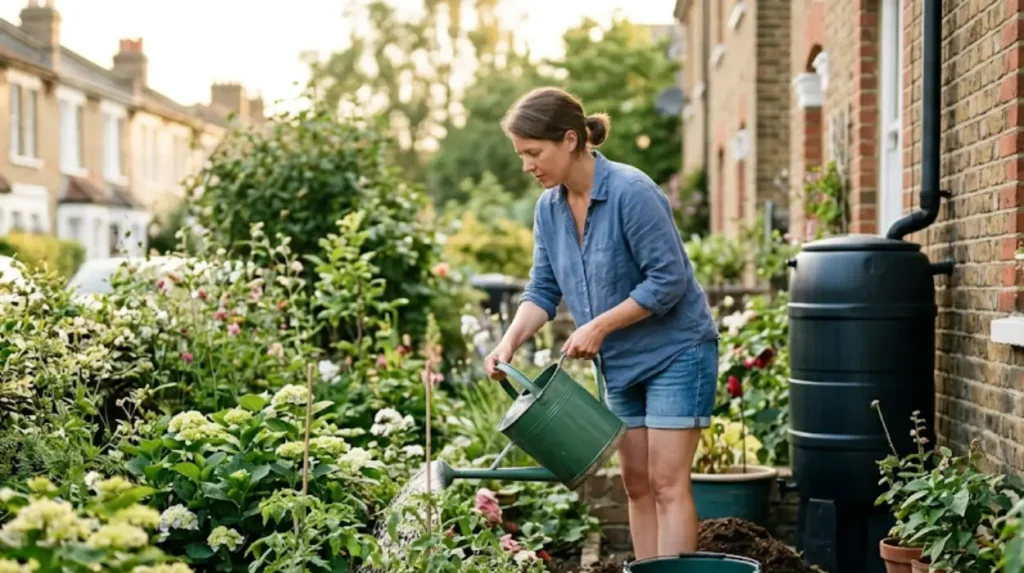
- Install rainwater butts under downpipes to collect roof water for garden use.
- Use collected rainwater for watering plants, lawns, and flower beds.
- Store water in covered containers to reduce evaporation and contamination.
Behavioural changes
- Shorten shower times and fix leaks to reduce overall household demand.
- Run washing machines and dishwashers only with full loads.
- Encourage neighbours and local community groups to share water-saving tips.
These measures help households stay compliant if a ban is introduced and reduce pressure on local water supplies, supporting long-term resilience in South London.
What are the consequences of breaking a hosepipe ban?
Breaking a hosepipe ban is a legal offence that can result in fines of up to £1,000, enforcement action, and reputational damage for households and businesses. Water suppliers can investigate complaints and take action through local courts if necessary.
Under a temporary use ban, customers who use hosepipes for prohibited activities may be:
- Reported by neighbours or observed by supplier staff.
- Investigated by the water company, which can gather evidence such as photos or witness statements.
- Taken to court if the breach is confirmed, with fines up to £1,000 per offence.
Businesses that rely on hosepipes, such as car washes or garden centres, may also face enforcement if they do not comply with exemptions and conditions set by the supplier. Some commercial users are exempt, but only if they meet specific criteria and follow agreed practices.
Beyond fines, repeated breaches can lead to:
- Increased scrutiny from the water company.
- Negative publicity in local media.
- Strain on community trust during drought periods.
Following the rules helps protect water supplies for everyone and ensures that suppliers can maintain essential services without resorting to stricter measures.