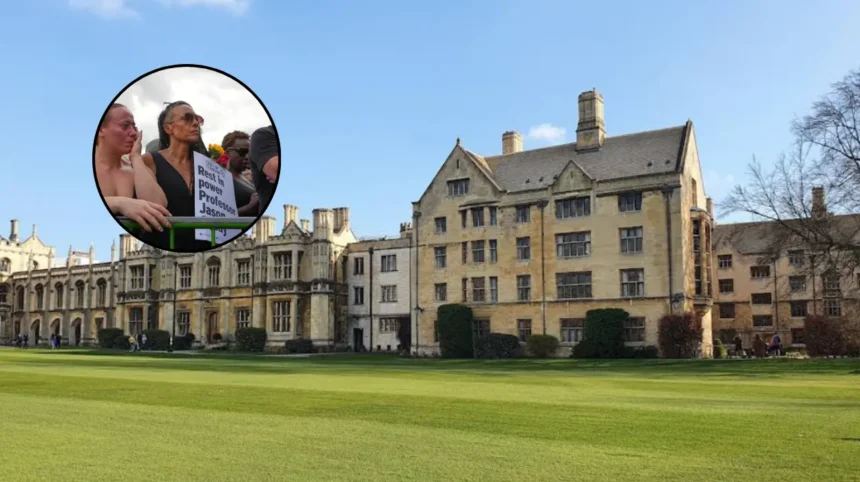
Key Points
- Former University of Cambridge professor Jason Arday, 41, was found dead at his home in south London following weeks of intense media scrutiny and allegations of academic misconduct.
- The Metropolitan Police stated that the death is being treated as unexpected but is not believed to be suspicious.
- Arday resigned from his chair as Professor of Sociology of Education and his fellowship at Jesus College on 5th August 2026, citing an “unrelenting level of public scrutiny and personal attack”.
- The controversy surrounding Arday involved accusations of plagiarism within his 2015 doctoral thesis, along with scrutiny regarding his charitable achievements and memoir claims.
- The academic’s family released a statement condemning a “campaign of sustained abuse” and misinformation that they argue targeted him since his appointment in 2023.
- Political figures, including Mayor of London Sadiq Khan and Education Secretary Lucy Powell, expressed shock over the tragedy, while an open letter signed by over 120,000 individuals demands a public inquiry into press conduct.
- The University of Cambridge, which had initiated an internal review prior to Arday’s resignation, expressed deep sadness through Vice-Chancellor Professor Deborah Prentice.
LONDON (South London News) August 19, 2026 —An intense national debate regarding academic rigor, press ethics, and institutional racism has erupted across the United Kingdom following the death of Jason Arday, 41, who made history in 2023 as the youngest Black professor ever appointed by the University of Cambridge.
- Key Points
- How did the investigation into Jason Arday’s academic work begin?
- How have the media, public figures, and Arday’s family responded to his death?
- What is the background of the particular development?
- What is the prediction for how this development will affect higher education institutions, media outlets, and diversity initiatives?
Emergency services were called to an address in Battersea, south London, shortly after 3:00 pm on Friday, where Arday was discovered unresponsive. The Metropolitan Police confirmed that a 41-year-old man was pronounced dead at the scene.
A spokesperson for the force stated that while the death is being treated as unexpected, officers do not consider it to be suspicious, and a file is being prepared for the coroner.
The tragedy occurs nine days after Arday stepped down from his professorial post in the Faculty of Education and his fellowship at Jesus College. His resignation followed weeks of media reporting focused on allegations of plagiarism in his doctoral work, disputed claims regarding his academic qualifications, and questions concerning his publicized personal achievements.
How did the investigation into Jason Arday’s academic work begin?
The scrutiny surrounding Arday intensified in July 2026 after questions regarding his credentials were highlighted by critics, including former Cambridge philosophy researcher Nathan Cofnas. As reported by journalists in The Times of London, an analysis of Arday’s 2015 PhD thesis—completed at Liverpool John Moores University—alleged that the text contained multiple passages “identical or near-identical” to an earlier paper published by another academic.
Further investigative reporting across national titles probed other claims associated with Arday’s career, including public statements that he had raised £5.5 million for charity by completing physical challenges such as 30 marathons in 35 days, alongside statements regarding book advance values for his memoir published by Simon & Schuster.
While Liverpool John Moores University confirmed it had reviewed and dismissed prior complaints against Arday in 2025, the University of Cambridge announced on 5th August 2026 that it had launched an internal inquiry. The university stated the review was prompted by “new information” regarding his qualifications, honorary appointments, and academic conduct. Arday tendered his resignation hours after the university’s announcement.
How have the media, public figures, and Arday’s family responded to his death?
In a public statement released through publisher Simon & Schuster, Arday’s family described their devastation, asserting that the academic had been subjected to a deliberate target campaign. As quoted by reporters from The Guardian, Arday’s family stated:
“Jason was subjected to a campaign of sustained abuse for more than three years since he accepted the role of professor at Cambridge University by those who would leave no stone unturned in their quest to undermine him. The campaign of misinformation was too much for Jason, who was a gentle man and who always wanted to see the best in everyone”.
The Mayor of London, Sadiq Khan, expressed his grief, stating that Arday was
“the victim of a pernicious public shaming that other people in his position simply wouldn’t have faced”
and called his death a “wake-up call”. Education Secretary Lucy Powell urged the public on social media to remember that
“there are real people with loved ones involved”
and appealed for privacy for the family.
Professor Deborah Prentice, Vice-Chancellor of the University of Cambridge, released a statement saying the institution was “desperately saddened to hear this tragic news” and extended sympathies to Arday’s family. Former colleagues at Durham University, where Arday worked between 2019 and 2021, remembered him as a
“kind and warm person who actively sought to promote opportunities for PhD students”.
In the wake of his passing, an open letter supported by more than 120,000 signatories has begun circulating online, demanding a formal public inquiry into media coverage of minority academics and press regulation practices.
Explore More UK News
D&T Electrical Services: Trusted Family-Run Electricians in Havering and Essex
How Stormzy Scholarship Transformed Joseph Vambe’s Life at Cambridge, London 2026
What is the background of the particular development?
Jason Arday’s rise through British academia was widely celebrated across the national press and educational sector. Diagnosed with global development delay and autism in early childhood, Arday did not speak until the age of 11 and did not learn to read or write until he was 18. He subsequently earned a degree in physical education and school sport before completing a postgraduate certificate, a master’s degree, and eventually a doctorate.
Before joining Cambridge, Arday held positions at the University of Surrey, Durham University, and the University of Glasgow.
In March 2023, at age 37, he was appointed Professor of Sociology of Education at Cambridge, making him the youngest Black person appointed to a professorship in the university’s history. His personal story made him a prominent public figure, often cited as a symbol of progress for diversity, equity, and inclusion (DEI) initiatives within higher education.
However, his rapid advancement also positioned him at the center of wider ideological debates over university recruitment standards, vetting procedures, and race relations in the U.K..
Supporters argue that his achievements made him an unfair target for bad-faith scrutiny, while critics argued that higher education institutions failed to apply standard vetting protocols in their eagerness to promote diversity metrics.
What is the prediction for how this development will affect higher education institutions, media outlets, and diversity initiatives?
The tragic outcome of the controversy surrounding Jason Arday is expected to have significant, lasting ramifications across higher education, media practices, and policy debates in the United Kingdom.
- Impact on Universities and Vetting Standards: U.K. higher education institutions are likely to implement stricter, standardized vetting processes for senior appointments, honorary awards, and academic literature checks. Universities will face pressure to ensure that credential verification is rigorous and transparent, mitigating potential vulnerabilities while aiming to protect institutional integrity.
- Reassessment of DEI Frameworks: The event will intensify existing debates surrounding Diversity, Equity, and Inclusion programs. While reform advocates may argue that academic institutions must protect minority scholars from targeted hostility and unfair scrutiny, critics of DEI policies may push for reduced emphasis on identity-conscious recruitment. Universities will need to navigate this polarization carefully to safeguard equitable hiring without compromising academic checks.
- Scrutiny of Press Ethics and Public Discourse: Print and digital media titles are likely to face heightened public and regulatory pressure regarding their treatment of academic figures undergoing public allegations. The public petition demanding an inquiry could lead to renewed debates around journalist ethics, the handling of trial-by-media dynamics, and the psychological duty of care owed to public figures facing online and press exposure.