
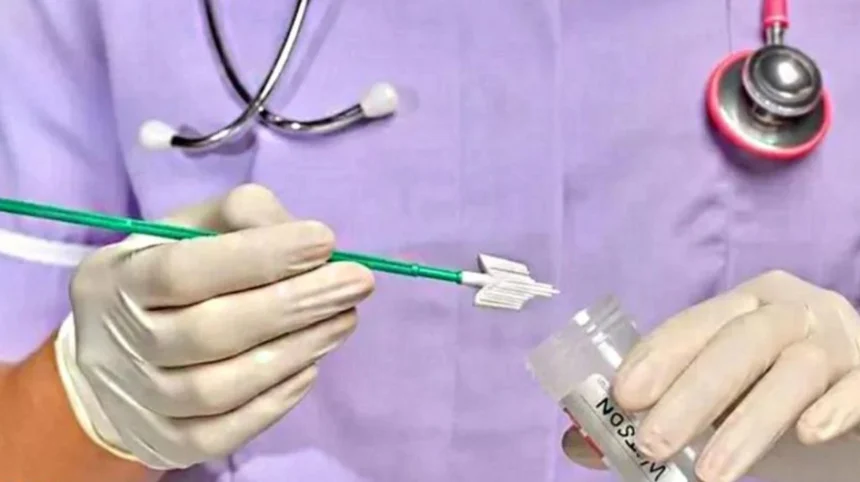
A new NHS self-swab option is now available across London, offering people who have delayed or avoided cervical screening another way to test for the virus linked to cervical cancer.
All 1,100 GP practices in London can now offer HPV self-sampling. NHS England expects approximately 70,000 under-screened people to be offered the option during 2026.
The rollout is part of the NHS ambition to eliminate cervical cancer by 2040. Its success will depend not only on whether the test is available, but also on whether people who have historically missed screening feel able and willing to use it.
How does cervical self-sampling work?
HPV self-sampling allows an eligible person to collect their own vaginal sample using a swab. The sample is then tested for high-risk types of human papillomavirus, commonly known as HPV.
HPV is a common virus. Most infections clear naturally, but persistent infection with certain high-risk types can cause changes in cervical cells that may eventually develop into cancer.
Unlike a traditional cervical screening appointment, self-sampling does not require a clinician to take an internal sample from the cervix.
The option is primarily being offered to women and people with a cervix aged approximately 25 to 64 who are overdue for screening and have not attended after previous invitations. Depending on local arrangements, the test may be completed at a GP practice or taken home.
The swab must be returned within the timeframe provided by the service. A positive HPV result does not mean that someone has cancer, but it does mean further assessment may be needed.
Reaching people who face barriers
Around one-third of eligible women in England are not up to date with cervical screening. Barriers usually include embarrassment, discomfort, lack of time, difficulties booking appointments, previous trauma, and cultural concerns.
For some people, collecting their own sample may make screening feel more private and manageable.
Research from the YouScreen study in North London found that offering HPV self-sampling to women who had not attended screening could increase participation. The findings helped support the wider rollout.
Irrespective, availability alone may not remove every barrier. People may still need clear information about HPV, reassurance about privacy, help understanding the instructions, and confidence that a positive result will lead to appropriate follow-up.
What happens after the test?
If no high-risk HPV is found, the person will generally be advised when they should next be screened, according to programme guidance.
If high-risk HPV is detected, the person will be invited for a follow-up appointment. A clinician will then take a cervical sample to check for abnormal cell changes.
This means self-sampling is not a complete replacement for clinician-led cervical screening. It is an additional route intended mainly for people who are under-screened or have not previously engaged with the programme.
The NHS has also begun a separate national rollout of postal HPV self-testing kits. From autumn 2026, some eligible women and people with a cervix in England will be invited to order a home-testing kit through the NHS App, text message, email, or letter.
Will the new option improve uptake?
The London rollout offers an opportunity to address inequalities in cervical screening, but its impact will need to be measured. For the programme to reach those most likely to miss screening, local GP practices may need to do more than simply provide kits.
Community outreach, translated information, accessible instructions, and conversations with women who have previously avoided screening could help determine whether the new option reaches the people it is intended to support.
Cervical screening is designed to prevent cancer rather than investigate symptoms. Anyone experiencing unusual bleeding, pelvic pain, or other concerning symptoms should contact a healthcare professional rather than wait for a screening invitation.
For eligible Londoners, self-sampling may provide a more private and convenient way to take part. The most important step is to complete screening in whichever approved form is suitable.