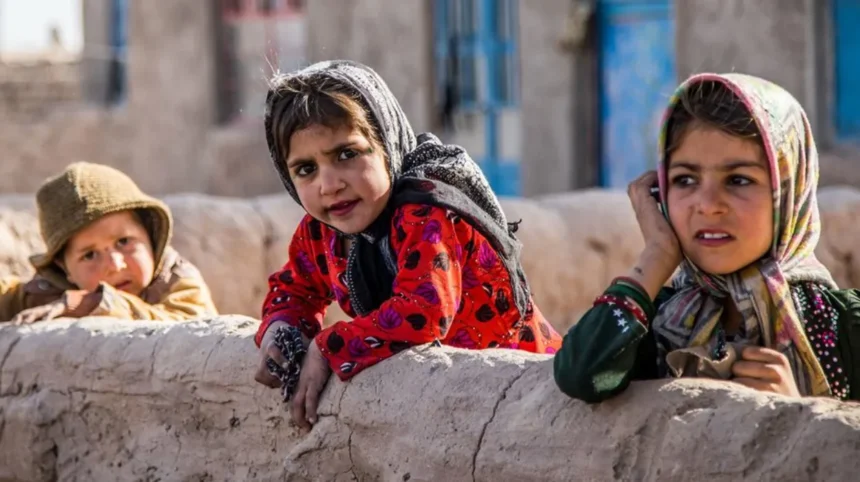
The Afghanistan and Central Asian Association (ACAA), an award-winning UK-based refugee charity headquartered in London and the largest charity supporting Afghan and Central Asian communities in the United Kingdom has called for urgent increases in international humanitarian assistance following a powerful BBC News report highlighting the devastating impact of poverty, hunger, and declining aid across Afghanistan. ACAA believes that no family should be forced into such impossible choices. The charity warns that the growing prevalence of child marriage linked to economic hardship reflects the depth of Afghanistan’s humanitarian emergency and the urgent need for increased international support.
The BBC report, published last week, paints a stark picture of a country facing one of the world‘s worst humanitarian crises. According to the United Nations, three out of every four Afghans are unable to meet their basic needs, while 4.7 million people – more than one-tenth of the population – are estimated to be one step away from famine.
The report can be read here: https://www.bbc.co.uk/news/articles/c0q25dwj807o
The report documents heart-breaking stories of families driven to desperate measures in order to survive. Some parents report considering marrying off their daughters because they can no longer afford to feed their children, while others describe living on little more than bread and hot water. The report underscores the harsh realities facing millions of Afghans as poverty, food insecurity, unemployment, and declining humanitarian assistance continue to place immense pressure on vulnerable communities.
The crisis is also having a devastating impact on children. In a paediatric intensive care unit featured in the BBC report, six-week-old Zameer was being treated for meningitis and pneumonia—both potentially curable illnesses. However, doctors lacked access to the MRI equipment needed to provide the full care required. Dr Muhammad Mosa Oldat, who runs the neonatal unit, told the BBC that mortality rates can rise to as high as 10 per cent, a figure he described as “not acceptable”. Nurse Fatima Husseini reported that there are days when as many as three babies die. The report also highlighted the case of Mohammad Hashem, whose 14-month-old daughter recently died. Speaking to the BBC, he said:
“My child died of hunger and a lack of medicine.”
The BBC further reported concerns from local community leaders that child mortality linked to malnutrition has increased significantly in recent years. In some communities, the only visible evidence of the growing tragedy is the increasing number of children’s graves.
The humanitarian situation has been exacerbated by a dramatic decline in international assistance. According to figures cited in the report, aid reaching Afghanistan this year is approximately 70 per cent lower than in 2025. The United States, previously the country’s largest donor, has significantly reduced assistance, while several other major donors have also cut funding.
Afghanistan remains one of the world’s largest humanitarian crises. Millions of people continue to require emergency assistance, while women and girls face significant barriers to education, employment, healthcare, and participation in public life. Many families are struggling to meet their most basic needs amid ongoing economic challenges and reductions in international aid.
Darius Nasimi, Head of Funding and Partnerships at the Afghanistan and Central Asian Association (ACAA), said:
“The stories highlighted by the BBC are heart-breaking and a devastating reminder of the human cost of Afghanistan’s ongoing humanitarian crisis. No parent wants to make decision that could affect a child’s future, but extreme poverty is leaving many families with few options for survival. When parents are forced to consider marrying off their daughters simply to keep the rest of their children alive, and when babies die from treatable illnesses because hospitals lack basic equipment and medicine, the international community cannot look away. Behind every statistic is a human life. Families are facing impossible choices, children are going hungry, and healthcare facilities are struggling to cope with overwhelming needs. These are not isolated incidents but symptoms of a much wider humanitarian emergency affecting millions of people across Afghanistan. The international community cannot turn its back on Afghanistan and has a moral responsibility to ensure that the Afghan people are not abandoned. Millions of people continue to live in poverty and face immense hardship every day. Increased humanitarian assistance is urgently needed to support vulnerable families, protect children, improve access to education and healthcare, and help communities rebuild their lives with dignity and hope.”
ACAA is calling upon governments, international organisations, donor agencies and humanitarian partners to:
- Increase humanitarian funding for Afghanistan
- Strengthen support for healthcare services and nutrition programmes
- Expand child protection initiatives and measures to prevent child marriage
- Support vulnerable families through livelihood and food assistance programmes
- Maintain international attention on the humanitarian and human rights challenges facing Afghanistan
For more than two decades, ACAA has worked to support Afghan refugees, asylum seekers and vulnerable communities both in the United Kingdom and Afghanistan. The charity remains committed to raising awareness of the challenges facing the Afghan people and advocating for practical solutions that protect lives, strengthen communities and uphold human dignity.