Key Points
- Developer Pocket Living proposes 92 new homes on a former synagogue and car park site in Streatham, South London.
- Homes include 38sqm ‘pocket’ homes, just above the legal minimum floor space.
- The site covers 35-37 Leigham Court Road and land behind 39-49 Leigham Court Road, including a closed synagogue and public car park.
- Lambeth Council’s Planning Applications Committee to consider the proposal on November 18.
- Pocket Living specialises in affordable homes for renters and first-time buyers at 80% of local market value.
- The scheme includes 15 social rented homes, 31 discount market rent homes, and 46 private homes.
- Development aims for 35% affordable housing by habitable room.
- Planning officers support the design and quality of the proposed homes.
- Public consultation received almost equal numbers of support and objections.
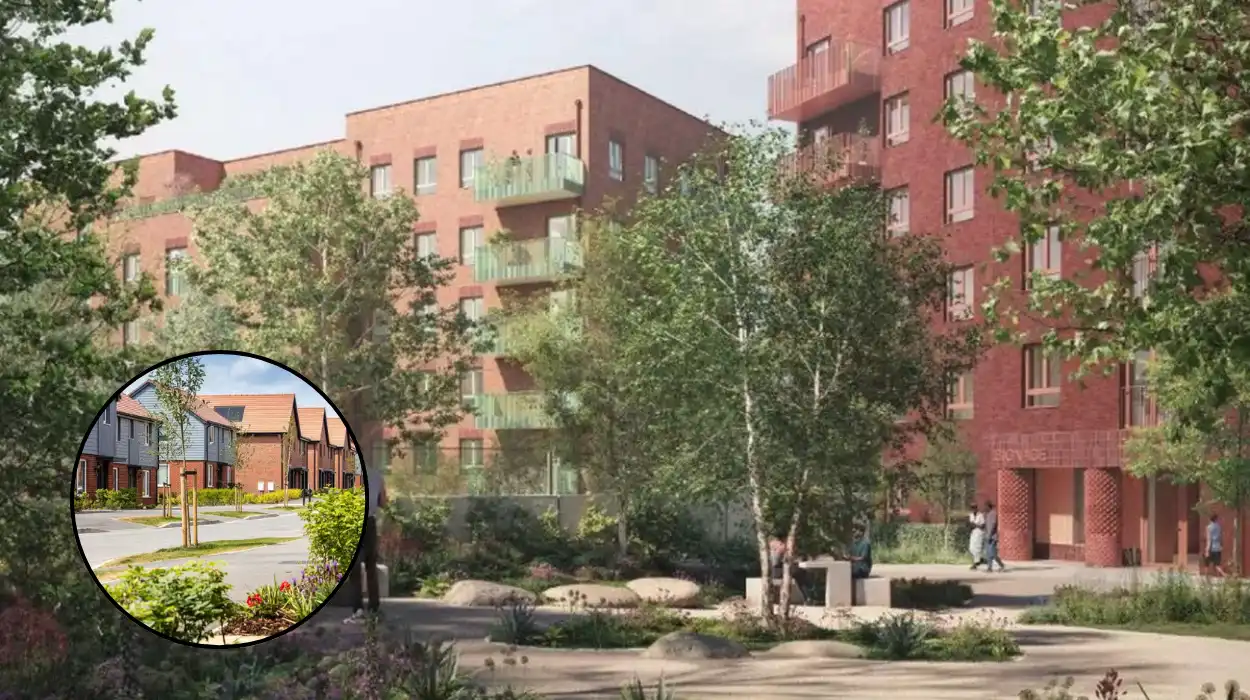
- The scheme involves four buildings ranging from three to six storeys in height.
What is the proposed development on the former synagogue site in South London?
As reported by Jonathan Mitchell of MyLondon, Pocket Living has submitted a planning application to Lambeth Council to redevelop a site in Streatham, South London, currently occupied by a former synagogue and public car park. The project covers 35-37 Leigham Court Road and adjacent land behind 39-49 Leigham Court Road. The synagogue has been closed since 2021, and the site also includes Leigham Court Road public car park and toilets.
- Key Points
- What is the proposed development on the former synagogue site in South London?
- Who is Pocket Living, and what housing model do they promote?
- What types of homes will be built and what sizes are they?
- How has the local community responded to the plans?
- What is the council’s stance on the development?
- What will the physical development look like?
The developer proposes to build 92 new homes, including what are described as ‘pocket’ homes measuring 38 square metres, which is just one square metre above the Government’s legal minimum for one-bedroom homes. This minimum is generally 39sqm but can be reduced to 37sqm if the property has a shower room instead of a bathroom.
Who is Pocket Living, and what housing model do they promote?
According to Eleanor Brown of MyLondon, Pocket Living was established in 2005 and has a track record of building developments across London, including in areas such as Croydon and Waltham Forest. The company promotes its homes as well-designed and affordable, targeting renters and first-time buyers by offering dwellings at 80% of the local market value.
In this Streatham development, Pocket Living plans to build a mixture of housing tenures: 15 social rented homes, 31 discount market rent homes, and 46 private homes.
What types of homes will be built and what sizes are they?
Council documents obtained by Sarah Patel of the Lambeth Local News detail the breakdown of homes:
- Discount market rent units (‘Pocket Rent Homes’): One-bedroom homes sized at 38sqm, designed for single occupants.
- Private homes (‘Pocket Sharer’ homes): Larger homes that include en-suite bathrooms. These are designed for tenants to share communal living spaces such as living rooms, kitchens, and dining areas.
- Social rented homes: A total of 15 homes reserved for social rent.
In total, 35% of the homes by habitable room will be ‘affordable’ housing units. Nine homes will be wheelchair accessible.
How has the local community responded to the plans?
During the public consultation phase, the proposal received 87 responses, with 44 in support and 43 objections, highlighting a community divided over the project.
Supporters praised the development for its inclusion of affordable and social housing, as well as the high quality of accommodation. Conversely, objections flagged concerns about the overall quality of the development and argued that the affordable housing provision was insufficient.
What is the council’s stance on the development?
Planning officers have reviewed the proposal and stated that the scheme
“would provide a good-quality environment for future occupiers.”
They also noted that the accommodation is well designed with unit sizes “according with policy,” as reported by Olivia Green of Lambeth Council’s Planning team.
The application is scheduled for consideration by the Planning Applications Committee on November 18, where a final decision will be made.
What will the physical development look like?
The scheme comprises four buildings with varying heights between three and six storeys. The inclusion of Pocket Living’s trademark ‘pocket’ homes is intended to maximise affordable housing density on a constrained urban site.