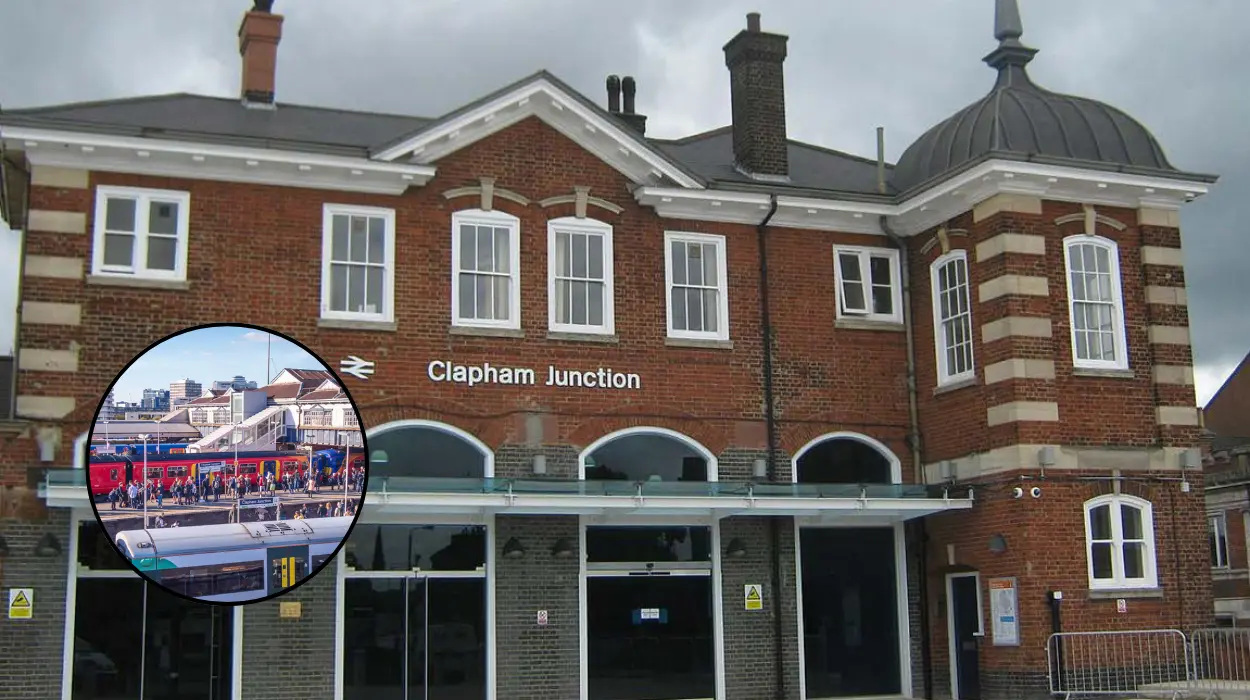
Key Points
- Clapham Junction is one of Europe’s busiest train stations by number of daily train services, with around 2,000 trains passing through each day.
- The station often experiences overcrowding, leading to plans for major refurbishment by Wandsworth Council in collaboration with Transport for London (TfL), Network Rail, and the Greater London Authority (GLA).
- Three shortlisted options for improvements include new station entrances on either side, with two options proposing a new overbridge and the third a subway underpass.
- The transformation coincides with thousands of new homes, shops, and infrastructure developments planned nearby, expected over the next decade.
- Network Rail has already announced a £35 million investment to improve passenger experience and reduce congestion at Clapham Junction.
- Recent progress includes refurbishment of lifts, installation of free Wi-Fi, painting and cleaning of entrances and overbridge, and plans for new retail units.
- The council is assessing how the three design options will impact the surrounding area, with detailed design work and further public consultation planned for completion by autumn 2026.
What makes Clapham Junction one of Europe’s busiest stations?
Clapham Junction, located in south London, is renowned for being among the busiest stations in all of Europe based on the number of trains that pass through daily. According to a report from secretldn.com, the station handles around 2,000 trains each day, making it exceptionally busy in terms of train services, though not the busiest by passenger numbers when compared to stations like Liverpool Street.
- Key Points
- What makes Clapham Junction one of Europe’s busiest stations?
- What are the current plans to transform Clapham Junction?
- How does the £35 million Network Rail investment fit into the upgrade?
- Why is now the right time for these refurbishments?
- What are the next steps and timelines for the project?
- What challenges and historical context have influenced the station’s development?
The heavy traffic results in chronic overcrowding issues, with commuters frequently facing packed platforms, congested ticket barriers, and crowded overpasses. As Ellie Muir wrote for Time Out, commuters at Clapham Junction are “familiar with being trapped like sardines,” highlighting the urgent need for upgrades.
What are the current plans to transform Clapham Junction?
Wandsworth Council, in partnership with major transport bodies such as TfL, Network Rail, and the Greater London Authority, has put forward ambitious refurbishment plans to tackle congestion and improve passenger flows at Clapham Junction.
The council has shortlisted three options for the station’s transformation:
- All options include constructing new entrances on both the eastern and western sides.
- Two options propose replacing the existing overbridge with a new one, potentially at the eastern or western ends of the station.
- A third option suggests building a subway under the railway at the eastern end instead of an overbridge.
These plans aim to provide better passenger connections while easing commuter traffic.
How does the £35 million Network Rail investment fit into the upgrade?
Complementing the council’s forthcoming redevelopment, Network Rail has already committed £35 million towards improving Clapham Junction, with work ongoing since earlier in 2025. The investment focuses on:
- Refurbishing all 10 lifts to enhance accessibility.
- Installing free passenger Wi-Fi.
- Repainting the overbridge and various platforms.
- Deep cleaning Grant Road entrance and adding improved lighting.
- Building retail units on the overbridge and near the Brighton Yard entrance.
- Installing new digital advertisement screens to modernise the station environment.
Network Rail senior sponsor Adrian Gogay highlighted that the first phase, which includes many visible improvements, is expected to conclude in spring 2026. Further phases will focus more on Brighton Yard and additional station elements, including expanding staircases and temporarily closing lifts for upgrades.
Why is now the right time for these refurbishments?
The refurbishment timing aligns with significant housing, retail, and infrastructure development plans scheduled for the Clapham Junction area, anticipated over the next ten years. Thousands of new homes and shops, along with improvements to local infrastructure, will increase passenger demand, making it essential to address station congestion proactively.
This forward-looking approach aims not only to handle current overcrowding but to future-proof the station as South London continues to grow.
What are the next steps and timelines for the project?
The council is currently engaged in evaluating how each of the three shortlisted options (two with new overbridges, one with a subway) will impact the station and its surrounding environments. Stage two of the project involves developing design principles and exploring the feasibility of each plan. This stage is aimed for completion by summer 2026, with the whole project expected to move into its next stages by autumn 2026.
Network Rail’s phased enhancement work will also continue alongside the council’s masterplan, ensuring ongoing improvements without major disruption to daily commuters.
What challenges and historical context have influenced the station’s development?
Historically, major redevelopment proposals, including a rejected £250 million private plan for skyscrapers alongside a £40 million station rebuild, faced local opposition led by the Clapham Junction Action Group. Instead, public funding has driven incremental improvements over the past decade, cumulatively exceeding £40 million, including step-free access and station refurbishment schemes supported by various public and private entities.
Despite these efforts, the station has remained overcrowded and lacking in modern facilities, highlighting the necessity for the current £35 million investment and the broader council-led transformation plans.
Clapham Junction’s scheduled transformation represents a significant commitment to enhancing one of Europe’s busiest rail hubs. By tackling congestion through new entrances, upgraded overbridges or subways, and improved facilities within an evolving urban landscape, the project seeks to improve commuter experience and support South London’s future growth.