Addiscombe, a vibrant district in South London’s Croydon borough, blends rich history with modern suburban appeal. This evergreen guide explores its origins, attractions, and lifestyle for locals and newcomers alike. Nestled 9.1 miles south of Charing Cross, Addiscombe offers green spaces, excellent transport, and a strong community spirit.
Historical Roots
Addiscombe’s name derives from Anglo-Saxon origins, likely “Eadda’s estate” or enclosed land, first recorded in the 13th century as part of Croydon Manor. The area remained rural and wooded for centuries, focused on farming and brick-making from local clay deposits.
During the Tudor era, it became a grand estate for the Heron family, with Sir Nicholas Heron dying there in 1568. Addiscombe Place, designed by Sir John Vanbrugh in 1703, hosted luminaries like John Evelyn, George III, and Peter the Great, who reportedly planted a cedar tree.
In 1809, the East India Company transformed it into the Addiscombe Military Seminary, training officers for India until its 1861 closure post-Indian Mutiny. The site was redeveloped into roads named after colonial figures like Outram and Havelock, with remnants like Ashleigh House surviving today.
Victorian expansion followed railways in the 1830s, with churches like St Mary Magdalene (1870) serving a growing population. By the 1930s, infill housing completed its suburban character.
Key Landmarks
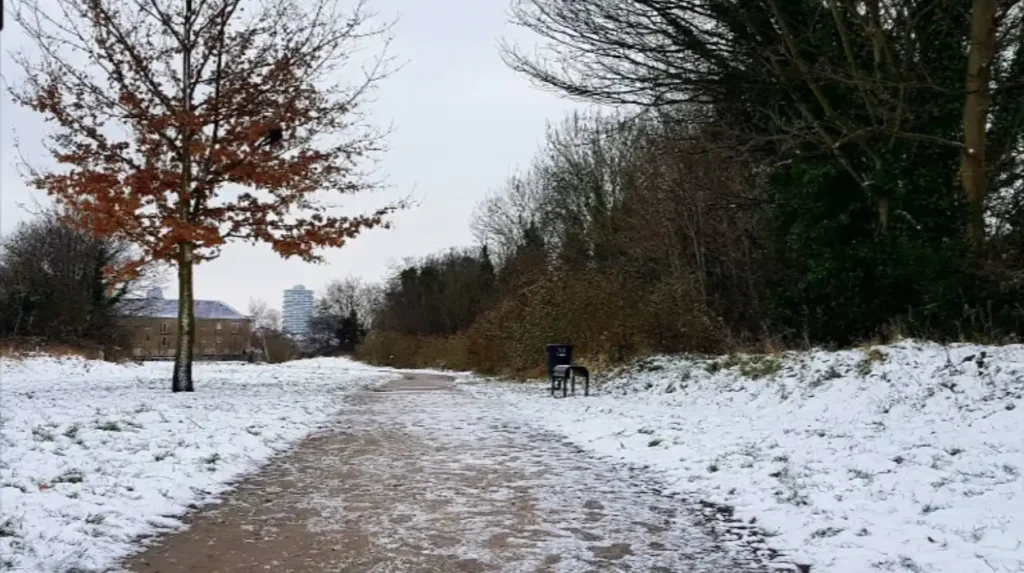
Addiscombe Railway Park, opened in 2007 on a former rail trackbed, spans 1.3 hectares with natural grasslands, cycle paths, and wildlife habitats enhanced by volunteer-planted shrubs. It honors the defunct Addiscombe station, closed in 1997 and now housing.
Ashburton Park and Addiscombe Recreation Ground provide essential green escapes amid urban living. Historic sites include blue plaques for D.H. Lawrence (taught locally 1908-1912) and inventor Frederick George Creed at 20 Outram Road.
St Mary Magdalene Church anchors community life, while 17th-century farm cottages on Addiscombe Road hold Grade II listing. The Oval Tavern pub nods to local heritage.
Modern Lifestyle
Lower Addiscombe Road buzzes as the main shopping parade, featuring diverse eateries like Damas Grill (Lebanese), Grillo’s Pizza, and Shah Karahi (Indian). Pubs and cafes cater to everyday needs.
Families appreciate schools such as Oasis Academy Shirley Park and St Thomas Becket Catholic Primary. Trinity School nearby offers strong transport links for older pupils.
Property appeals with Victorian semis around £650,000-£700,000 and flats from £200,000-£300,000, drawing professionals via commuter access.
Demographics and Community
Addiscombe East ward has about 11,706 residents (2024 estimate), with Addiscombe West at 16,765; diverse makeup includes 52% White, 15-20% Asian, 18-20% Black, and significant EU-born (13%). Ages skew working (65% 18-64), supporting family-friendly vibes.
Sports thrive via Addiscombe Cricket Club (est. 1866), Hockey Club, and Cycling Club. Residents’ associations like ASPRA foster engagement.
Getting Around
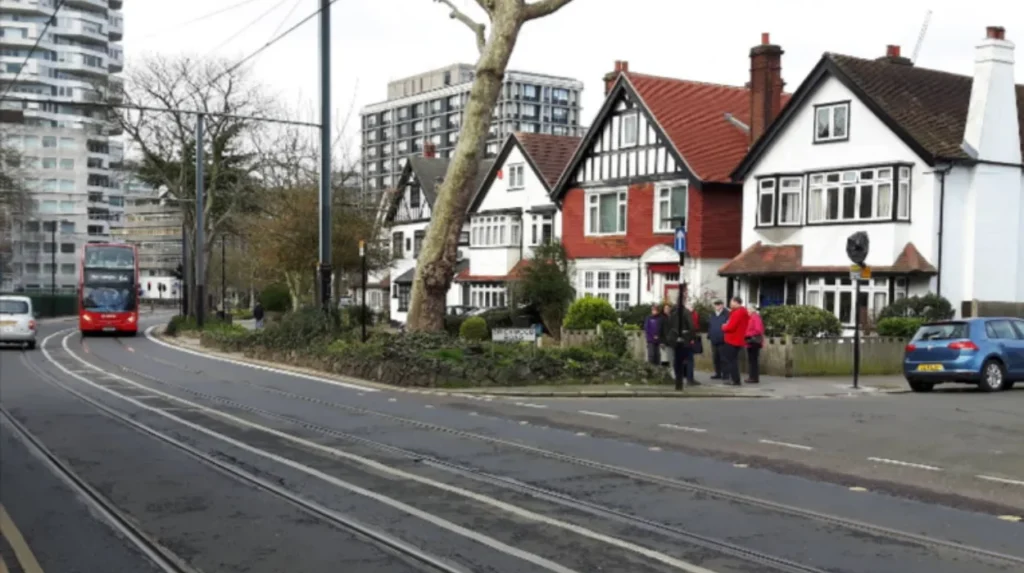
Tramlink serves Addiscombe, Blackhorse Lane, and Sandilands stops, linking to Croydon and beyond—despite the 2016 derailment tragedy. Buses (119, 194) and East Croydon station (2 miles) ensure London access.
Notable Residents
Literary figure R.F. Delderfield drew inspiration from local life (1918-1923). Model Kate Moss grew up here, alongside Procol Harum’s Matthew Fisher and Darth Vader actor David Prowse. Olympic walker Paul Nihill and Breast Cancer Care founder Betty Westgate add prestige.