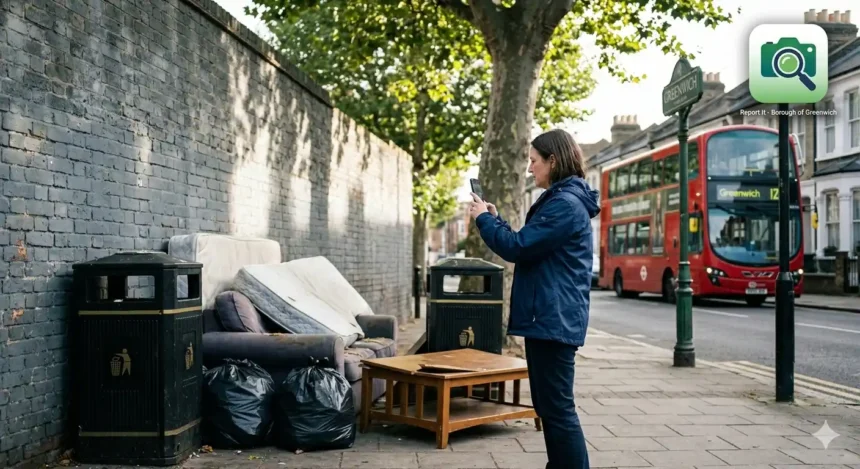
To report fly-tipping in Greenwich easily, contact the Royal Borough of Greenwich’s Enviro Crime team by email at their dedicated address or phone, providing location details, photos, and any witness info. Local residents in Bexley, Bromley, Lewisham, Southwark, Greenwich, and Croydon can use similar council online forms or apps for quick reporting across South London councils.
- Why Fly-Tipping Matters to Local Residents
- Step-by-Step Actions to Report Fly-Tipping
- Which Council Service Handles Fly-Tipping
- Information or Documents Needed
- Expected Response Time
- What to Do If Follow-Up Is Required
- Rights and Responsibilities Under UK Rules
- Practical Tips to Avoid Fly-Tipping in Future
Why Fly-Tipping Matters to Local Residents
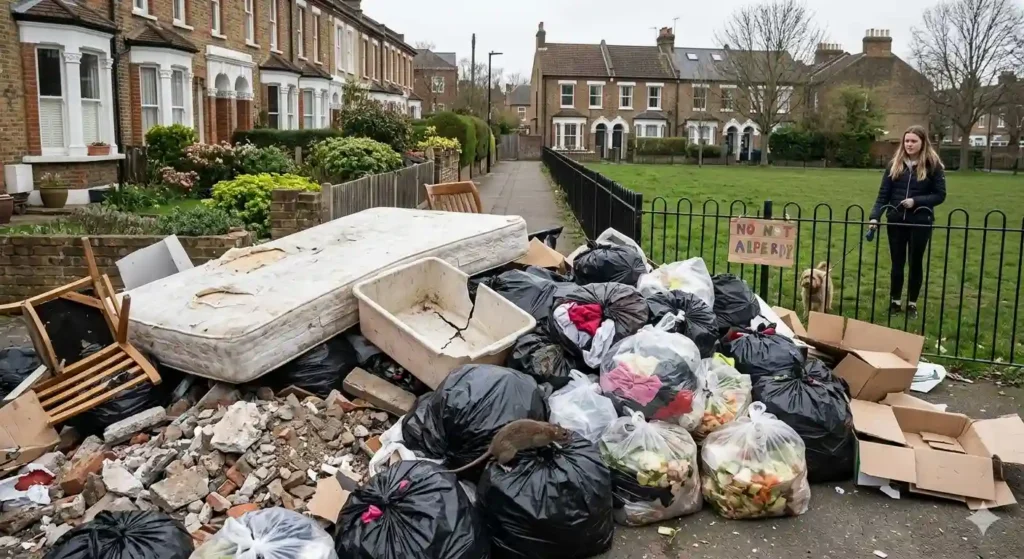
Fly-tipping blights communities in South London, turning streets, parks, and alleys into unsightly dumps that attract pests and harm the environment. For residents in Greenwich, Bexley, Bromley, Lewisham, Southwark, and Croydon, it raises health risks from vermin and pollution while lowering property values and quality of life.
Councils spend thousands annually clearing these illegal dumps, passing costs to taxpayers through higher council taxes. In areas like Croydon, over 1,000 incidents occur weekly, overwhelming services and frustrating local residents who value clean neighbourhoods.
This issue disrupts daily life, from blocked footpaths to fire hazards, making prompt reporting essential for safer, tidier boroughs.
Step-by-Step Actions to Report Fly-Tipping
Spotting fly-tipping requires immediate, safe action without confronting offenders.
- Note the exact location, date, time, waste description, and any vehicles (make, colour, registration) or suspects involved.
- Take clear photos or videos from a safe distance, capturing the waste pile and surroundings for evidence.
- Identify your local council: Greenwich uses Enviro Crime; Bexley has an online postcode form; Lewisham’s Cleaner Lewisham app; check Southwark, Bromley, or Croydon sites similarly.
- Submit via the council’s online portal, app, email, or phone—provide your details for follow-up but request anonymity if preferred.
- If ongoing, call police on 101 first, then inform your council with the reference number.
These steps ensure councils like Bexley council or Lewisham council act swiftly on reports from local residents.
Which Council Service Handles Fly-Tipping
Each South London council designates environmental enforcement or street care teams for fly-tipping.
In Greenwich, the Enviro Crime team investigates reports and clears public land waste. Bexley council’s Area Teams manage enforcement, issuing £400 fixed penalties.
Lewisham council directs reports through Cleaner Lewisham for public areas, with separate handling for estates. Southwark council uses its Street Care service for penalties under the Environmental Protection Act 1990.
Bromley and Croydon councils route issues via waste or enviro-crime departments, prioritising public highways. Always confirm via postcode search on the relevant South London council website.
Information or Documents Needed
Accurate details speed up council responses.
Provide the precise postcode or landmark, waste type (household, builders’ rubble), volume, and photos showing scale. Note vehicles, suspects’ descriptions, or company logos if seen.
Your contact info helps investigations, though councils protect it; include police CAD if applicable. For fly-tips from your waste, prove handover to a licensed carrier to avoid £400 fines.
No formal documents required upfront, but sketches or multiple angles strengthen cases for Greenwich or Bexley council actions.
Expected Response Time
Councils aim for prompt clearances on public land, often within days.
Greenwich investigates all reports, prioritising urgent hazards like blocking paths. Bexley and Lewisham target quick removals via apps, with assessments in 24-48 hours for high-priority sites.
Southwark and Croydon typically clear within a week, weather permitting, though peaks delay non-emergencies. Bromley focuses on enforcement post-clearance.
Response varies by volume—over 1,000 weekly Croydon reports strain services—but detailed submissions prioritise effectively.
What to Do If Follow-Up Is Required
Track progress if no action after initial report.
Contact the reporting team with your reference number, politely requesting updates on clearance or investigation. For Greenwich, email or call Enviro Crime; Lewisham uses Cleaner Lewisham status checks.
Escalate to the council’s complaints process if unresolved after two weeks, citing Environmental Protection Act duties. Share new evidence like worsening conditions to bump priority.
Local residents can join community watches in Bexley or Bromley for collective follow-ups with South London councils.
Rights and Responsibilities Under UK Rules
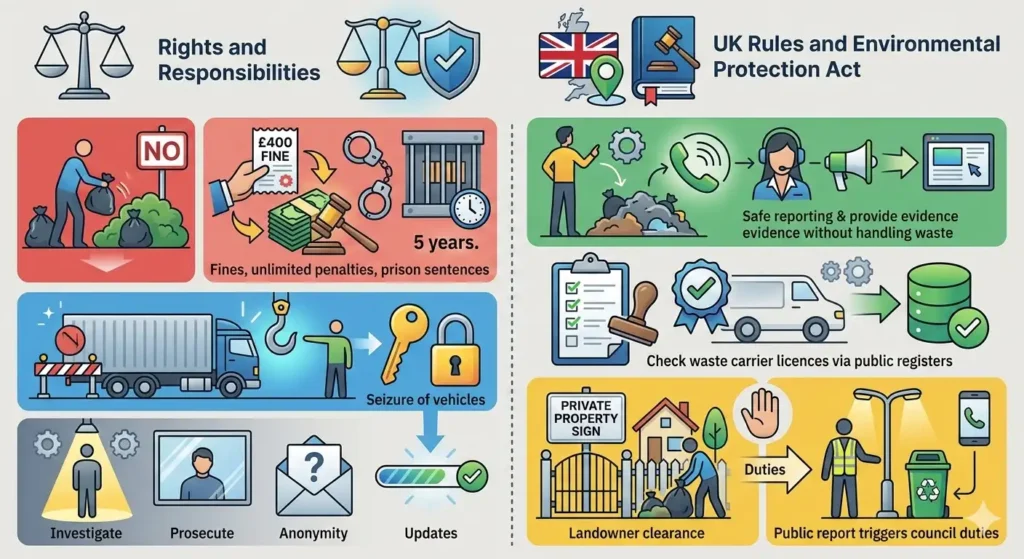
UK law under the Environmental Protection Act 1990 makes fly-tipping a crime, with councils issuing £400 fixed penalties or unlimited court fines up to five years’ jail.
Residents must report safely without handling waste and check waste carriers’ licences via public registers to avoid liability. Landowners clear private land fly-tips; public reports trigger council duties.
Councils investigate, prosecute, and seize vehicles but need evidence from local residents. You have rights to anonymity and updates, balanced by duties not to impede probes.
Practical Tips to Avoid Fly-Tipping in Future
Prevent hotspots through community vigilance.
Secure bins and alleys with locks or barriers in Greenwich back lanes. Use licensed carriers only—check via council tools—and keep receipts.
Join neighbourhood watches in Croydon or Lewisham to monitor and report early. Support council campaigns like Bromley’s “Your Waste is Your Responsibility.”
Plant hedges or install signs in vulnerable spots; report repeat sites for CCTV. Educate via local groups to deter in Bexley, Southwark areas.
These habits keep South London clean long-term.