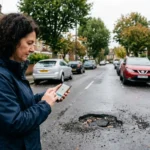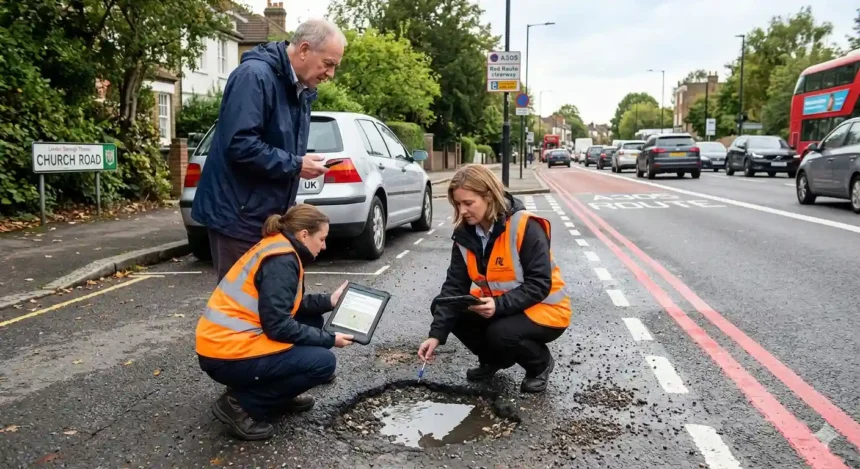
If you spot a pothole or damaged road surface in Richmond upon Thames, you should report it to Richmond Council through their online fault reporting system for roads and pavements. For serious hazards on the A316 or A205 “red routes”, the issue must instead be reported to Transport for London, which manages those major roads. Once reported, the council will inspect most road defects within around 3–5 working days and arrange repairs if they meet safety criteria.
Why road defects matter to local residents
Road defects such as potholes, broken pavements and damaged manhole covers can cause accidents for drivers, cyclists and pedestrians, especially children and older people. They can also damage vehicles, create trip hazards for people with mobility issues, and increase noise from traffic using uneven road surfaces.
For local residents travelling between boroughs like Bexley, Bromley, Lewisham, Southwark, Greenwich and Croydon, consistent road safety standards are important across South London council areas. Reporting defects quickly helps each borough, including Richmond upon Thames, plan repairs efficiently, reduce long‑term maintenance costs and keep streets accessible for walking, cycling, public transport and emergency services.
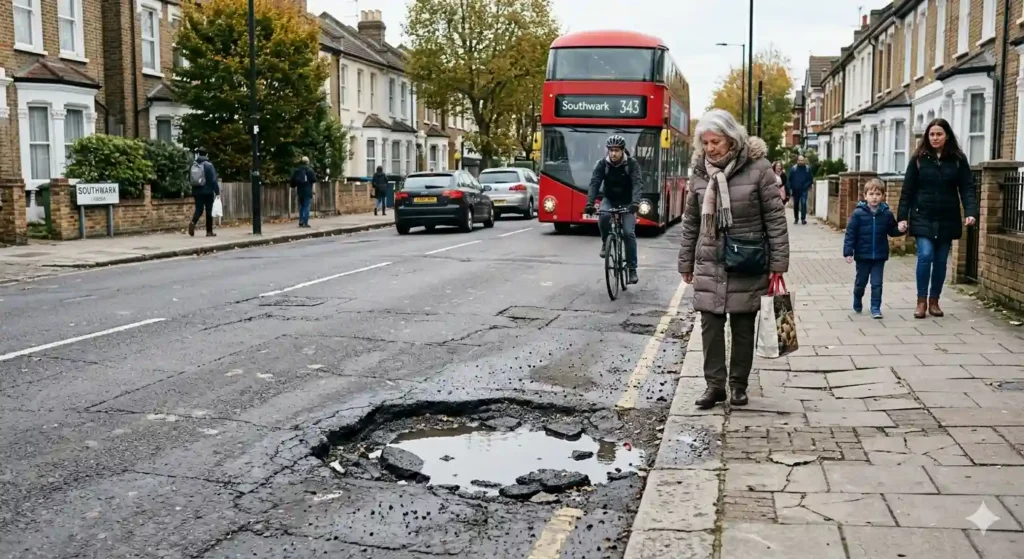
Step-by-step actions to solve the problem
If you need to report a pothole, broken pavement or similar road defect in Richmond upon Thames, you can follow these steps, which will feel familiar to residents used to systems run by Bexley Council, Lewisham Council and other South London councils.
- Identify who is responsible
- Check whether the defect is on a normal local road or a red route (A316 or A205). Red routes are managed by Transport for London, not the borough.
- If it is on a local street, Richmond Council’s highways team will usually handle it.
- Gather details at the scene
- Note the street name, nearest house number or junction, and any landmarks such as shops, parks or bus stops.
- Take clear photos if it is safe to do so, ideally from different angles showing the defect and its surroundings.
- Estimate the size and type of defect (for example, depth and width of a pothole, or whether a pavement flag is loose or raised).
- Make the report online
- Use Richmond upon Thames’ online “fault reporting” or “report potholes/damaged pavements” forms for roads and streets.
- On the form, you can usually drop a pin on a map to show the exact location and upload photographs of the damage.
- Provide a short description of the problem and how it affects road users (for example, “pothole in wheel track, cyclists forced to swerve”).
- Use out-of-hours routes for urgent hazards
- If the damage is so severe that it cannot safely wait (for example, a large hole, missing cover or serious trip hazard), councils typically provide an out‑of‑hours contact for emergencies.
- You should only use emergency contact options for clear safety risks to people or property, not for minor surface defects.
- Keep a record of your report
- Save any reference number generated by the online form along with the date and a screenshot or copy of what you submitted.
- This will help if you need to follow up later, similar to how you might track a case with Bexley Council or another South London council service.
Which council service handles it
In Richmond upon Thames, road defects on ordinary borough roads are handled by the highways or roads and transport service within the council. Their online fault reporting pages list issues such as potholes, damaged pavements, road markings, street flooding, bollards and road signs.
For A‑roads designated as red routes (the A316 and A205), responsibility sits with Transport for London rather than the local authority. If you report a red‑route problem to Richmond Council by mistake, they may pass it on, but using the correct route from the start usually speeds things up, just as in other boroughs like Southwark or Greenwich where TfL manages some main roads.
Information or documents needed
Most online forms used by Richmond and other South London councils ask for similar details when you report a highway defect.
You will usually need:
- Location details – street name, nearest property number or junction, and the exact position on the road or pavement.
- Description of the problem – what the defect is, its approximate size and any immediate risks.
- Photos (if available) – helpful but normally optional; they support the inspection and help crews find the right spot.
- Your contact details (optional in many cases) – name and email or address, so the council can send updates or request more information.
You do not normally need formal documents to report a defect, and you can usually report anonymously if you prefer. However, if you later want to make a claim for vehicle damage or injury, you will need to keep evidence such as repair invoices, medical notes and photographs taken as close to the date of the incident as possible.
Expected response time
Richmond upon Thames indicates that once you submit a road or pavement defect report, the location is inspected within about 3–5 working days. After inspection, repairs are prioritised based on how serious the defect is and how much risk it poses to road users.
This prioritisation approach is also common in neighbouring boroughs such as Bexley or Lewisham, where major potholes or dangerous trip hazards are repaired more quickly than minor surface wear. If you provide your contact details, councils often offer email updates or allow you to track progress through their online services.
What to do if follow-up is required
Sometimes a defect may not be repaired as quickly as you expect, or you may feel it has been missed. In that situation, local residents can take several practical steps, similar to processes in other South London council areas.
- Check your original report
Confirm that the location and description were accurate and that you used the correct category (for example, pothole vs. street flooding). - Wait for the standard inspection period
Allow at least one inspection cycle (around 3–5 working days) and a reasonable time for scheduling repairs, especially during busy periods. - Submit a follow‑up query
Using your case reference, you can contact the council again to ask for an update or to report that the defect has worsened. Providing updated photos can show that the problem has become more urgent. - Escalate through the council’s complaints process
If you believe the council has not followed its published procedures, you can use its formal complaints route, as you would with Bexley Council, Lewisham Council or any other local authority. This should be used for process concerns rather than to challenge individual technical decisions about what meets repair criteria.
Rights and responsibilities under UK rules
Under UK law, highway authorities such as borough councils and Transport for London have a duty to maintain public highways in a safe condition, within reasonable resource limits. For local residents, that means roads and pavements should not present unnecessary and foreseeable risks, and councils should have inspection and maintenance regimes in place.
At the same time, residents also have responsibilities:
- To report hazards promptly when they notice them, using the appropriate channels.
- To take reasonable care for their own safety, for example by not walking into clearly cordoned‑off areas or driving at unsafe speeds.
- To allow reasonable time for inspection and repair and to understand that not every minor defect will meet repair criteria immediately.
If a person suffers injury or damage because of a road defect, they may be able to pursue a claim, but the council can defend itself if it can prove that it took reasonable care through inspections and repairs. Keeping evidence and reporting defects when you see them helps demonstrate that problems were raised in good time.
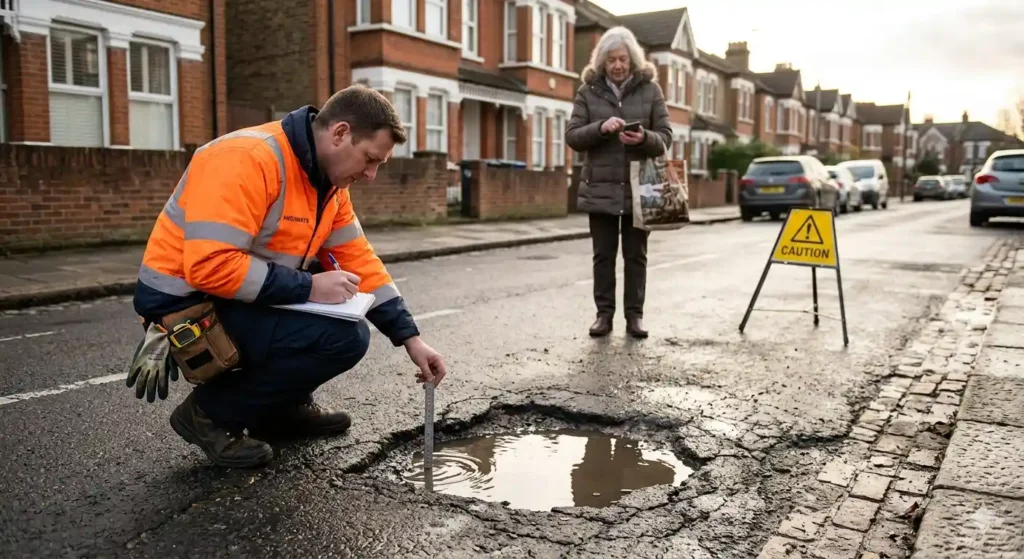
Practical tips to avoid problems in future
While road maintenance is the council’s responsibility, there are several practical ways residents across South London can reduce risk and help keep streets in good condition.
- Report small issues early
Even minor cracks or dips can develop into larger potholes if left untreated, so early reporting gives the highways team more options and may keep costs down. - Share information with neighbours
If a particular road defect affects many people in Bexley, Bromley, Lewisham, Southwark, Greenwich, Croydon or Richmond, encourage others to report it too so that the council sees the full impact. - Drive and cycle carefully around known defects
Until repairs are completed, take extra care, slow down and choose your road position to avoid sudden swerves that could cause collisions. - Respect temporary works and barriers
When contractors are repairing the highway, follow signs and diversions, and avoid moving cones or barriers. Interfering with works can delay repairs and create new hazards.
By understanding how to report road defects in Richmond upon Thames and neighbouring boroughs, local residents can help keep South London’s streets safer and more pleasant for everyone.
How do you report pothole damage?
To report pothole damage in London Borough of Richmond upon Thames, visit the council’s road defect reporting page and submit details of the location, the type of damage, and a photo if possible. You can also report it through the council’s online reporting tool so the highways team can inspect and schedule repairs.