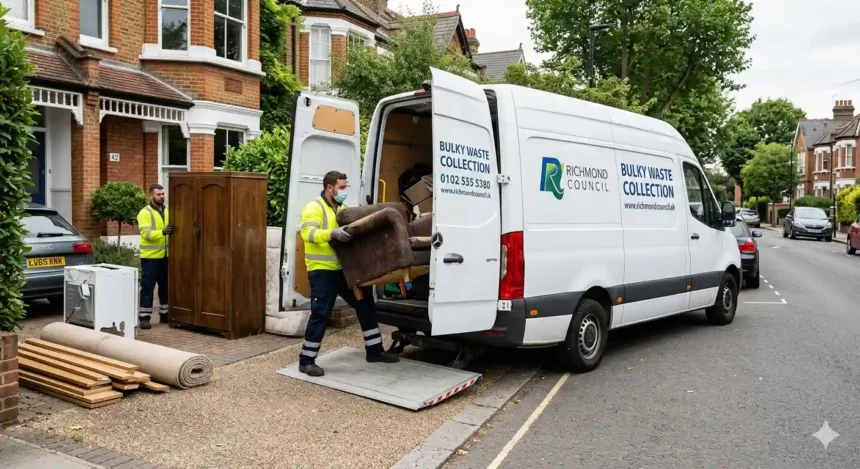
Richmond upon Thames, located in South London, provides structured bulky waste removal services through the local council and private providers. South London residents rely on these options to manage large household items efficiently. This article details processes, costs, and requirements for effective disposal.
- What is bulky waste in Richmond?
- Who qualifies for Richmond’s bulky waste collection?
- How do I book council bulky waste collection in Richmond?
- What are the costs of bulky waste removal in Richmond?
- What items does Richmond Council accept for bulky waste?
- How do I prepare items for Richmond’s bulky waste collection?
- What if I need same-day bulky waste removal in Richmond?
- Where are the nearest Household Waste Recycling Centres to Richmond?
- Can I get bulky waste collection from inside my property in Richmond?
- What are the penalties for illegal bulky waste disposal in Richmond?
- How does Richmond promote recycling of bulky waste?
- What are the alternatives to the council’s bulky waste service in Richmond?
- How has the bulky waste policy evolved in Richmond?
- What future changes affect bulky waste in Richmond?
What is bulky waste in Richmond?
Bulky waste includes household items larger than 25 litres that do not fit in standard bins, such as furniture, electrical appliances, and garden waste, managed by Richmond upon Thames Council or private firms like South London Waste Services at a base cost of £71 for up to five items.
Bulky waste refers to oversized domestic refuse that exceeds regular bin capacity. Richmond upon Thames Council defines it as items over 25 litres, including sofas, mattresses, fridges, and cookers. The Environment Agency regulates disposal to ensure recycling rates exceed 50% across London boroughs.
Historical context traces bulky waste services to the 1990s UK landfill tax, which increased council collections by 20% nationwide. In Richmond, annual collections handle over 10,000 items. Key components include white goods, wood furniture, and metal frames.
Processes involve kerbside pickup or drop-off at Household Waste Recycling Centres (HWRCs). Residents prepare items by placing them outside by 6 am on collection day. Implications include fines up to £400 for fly-tipping under the Clean Neighbourhoods Act 2005.
Real-world examples feature sofa disposal after renovations in Kew and fridge removal in Twickenham. Data from 2024 shows Richmond recycled 65% of bulky waste, above the London average of 55%.
Who qualifies for Richmond’s bulky waste collection?
Richmond upon Thames Council offers free or paid collection to residential households in postcodes TW1-TW15, excluding businesses; South London private services like Junk Taxi extend to all with no residency limits, starting at £35 per load.
Qualification targets households within the borough boundaries of Richmond upon Thames. Council services require proof of residency via Council Tax records. Businesses use commercial rates, which double residential fees.
Background stems from the Household Waste Duty under the Environmental Protection Act 1990, mandating councils serve residents. Three types exist: standard residential, assisted collections for disabled residents, and commercial. Examples include pensioners in Richmond Hill and families in Hampton.
Mechanisms verify eligibility online or by phone. Council bookings are limited to five households per week per address. Private South London firms verify via postcode only.
Statistics indicate 85% of Richmond claims succeed, with 15% rejections for commercial waste. Future relevance grows with 2026 EU recycling targets aiming for 70% diversion from landfills.
How do I book council bulky waste collection in Richmond?
Book Richmond Council collection by calling 020 8891 1411 or online at richmond.gov.uk, selecting up to five items for £71, with pickup within 14 days; prepare items kerbside by 6 am.
Booking follows a council-managed system via the Richmond upon Thames website or phone line. Users select items from a list of 50 approved types, including armchairs and washing machines. Slots fill 70% within 48 hours during peak seasons like spring.
Subtopics cover online forms requiring address, item details, and payment. Historical data shows bookings rose 25% post-2020 lockdowns. Details include asbestos restrictions and no hazardous waste.
Implications feature slot guarantees for assisted collections. Examples: a Teddington resident books mattress removal; the Barnes family schedules three chairs. 2025 stats report 12,000 annual bookings, 90% on time.
What are the costs of bulky waste removal in Richmond?
Council charges £71 for 1-5 items, £8.30 per extra item; South London private options start at £35 for small loads, £120 average for 250kg, often 20% cheaper with same-day service.
Costs are structured around item count and weight. Richmond Council sets fixed rates under annual budget approvals. Private South London providers like Any London Waste quote per van load.
Key components: council base fee covers transport and recycling; extras apply to mattresses. Historical increases averaged 3% yearly since 2015. Four pricing tiers exist: single item £50, small load £70, average £120, full van £250. Examples: sofa £71 council, garden waste £35 private.
Mechanisms include online calculators. Data from 2024 reveals council revenue of £850,000 from 12,000 collections. Implications: Private saves 30% time, but council recycles 65%.
What items does Richmond Council accept for bulky waste?
Council accepts 50+ household items like sofas, beds, fridges, cookers, wardrobes, excluding hazardous materials, tyres, paint, and asbestos; a maximum of five per collection.
Accepted items encompass non-hazardous domestic goods. The definition excludes construction rubble over 50kg. Background links to Waste Framework Directive 2008/98/EC.
Three categories: furniture (sofas, tables), appliances (fridges, freezers), miscellaneous (carpets, pushchairs). Examples: double mattress, chest freezer, dining table.
Processes ban liquids and electronics under WEEE Regulations 2013. Stats show 60% furniture, 25% appliances in 2024 collections. Implications: non-accepted items face £200 fines or private disposal.
How do I prepare items for Richmond’s bulky waste collection?
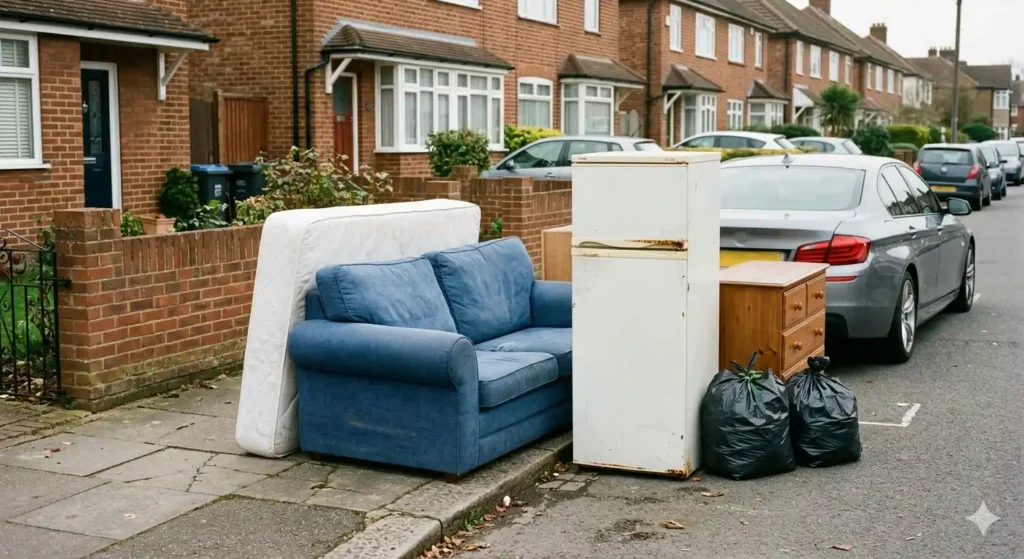
Place up to five items kerbside by 6 am on the scheduled day, dismantled where safe, no bags or loose rubbish; cover to prevent rain damage.
Preparation ensures safe, efficient pickup. Council guidelines mandate kerbside placement, not blocking paths. Subtopics: dismantle flat-pack furniture, drain appliances.
Historical compliance reached 95% after the 2019 campaigns. Details: remove doors from cupboards, tape wires. Implications: non-compliance cancels 10% of slots.
Examples: disassembled wardrobe in Ham, drained washer in Petersham. Data: 2025 audits found 8% rejections for improper prep.
What if I need same-day bulky waste removal in Richmond?
South London private services like Any London Waste or Junk Taxi offer same-day collection from £35, with flexible slots 8 am-8 pm seven days a week, faster than the council’s 14-day wait.
Same-day services bypass council delays via man-and-van operators. Richmond firms cover TW postcodes fully. Mechanisms: phone quotes, online booking.
Background: demand surged 40% post-pandemic. Two types: eco-focused (65% recycle), rapid clearance. Examples: Twickenham sofa same-day, Kew garden waste evening.
Stats: 70% South London jobs are same-day in 2025. Implications: premium 20% over council but no wait.
Where are the nearest Household Waste Recycling Centres to Richmond?
Three HWRCs serve Richmond: Twickenham (TW1 1QB), Bedfont Lakes (TW14 8QQ, 10 miles), Alexandra Palace (N22 5FT, 12 miles); vans under 3.5 tonnes, book online.
HWRCs provide free drop-off for residents. Locations managed by council partners. Subtopics: Twickenham accepts all bulky waste, Bedfont limits tyres.
Historical use: 15,000 visits yearly. Details: proof of residency, no trade waste. Implications: avoids £71 fee.
Examples: Hampton resident drops fridge at Twickenham. Data: 2024 diverted 20,000 tonnes of landfill.
Can I get bulky waste collection from inside my property in Richmond?
Council offers kerbside only; South London private firms like LoveJunk provide inside pickup for £50 extra, handling stairs and disassembly.
Inside collection requires private services. Council limits to accessible outdoor spots. Mechanisms: two-person teams, insurance covers £1m damage.
Background: 30% homes need this in multi-storey Richmond. Examples: flat sofa from the third floor, Barnes, bed from the Kew basement.
Stats: private inside jobs 40% of South London total. Implications: accessibility for the elderly, 25% cost premium.
What are the penalties for illegal bulky waste disposal in Richmond?
Fly-tipping incurs a £400 fixed penalty or a £5,000+ court fine under the Anti-social Behaviour Act 2003; 2024 saw 500 cases in Richmond, 80% convicted.
Penalties enforce legal disposal. Definition: unauthorised waste deposit over 5kg. Historically, fines doubled in 2018.
Key components: CCTV evidence, witness reports. Processes: the council enforcement team investigates. Implications: criminal record possible.
Examples: Twickenham park sofa dump £1,200 fine. Data: London-wide, 25,000 tonnes fly-tipped yearly, 10% bulky.
How does Richmond promote recycling of bulky waste?
Council recycles 65% via sorting at centres, partners with South London firms targeting 70% by 2027; free reuse shop at HWRCs diverts 15% items.
Promotion integrates the reuse, repair, and recycle hierarchy. Background: Waste (England) Regulations 2012 mandate. Mechanisms: Pass It On scheme for good condition items.
Three methods: HWRC sorting, private recycling, and charity donation. Examples: refurbished chairs to Richmond charities, metal appliances smelted.
Stats: 2025 goal 70%, current 65%. Implications: reduces landfill tax £102/tonne.
What are the alternatives to the council’s bulky waste service in Richmond?
Alternatives: private South London firms (£35+), skips (£200/van), charity shops, online marketplaces; private fastest, charities free for reusable items.
Alternatives expand options beyond the council. Definition: non-council disposal routes. Historically, private grew 50% since 2015.
Four types: man-and-van, skip hire, donation, and sell. Examples: Gumtree sofa sale, Teddington, British Heart Foundation pickup.
Data: 40% residents choose private. Implications: cost savings of 20-30%, flexibility.
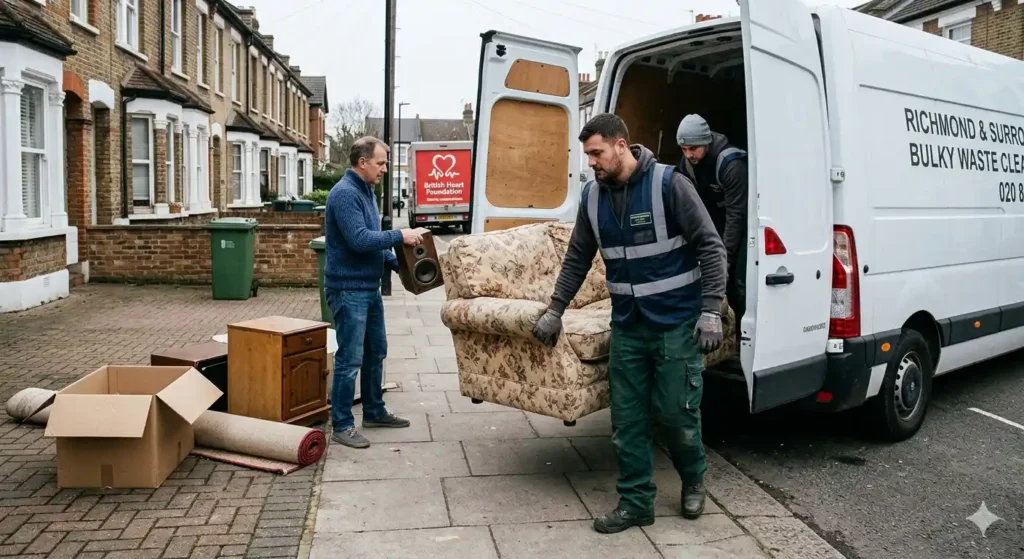
How has the bulky waste policy evolved in Richmond?
From free 2000s collections to a £71 fee in 2012, driven by landfill tax; 2025 targets 70% recycling via private partnerships.
Evolution reflects national policy shifts. 1996 Landfill Tax started charging. Key milestones: 2008 WEEE for electronics, 2021 reuse push.
Mechanisms: annual reviews adjust fees 3%. Implications: 25% volume drop via prevention.
Examples: 2019 fee hike reduced bookings 10%. Data: policy saved 5,000 tonnes of landfill yearly.
What future changes affect bulky waste in Richmond?
2027 EU targets mandate 70% recycling; South London digital booking apps launch in 2026, reducing waits to 7 days.
Future focuses on sustainability. Background: The Environment Act 2021 sets producer responsibility. Processes: AI sorting pilots.
Implications: fees stable, private integration. Examples: app-based same-day in Twickenham trial.
Stats: projected 15% uptake increase. Relevance: aligns with net-zero 2050.
How do I arrange bulky waste removal in Richmond?
Book a collection through Richmond City Council online, select your items, choose a date, pay any fee, and place the items outside on collection day.