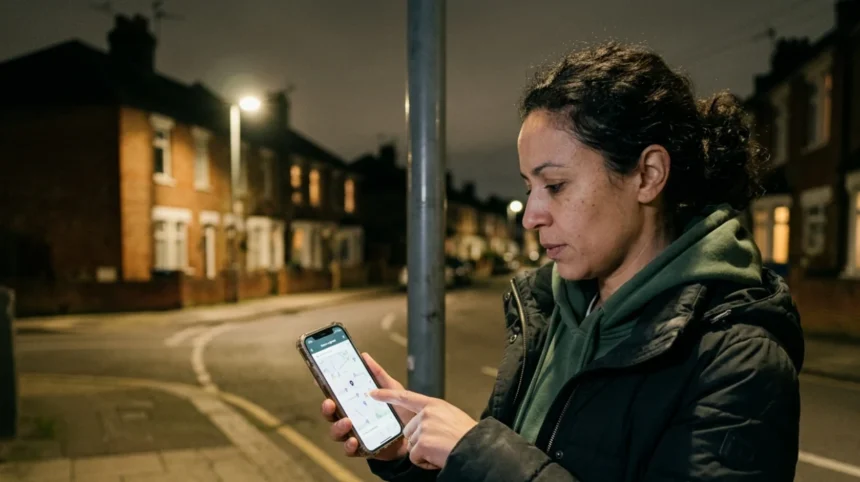
South London residents use the Sutton map tool to report broken street lights by finding the lamp on a map, checking its location, and submitting a short form to Sutton Council. Dangerous lights need a phone call, and red routes sit with Transport for London, not the borough.
- What is the Sutton street light map tool?
- How do you find the right street light on the map?
- What details does Sutton Council ask for?
- Which street light problems go to the Sutton Council?
- When should you contact TfL instead?
- Why does the unique reference number matter?
- What happens after you submit a report?
- What counts as a dangerous street light?
- How does Sutton’s reporting system fit South London?
- Why does this matter for everyday road safety?
What is the Sutton street light map tool?
The Sutton street light map tool is an online reporting form that lets residents identify a faulty street light by location and submit the issue directly to Sutton Council. It is designed for broken lights, not dangerous lights, and it separates borough problems from TfL roads.
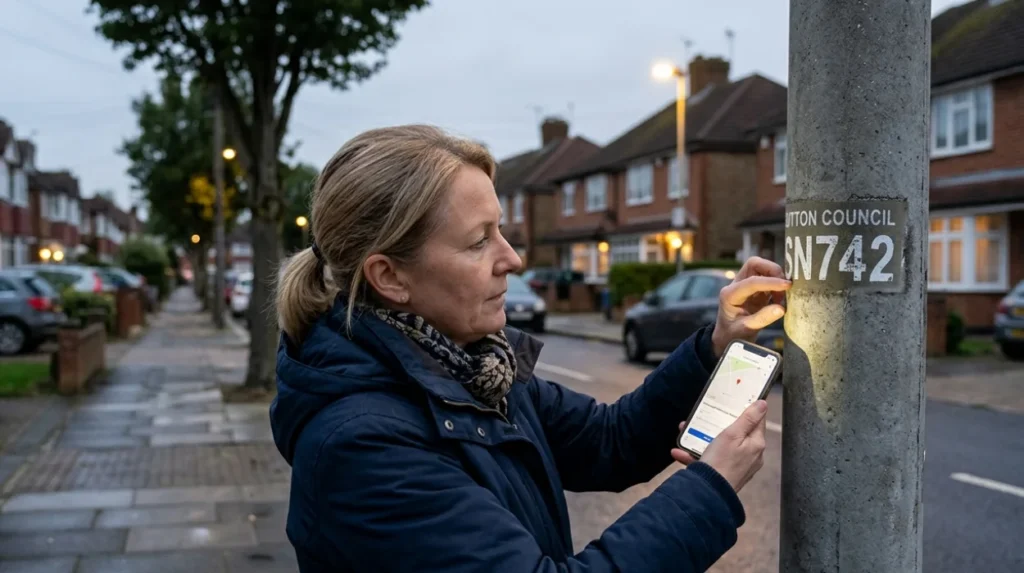
Sutton Council says the map is the route for reporting an issue with a street light. The council asks users to know the location of the light and the unique street light reference number painted on the column before submitting the report. The same council service also covers related street furniture, such as bollards and lit signs.
The tool matters because street lighting is part of the wider streets, roads, and highways service in Sutton. That service page groups street lights with potholes, road markings, and roadworks, which shows how the council treats lighting as part of everyday highway maintenance rather than as a standalone facility.
How do you find the right street light on the map?
Use the search bar to type a location, address, or street name, then select the correct lamp on the map before starting the form. Sutton Council also accepts a manual click on the map and asks for the light’s location and unique reference number.
The council’s instructions are simple. First, search for the road or address. Next, click the relevant street light on the map. Then complete the short report form. If the map is hard to use, Sutton also provides a form option for people who cannot use the map.
The reference number matters because it identifies the exact column. On streets with several lights close together, that number removes confusion and helps the repair team target the correct asset. Sutton’s guidance places the reference number alongside the location as the main information needed before the report is submitted.
A useful example is a resident on a South London side street who sees a dark lamp outside a terrace. They search the street name, click the nearest column, confirm the reference number painted on it, and submit the form. That creates a precise report instead of a vague complaint about the whole road.
What details does Sutton Council ask for?
Sutton Council asks for the location of the light, the unique reference number on the column, and a short description of the fault. These details help the council identify the asset, assess the problem, and route the report to the correct maintenance team.
The council does not ask residents to diagnose the fault in technical terms. A plain description works. Examples include a light that is not working, a lamp that flickers, or a column that looks damaged. The critical part is accurate location data because street lighting networks contain many similar-looking columns.
For dangerous lights, Sutton uses a different process. The council says to call 020 8770 5000 if the light is leaning, fallen, missing an inspection door, smoking, sparking, or showing exposed wires. That emergency-style route exists because dangerous electrical equipment needs immediate attention.
This split between ordinary faults and dangerous faults keeps the reporting system clear. A broken lamp fits the online map tool. A hazardous column needs direct contact by phone. Sutton’s public guidance draws that line explicitly.
Which street light problems go to the Sutton Council?
Sutton Council handles broken or faulty street lights on borough roads, including many residential streets and local highways. It also accepts reports for related items like bollards and lit signs, while red routes and traffic signals fall to TfL.
The council’s street light page says residents should report a broken street light using the map. Its broader highways pages also include street lights, bollards, lit signs, and street furniture, which confirms that these assets sit within the borough’s local road management duties.
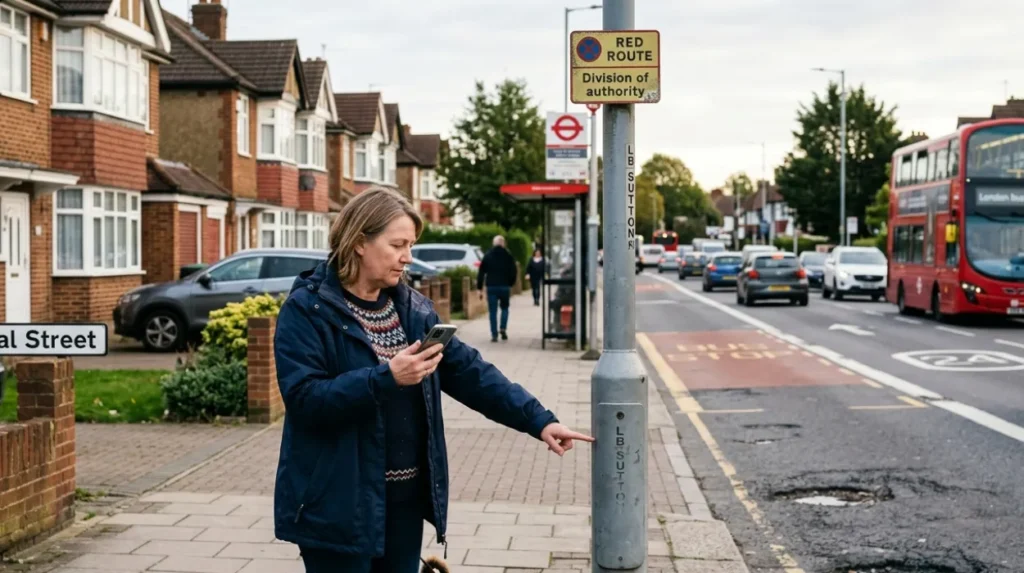
Sutton also states that it is responsible for street lights in the borough except on red routes and A roads under TfL control. That distinction is essential in South London because some busy corridors, including major routes such as the A217 and A24, sit outside the council’s direct responsibility for this type of issue.
A resident in Sutton should treat the map tool as the default route for local roads and estates. If the road is a red route or part of TfL’s network, the borough does not process the report as its own case.
When should you contact TfL instead?
Contact TfL when the street light issue sits on a red route or a major A road, because TfL manages those roads in Sutton. TfL’s Streetcare service uses an online map and a short form for road network problems, including street lights.
TfL says its Streetcare tool is the quickest way to report issues on the roads it manages. TfL also explains that the service can identify whether a problem belongs to TfL or to another authority, then route it accordingly. That matters for South London because road responsibility changes from street to street.
TfL’s red routes make up 5 per cent of London’s roads but carry up to 30 per cent of the city’s traffic. Those roads exist to keep major journeys moving, so their maintenance sits with TfL rather than borough councils.
The practical rule is straightforward. If the street light sits beside a red route line or a major TfL-managed corridor, use TfL Streetcare. If it sits on a normal borough street in Sutton, use the Sutton map tool.
Why does the unique reference number matter?
The unique street light reference number identifies one exact column in Sutton’s lighting inventory. It reduces reporting errors, speeds up diagnosis, and helps maintenance teams match the complaint to the correct asset without relying on vague street descriptions alone.
Sutton Council requires the number because streets contain many similar lamps. A location alone can still leave ambiguity, especially on long roads, junctions, or estates. The reference number gives the report a fixed asset identity that supports maintenance logging and repair planning.
Public records show that Sutton holds detailed street lighting location data and has shared that information in response to a freedom of information request. That response also noted thousands of LED units in the borough, which indicates a large, managed network rather than a small set of isolated lamps.
This asset-based approach is normal for local highway services. It helps the council track faults, plan replacements, and work through repair queues with less confusion. For residents, the direct benefit is faster and more accurate reporting.
What happens after you submit a report?
After you submit the form, the council records the issue against the identified light and sends it into its maintenance workflow. TfL follows a similar process for its roads, using Streetcare to route the problem and return updates when the issue is being investigated or completed.
Sutton does not publish a detailed public service timeline on the street light page, but it does instruct residents to use the map and short form, which shows that the report becomes a logged case for the relevant team. The borough’s separate emergency phone route for dangerous lights confirms that urgent cases receive faster direct handling.
TfL gives a clearer public description of the next stage. It says Streetcare helps it investigate reports and automatically detects whether the problem sits on TfL or another authority’s network. That model shows how London road reporting often depends on asset ownership before repair action begins.
In practical terms, the report enters a queue, gets matched to the asset, and moves to inspection or repair. The more precise the report, the less time the team spends confirming the problem.
What counts as a dangerous street light?
A dangerous street light is one that is leaning, fallen, smoking, sparking, missing an inspection door, or exposing wires. Sutton Council says residents should call 020 8770 5000 for these cases instead of using the standard map form.
This emergency pathway exists because live electrical faults create a risk to pedestrians, drivers, and nearby property. A damaged column can also become unstable, which turns a maintenance issue into a safety issue. Sutton’s wording is specific, and residents should follow it exactly.
The map tool suits ordinary faults where the light is out or not working. The phone line suits dangerous conditions where immediate human review matters more than a standard online submission. That separation is a basic safety control in local highway services.
A simple rule works well in practice. If the lamp is dark, use the map. If the column looks unsafe or electrically dangerous, call the council.
How does Sutton’s reporting system fit South London?
Sutton’s street light map is part of a wider South London highway reporting system that includes borough councils, TfL roads, and other asset owners. Residents need the right authority because the network is split by road type, not by postcode alone.
South London road users often cross boundaries between borough streets and strategic roads. Sutton’s guidance and TfL’s Streetcare service together show how reporting works across that boundary. The borough handles local streets, while TfL handles red routes and other major roads.
That division affects every report, not just street lights. Sutton’s highways pages group street lights with potholes and road markings, while TfL’s service covers issues such as roadworks, traffic lights, bus shelters, and damaged street lights on its own network.
For residents, the main implication is accuracy. A report sent to the wrong authority slows down repair. A report sent to the right one moves faster and gets tracked by the correct team.
Why does this matter for everyday road safety?
Street lighting supports visibility, navigation, and perceived safety on local roads. Sutton’s system matters because it lets residents report faults quickly, separate urgent hazards from routine issues, and direct problems to the right authority in a large London highway network.
TfL’s statement that red routes carry 30 per cent of London’s traffic on 5 per cent of the roads shows why correct routing matters at the city scale. High-traffic corridors need efficient issue handling, while borough streets need clear local reporting channels.
Sutton’s public pages also show that street lighting is part of a broader maintenance structure, not an isolated service. That structure includes street furniture, street works, and highway management, all of which affect how quickly residents get a response to a fault.
The long-term relevance is clear. As councils upgrade lighting networks and maintain LEDs, residents still need a simple way to report failures. Sutton’s map tool gives that route today, and the borough’s published guidance keeps the process consistent for routine repairs and urgent hazards alike.
How do I report a broken street light in Sutton?
Use the Sutton street light map tool: search your street, click the exact lamp, enter its reference number, and submit a short report.