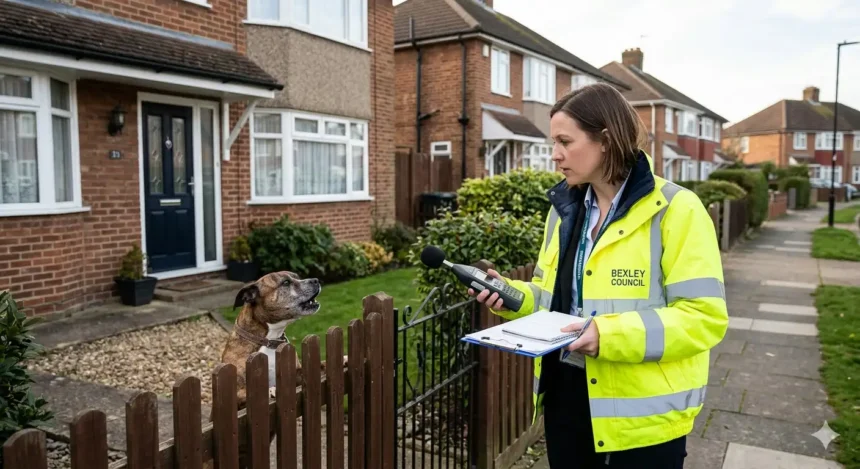
If a dog in Bexley is barking so often or so loudly that it regularly disturbs your sleep, work‑from‑home life, or daily routine, you can report it to the London Borough of Bexley as a noise nuisance. South London residents are protected by the Environmental Protection Act 1990, which lets local councils treat persistent dog barking as a statutory nuisance and act against the owner. This guide explains when barking becomes a legal issue, how to gather evidence, and how to submit a formal complaint to Bexley Council so environmental‑health officers can investigate and, if needed, issue a noise‑abatement notice.
- What is a barking‑dog nuisance in Bexley?
- When should you report a barking dog to Bexley Council?
- How does Bexley Council handle dog‑barking complaints?
- What evidence do you need to report a barking dog?
- How to report a barking dog online to Bexley Council
- What happens after you submit a barking‑dog complaint?
- When should you contact the police about a barking dog?
- What legal powers does Bexley Council have over barking dogs?
- How can you reduce the impact of a barking dog while a complaint is open?
- What are the limitations of a barking‑dog complaint in Bexley?
- How to live alongside dogs in South London while protecting your rights?
What is a barking‑dog nuisance in Bexley?
A barking dog becomes a nuisance when it emits noise at a level, frequency, or duration that is “prejudicial to health or a nuisance” to nearby residents. Under the Environmental Protection Act 1990, a “statutory nuisance” includes any noise that unreasonably interferes with your enjoyment of your home, especially during the night or at times when quiet is reasonably expected, such as early morning or late evening. In Bexley this is assessed by the council’s environmental‑health or community‑safety team, who treat repeated, prolonged barking that you cannot reasonably ignore as a potential statutory nuisance.
For example, a dog that barks for at least 30 minutes multiple times a day, or several times a night, may meet the threshold if it regularly prevents you from sleeping or concentrating. Short, occasional barks—for instance, when a dog greets a visitor or a postman—do not usually qualify, but long‑running patterns that coincide with your rest, work, or care routines can. South London residents in Bexley are covered by the same national framework applied across England, so the legal test is the same whether you live in Chislehurst, Bexleyheath, or Sidcup.
When should you report a barking dog to Bexley Council?
You should report a barking dog to Bexley Council when informal steps have failed and the noise is clearly affecting your quality of life. Typical triggers include:
- Barking that happens at least 3–4 times per week, often at night or early morning.
- Barking that lasts 20–30 minutes or more at a time and recurs regularly.
- A noticeable impact on your sleep, work performance, or mental‑health stability.
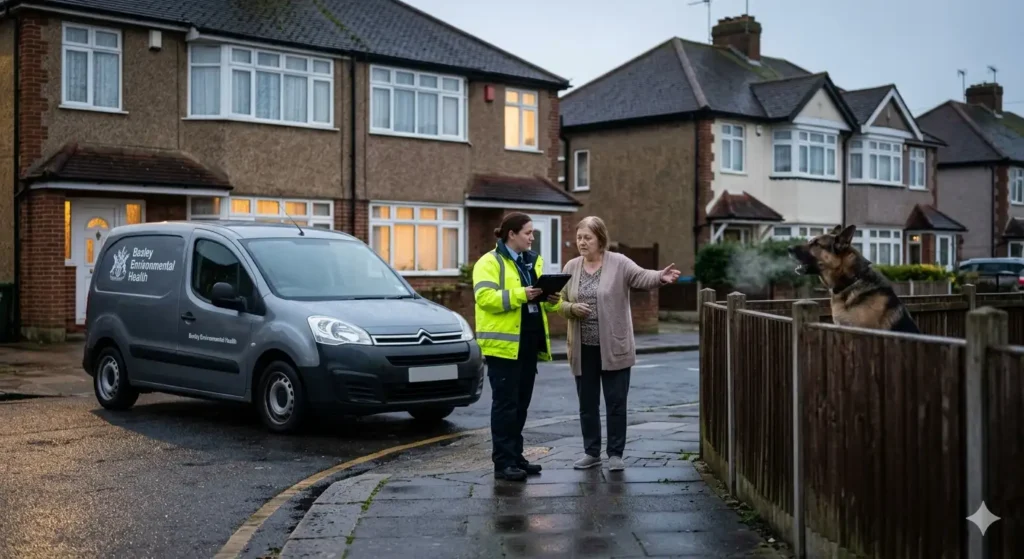
Before going straight to the council, South London residents are usually advised to try at least one reasonable, non‑confrontational contact. This might mean speaking to the dog owner, leaving a polite note, or checking whether the dog is being left alone for long hours or reacting to a specific trigger such as a builder’s lorry or delivery van. If the problem persists for several weeks despite these efforts, or if you cannot safely or comfortably speak to the neighbour, you should escalate to a formal complaint via Bexley Council’s community‑safety or environmental‑health channels.
How does Bexley Council handle dog‑barking complaints?
Bexley Council handles barking‑dog complaints under its broader noise‑nuisance and community‑safety framework. When you report a dog, the council’s environmental‑health or community‑safety team first reviews your complaint to determine whether it meets the statutory‑nuisance test. Officers may ask you to provide a written description of the noise, your property layout, and how the barking affects you on a typical day or night.
If the complaint is accepted as a potential statutory nuisance, the council is likely to:
- Ask you to keep a detailed noise diary or log.
- Conduct site visits or use noise‑monitoring equipment.
- Contact the dog’s owner, advise them on responsible‑ownership practices, and warn that formal action may follow if the barking continues.
Under the Environmental Protection Act 1990, a council can issue an abatement notice if evidence shows that the dog’s barking amounts to a statutory nuisance. If the owner fails to comply without a reasonable excuse, the council can prosecute and seek fines of up to £5,000 in the magistrates’ court. In Bexley this process is coordinated through the council’s community‑safety and environmental‑health services, which also handle other noise issues such as loud music, building works, and anti‑social behaviour.
What evidence do you need to report a barking dog?
To report a barking dog effectively, you must provide concrete, repeating evidence that shows the noise is both frequent and disruptive. The kind of evidence that Bexley Council typically asks for includes:
- A written description of the noise (type of sound, duration, pattern).
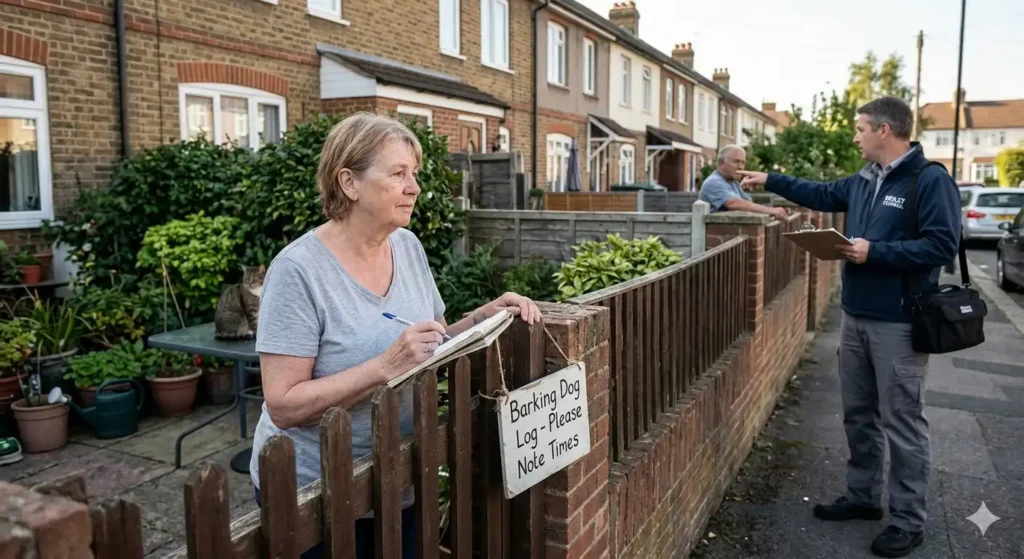
- A noise‑barking diary or log (best practice).
- Contact details so officers can follow up.
A noise diary should record at least 14 days of data, noting every time the dog barks in a way that is clearly noticeable. For each entry, you should record:
- Date and time (start and end where possible).
- Approximate duration (e.g., “10:15–10:45 = 30 minutes”).
- Whether the barking was continuous or intermittent.
- How the noise affected you (e.g., woke you, stopped you working, stressed you).
You can use separate columns for “Date”, “Time start”, “Time end”, “Duration”, “Dog’s location (visible or inferred)”, and “Impact on you”. Keeping this record for two to four weeks gives officers a clear pattern and helps them distinguish occasional nuisance from a genuine statutory‑nuisance‑level problem. South London residents who live in shared or semi‑detached housing should also note which side of the house the sound comes from, and whether walls or windows are facing the source.
How to report a barking dog online to Bexley Council
Bexley Council offers an online route for reporting concerns about noise, including barking dogs. You should access the “Issues with noise” or similar section under the council’s community‑safety and environment pages. The exact steps are:
- Go to the Bexley Council website and navigate to the “Community safety and environment” or “Noise” section.
- Select the option for reporting a noise or nuisance issue.
- Fill in your personal details, your address, and the address of the property where the dog is kept.
- Describe the barking (frequency, typical times of day, duration, impact).
- Upload or reference your barking diary (if you have one) and confirm you are willing to co‑operate with any investigation.
The council will confirm your complaint, usually within a few working days, and may then request further evidence or contact you by phone or email. In some cases officers may visit the area, speak to the dog owner, and advise on how to reduce the barking through training, containment, or environmental changes. If the problem continues, they can escalate to formal statutory‑nuisance procedures.
What happens after you submit a barking‑dog complaint?
Once you submit a barking‑dog complaint to Bexley Council, the council’s environmental‑health or community‑safety team will review it and decide whether it meets the statutory‑nuisance test. If it does, they generally follow a staged process:
- Initial review: officers check your description, your address, and any diary or evidence you have provided.
- Owner contact: they may contact the dog’s owner, explain the complaint, and warn that continued barking may lead to formal action.
- Evidence‑gathering: they may ask you to keep a more detailed diary or may conduct site visits, use noise‑monitoring devices, or request further statements.
- Formal notice: if sufficient evidence exists, they can serve a noise abatement notice under the Environmental Protection Act 1990.
If the owner ignores the notice without a reasonable excuse, the council can prosecute in the magistrates’ court. Penalties can include fines of up to £5,000 for residential properties and higher amounts for commercial premises. In Bexley, the process is designed to be proportionate, with warnings and advice offered before fines are sought, but residents are expected to provide clear, consistent evidence that the barking is genuinely disruptive.
When should you contact the police about a barking dog?
In most barking‑dog cases, Bexley residents should contact the council rather than the police, because noise from domestic animals is usually treated as a civil statutory‑nuisance issue, not a criminal one. Police involvement is appropriate only if:
- The barking is linked to other anti‑social behaviour (intimidation, threats, or harassment).
- The dog is clearly being abused or permanently confined in a way that raises welfare concerns.
- There is an immediate threat to safety or public order (for example, a dog roaming loose in a public space).
In those situations you can call the non‑emergency police number (101) or, in an emergency, 999. The police may pass relevant information to the council’s environmental‑health or animal‑welfare teams, but they will not usually enforce statutory‑nuisance law for barking dogs on their own. For routine, persistent barking, the council remains the primary route for formal action in Bexley and across South London.
What legal powers does Bexley Council have over barking dogs?
Bexley Council draws its main legal powers from the Environmental Protection Act 1990 and the Anti‑social Behaviour, Crime and Policing Act 2014. Under these laws, the council can:
- Treat a barking dog as a statutory nuisance if its noise is “prejudicial to health or a nuisance”.
- Investigate complaints, gather evidence, and serve a noise abatement notice on the owner.
- Prosecute the owner if the notice is breached, seeking fines in the magistrates’ court.
The council may also work with other agencies, such as animal‑welfare charities or dog‑training organisations, to help owners change their dogs’ behaviour. In some cases this can lead to advice notices, training referrals, or even rehoming where a dog is demonstrably unsuitable for the home environment. For South London residents, the key point is that the council has both enforcement and advisory powers, so a complaint can lead to both a formal order and practical support for the dog’s owner.
How can you reduce the impact of a barking dog while a complaint is open?
While you wait for Bexley Council to act, you can take practical steps to reduce the impact of a barking dog on your daily life. These measures do not replace a formal complaint but can ease symptoms and strengthen your case by showing that you have tried to manage the situation. Examples include:
- Using earplugs or white‑noise machines at night to mask the sound.
- Closing windows and drawing curtains during peak barking times.
- Rearranging your bedroom or workspace to the side of the house farthest from the noise source.
- Using noise‑cancelling headphones if you work from home.
You should still keep a clear diary of when the barking occurs and how it affects you, because this record remains crucial for the council’s investigation. If your sleep or mental health is significantly affected, you might also note any medical consultations or advice from a GP, as this can help demonstrate the seriousness of the nuisance in a statutory‑nuisance context.
What are the limitations of a barking‑dog complaint in Bexley?
Complaints about barking dogs in Bexley have clear limits set by law and council policy. The council cannot act on every single bark, only on patterns that amount to a statutory nuisance. Officers must also protect privacy and avoid prolonged surveillance, so they rely heavily on resident evidence and reasonable on‑site checks.
Typical limitations include:
- No guarantee of immediate resolution; investigations can take several weeks.
- No requirement for the council to remove the dog or rehome it; they usually focus on stopping the noise.
- No action where the barking is very occasional or short‑lived and does not meet the “nuisance” threshold.
In practice this means that many residents in South London will need to accept a baseline level of everyday dog noise, such as greetings, brief territorial alerts, or training sessions. The legal framework is designed to target persistent, unreasonable barking, not to create a perfectly silent environment.
How to live alongside dogs in South London while protecting your rights?
Living in South London means sharing space with many dogs, especially in semi‑detached streets, terraces, and shared‑garden blocks. Bexley residents can protect their rights while remaining good neighbours by combining clear communication, evidence‑based complaint‑making, and sensible noise‑reduction habits. Key strategies include:
- Speaking to dog owners calmly before escalating to the council.
- Documenting only the barking that is clearly excessive and disruptive.
- Using the council’s formal channels when informal resolution fails.
By following these steps, residents help councils target the worst cases of dog‑barking nuisance without overburdening services or straining local relationships. For South London communities, this balance supports both animal ownership and residents’ right to a reasonably quiet home environment under the Environmental Protection Act 1990.
Can you complain to the London Borough of Bexley about a barking dog?
Yes. You can report excessive barking as a noise nuisance through the council’s environmental health service. Provide details like timing, frequency, and how it affects you for council action.