Persistent dog barking is a common nuisance in residential areas of South London, including Lewisham. When barking regularly disrupts sleep, work from home, or daily life, residents can treat it as a statutory noise nuisance under UK environmental‑protection law. Lewisham Council handles these complaints through its environmental‑health team, which follows a defined process for recording, assessing, and enforcing action. This article explains how to report dog‑barking noise to Lewisham Council, what evidence you need, and what happens next, written for a broad South London audience.
- What counts as a reportable dog‑barking problem?
- What UK laws cover dog barking in Lewisham?
- Who is responsible for investigating dog‑barking complaints?
- When should you report dog barking to Lewisham Council?
- How to contact Lewisham Council about dog barking
- What information Lewisham Council will ask for
- How to keep a noise diary for dog‑barking complaints
- What Lewisham Council officers do after a report
- What a noise abatement notice means for dog owners
- What residents can do before contacting the council
- Special cases: flats, blocks of flats, and housing associations
- What to do if the council does not act quickly
- How to protect privacy and avoid confrontation
- Long‑term implications of unresolved dog‑barking noise
- How South London residents can stay informed and proactive
What counts as a reportable dog‑barking problem?
A reportable dog‑barking problem is noise that unreasonably and substantially interferes with the use or enjoyment of your home for a significant period. This is defined legally as a “statutory nuisance” under the Environmental Protection Act 1990. In practice, Lewisham Council officers treat this as a nuisance when barking is frequent, prolonged, or occurs at unreasonable times such as late at night or early morning.
Dog‑barking becomes a statutory nuisance where it is persistent, not just occasional. Examples include a dog barking for 30 minutes or more several times per week, or a dog barking most evenings between 10 p.m. and 8 a.m. in a terraced street. The council will not usually act on a single incident, but will consider a pattern of disturbance over days or weeks. South London residents in Lewisham can report this either online or by phone through the council’s customer‑services routes.
What UK laws cover dog barking in Lewisham?
The main law governing dog‑barking noise in Lewisham is the Environmental Protection Act 1990, which defines “statutory nuisance.” Statutory nuisance includes any noise that unreasonably and substantially interferes with the use or enjoyment of a home or other premises. Lewisham Council officers apply this definition when assessing complaints about barking dogs, loud music, or similar noise sources.
The Act empowers local councils in England and Wales to investigate and serve legal notices if a nuisance is found. A second key piece of legislation is the Anti‑social Behaviour, Crime and Policing Act 2014, which strengthens councils’ powers to issue noise abatement notices and consider injunctions. If a dog‑barking nuisance continues after a notice, the council can take the case to a magistrates’ court, where fines of up to £5,000 are possible for residents, or higher for businesses.
Who is responsible for investigating dog‑barking complaints?
Lewisham Council’s environmental‑health team is responsible for investigating statutory‑nuisance complaints, including persistent dog barking. Officers are trained to assess noise according to objective criteria such as volume, duration, frequency, time of day, and impact on an average person. The team also works with housing or anti‑social‑behaviour units if the barking is linked to broader tenancy issues.
Residents in South London must contact Lewisham Council directly, not the police or the RSPCA, unless the situation involves animal welfare or an immediate threat. The council’s website directs people to report noise nuisances via its online form or by calling customer services. Officers may then speak to the dog owner, ask them to reduce the noise, and monitor the situation before taking formal action.
When should you report dog barking to Lewisham Council?
You should report dog barking to Lewisham Council when it is both persistent and disruptive, not just occasional. The council expects residents to treat regular barking that affects sleep, concentration, or wellbeing as a reportable issue. A single evening of noise, or brief barking during the day, is usually not enough to trigger a statutory‑nuisance case.
Typical situations that warrant a report include barking most nights between 10 p.m. and 7 a.m., a dog barking for extended periods several times per week, or multiple dogs in one building causing frequent disturbances. The council’s guidance also notes that residents should normally try a polite conversation with the owner first, unless there is a safety concern. If the barking continues after discussion, that is the point at which to contact Lewisham Council through its formal route.
How to contact Lewisham Council about dog barking
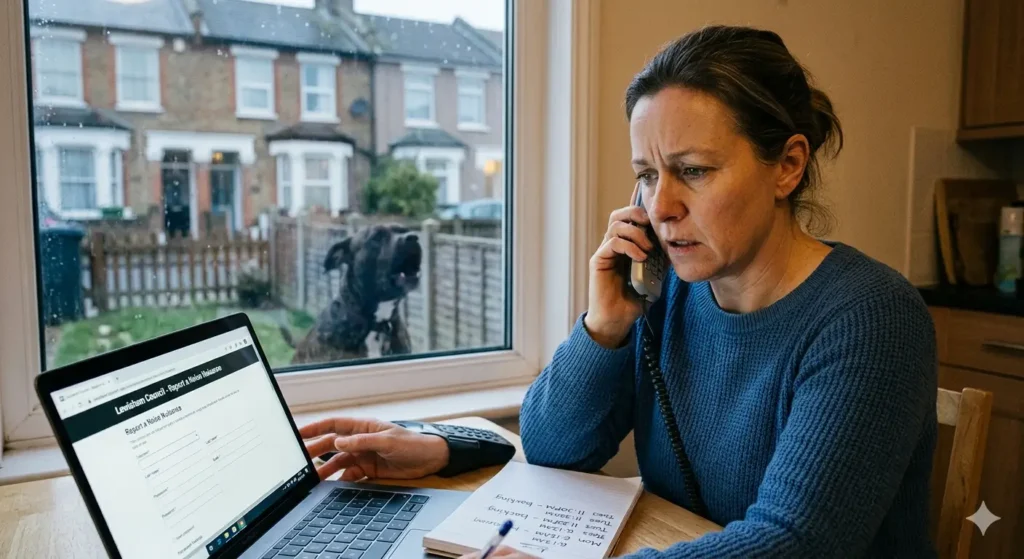
To report persistent dog barking to Lewisham Council, you must use the official reporting channels the council sets out. The primary route is the online “report a noise nuisance” form on the Lewisham Council website, which is linked from the GOV.UK noise‑pollution reporting page. Residents can also call the council’s customer‑services number and ask for environmental health or noise‑nuisance support.
The council will ask for your name, address, contact details, and a description of the barking. You should specify the property where the dog is kept, the times and days it barks, how long it continues, and how it affects you. South London residents in Lewisham are advised to keep a draft of this information so they can complete the form or phone call in one sitting. Anonymous complaints are generally not accepted because the council may need to show evidence to the dog owner or a court.
What information Lewisham Council will ask for
Lewisham Council will ask for specific details about the dog‑barking noise before opening a case. This includes your full name and address, the property address where the dog is located, the type of dwelling (house, flat, maisonette), and whether you are renting or owning. You must also state how the barking affects you, such as inability to sleep, difficulty studying, or stress at home.
The council will request a description of the nuisance, including typical times (for example, every night from 10:30 p.m. to 11:45 p.m.), duration (15–30 minutes per episode), and frequency (four or five nights per week). Officers may also ask whether you have spoken to the dog owner, what was said, and whether the behaviour changed. This information helps them decide whether the barking meets the legal definition of a statutory nuisance and whether a formal investigation is justified.
How to keep a noise diary for dog‑barking complaints
Lewisham Council often asks residents to complete a noise diary for at least 14 days to support a dog‑barking complaint. A noise diary is a structured record of each barking episode, noting the date, start and end time, duration, and how it affected you. You should also record any conversations with the dog owner or other neighbours.
To keep a reliable diary, use a printed template or a simple spreadsheet. For each entry, write the date, the exact start and finish time of the barking, how loud it seemed (for example, “clearly audible through walls”), and what you were doing (sleeping, working, studying). Examples of useful notes include: “19 April 2026, 10:30 p.m. to 11:15 p.m., dog barking, unable to sleep” and “21 April 2026, 7:00 a.m. to 7:20 a.m., barking as I left for work.” The council says diaries should be returned within 42 days and will be reviewed by a case officer within about 15 working days.
What Lewisham Council officers do after a report
Once a dog‑barking complaint is logged, Lewisham Council officers follow a standard procedure. First, they review the information you provide, including any noise diary, and may contact the dog owner to discuss the issue informally. They may advise the owner to address the cause, such as leaving the dog alone less, using training, or checking for health issues.
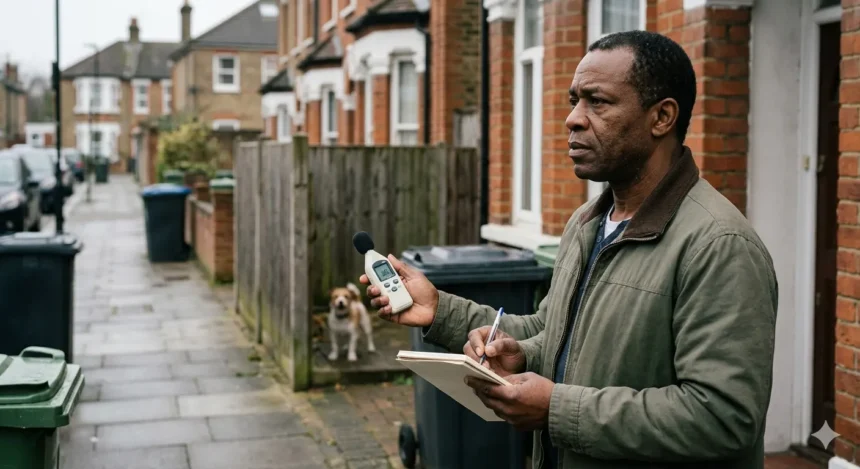
If the barking continues and the evidence suggests a statutory nuisance, an officer may visit the area or the property to record or assess the noise. They use professional judgment and may compare the noise to what an “average person” would find unreasonable. If they conclude a nuisance exists, the council can issue a formal warning or a noise abatement notice under the Environmental Protection Act 1990. Further escalation may involve court proceedings if the owner fails to comply.
What a noise abatement notice means for dog owners
A noise abatement notice is a legal document issued by Lewisham Council when a statutory nuisance is confirmed. It tells the dog owner to stop or reduce the barking within a set period, usually up to seven days. The notice can specify times when barking must not exceed certain levels, or require steps such as not leaving the dog alone for long periods or moving it to a quieter part of the property.
If the owner complies, the case may be closed. If the barking continues, the council can take the matter to a local magistrates’ court. On conviction, the court can impose a fine of up to £5,000 for a resident, or higher for a business. The owner may also be ordered to pay costs, and in extreme cases, the court can consider an injunction to prevent further noise. Lewisham’s procedure is designed to balance enforcement with a fair warning period.
What residents can do before contacting the council
Before contacting Lewisham Council, residents in South London are encouraged to try resolving the issue informally where safe. This usually means speaking calmly to the dog owner, explaining how the barking affects you, and suggesting practical solutions such as closing windows, using a bark‑deterrent device, or adjusting the dog’s routine.
Examples of informal steps include sending a polite note through the door, leaving a message if the owner is absent, or using a neighbour‑mediation service if available. If the owner is receptive, this can stop the nuisance quickly and avoid formal complaints. However, if the barking continues, or if there is conflict or a safety concern, you should then proceed to report the issue to Lewisham Council through its official route.
Special cases: flats, blocks of flats, and housing associations
Dog‑barking complaints in flats or blocks of flats in Lewisham can be more complex because of shared walls and communal areas. In such cases, the council may involve housing officers or the landlord, especially if the property is managed by a housing association or the council itself. Housing policies often treat persistent noise as a breach of tenancy conditions, which can lead to warnings or other action.
For example, if a tenant barks a dog most nights from a flat above another resident, the landlord may be asked to investigate. The housing association or council housing officer may speak to the tenant, check the tenancy agreement, and consider penalties if the noise continues. Residents in blocks of flats should note the flat number, building name, and any relevant management‑company details when reporting to Lewisham Council.
What to do if the council does not act quickly
If Lewisham Council does not act quickly or seems to dismiss a dog‑barking complaint, residents have several options. First, they can request feedback on the case, asking why no statutory nuisance was found or what further evidence is needed. The council’s procedure typically allows residents to get a written explanation of the decision.
If you believe the council has mishandled the case, you can escalate through its formal complaints process. If the complaint is still unresolved, you may contact the Local Government and Social Care Ombudsman (LGSCO), which investigates disputes between residents and councils. The LGSCO can review whether Lewisham Council followed its own noise‑nuisance procedure and acted reasonably in your case.
How to protect privacy and avoid confrontation
Reporting dog barking to Lewisham Council can raise concerns about privacy and neighbour relations. The council will usually keep your identity confidential when dealing with the dog owner, but it may need to share some details if a case goes to court. Officers are trained to avoid disclosing more than necessary and to focus on the noise, not personal disputes.
To minimise confrontation, do not confront the owner aggressively. Avoid recording conversations in private spaces without consent, which may be unlawful under data‑protection rules. Instead, rely on objective evidence such as your noise diary, written notes, and any formal correspondence with the council. This approach supports both your safety and the legitimacy of your complaint.
Long‑term implications of unresolved dog‑barking noise
Unresolved dog‑barking noise can have long‑term effects on health and community relations in South London. Chronic sleep disturbance from frequent barking is linked to stress, anxiety, and reduced concentration, which can affect work and study. Repeated conflicts over noise may also damage neighbourly trust and make it harder to resolve smaller issues in the future.
From a policy perspective, Lewisham Council’s handling of such cases influences how residents view local governance. Efficient, fair enforcement of noise rules encourages people to come forward and strengthens community standards. Persistent unresolved nuisances, on the other hand, can erode confidence in local services and lead to more complaints through ombudsman channels.

How South London residents can stay informed and proactive
South London residents can stay informed about dog‑barking rules and reporting procedures by regularly checking the Lewisham Council website and national guidance on GOV.UK. The council publishes information on noise nuisances, environmental health, and how to submit evidence such as noise diaries. South London‑focused housing organisations and community groups may also share local advice and training on resolving disputes.
Residents can be proactive by understanding local‑noise limits, keeping records of problems, and using available mediation services. If you share a building or street with others affected by the same barking dog, you can collectively keep diaries and speak to the council together. This unified approach can strengthen the case and show that the nuisance affects multiple households rather than just one.
Persistent dog barking that regularly disrupts your home in Lewisham can be treated as a statutory nuisance under the Environmental Protection Act 1990. Lewisham Council’s environmental‑health team investigates such complaints, often asking residents to keep a 14‑day noise diary and then deciding whether to issue warnings or formal notices.
South London residents should first try a polite conversation with the dog owner if safe, then report the issue to Lewisham Council using the official online form or phone line. By providing clear details, times, and a diary, you increase the chances of a swift and fair resolution. Unresolved nuisances can affect wellbeing and community relations, so timely, evidence‑based reporting is crucial for maintaining a peaceful living environment in Lewisham and wider South London.
Can I report my neighbour’s dog for barking all night in Lewisham?
Yes, but only if it’s persistent. Occasional barking won’t qualify, but repeated late-night barking (e.g., after 10 p.m.) can be reported to Lewisham Council as a statutory nuisance.