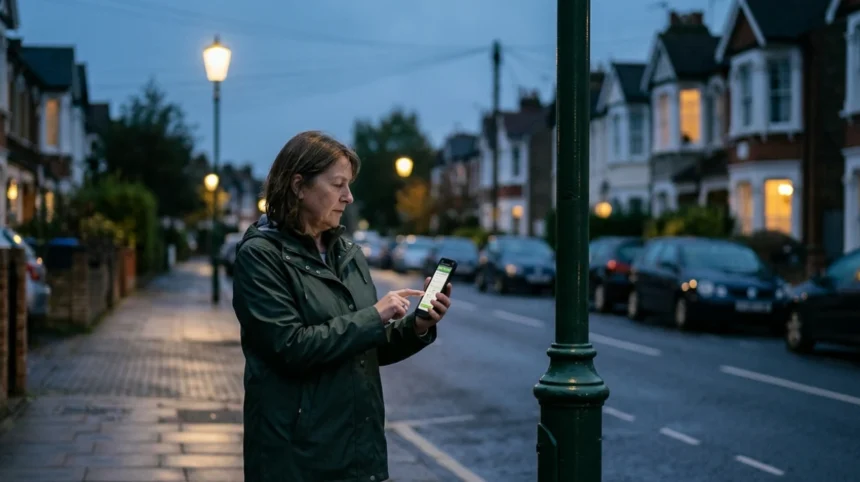
The London Borough of Merton utilises the FixMyStreet platform to manage resident reports regarding street light outages and maintenance. Residents must access the official Merton FixMyStreet portal, input the specific street location, and provide details of the fault to initiate the council’s investigation process.
Street lighting maintenance represents a critical component of municipal infrastructure in South London, ensuring public safety, reducing crime, and improving traffic visibility during low-light conditions. The system relies on a combination of scheduled inspections and reactive reporting from local residents. When an individual street light malfunctions, it creates a localised service gap that the borough addresses through a defined, data-driven maintenance workflow. By engaging with official reporting channels, residents provide the necessary data points that allow council contractors to prioritise repairs based on location, safety risk, and resource availability.
How do you report a street light issue in Merton?
To report a street light issue, navigate to the Merton Council FixMyStreet portal, enter the specific postcode or street name, pinpoint the location on the interactive map, and submit a detailed description of the observed fault for council investigation.
The reporting process is designed to streamline information from the public directly to the infrastructure maintenance team. Once a user accesses the portal, the map-based interface ensures that the report is geographically linked to the correct asset. Providing a precise location, such as the house number nearest to the pole or a specific intersection, increases the efficiency of the contractor dispatched to perform the repair. Users should include identifying information, such as the lamp post number if visible, which significantly aids maintenance crews in locating the exact unit amidst multiple potential faults on a single street.
Upon submission, the council generates a tracking reference, allowing the resident to monitor the status of the report. This digital record serves as the primary mechanism for communication between the public and the council’s maintenance contractors. The system is specifically optimised for efficiency, ensuring that reports of outages or physical damage move rapidly from the public interface to the operational database. By using this standardised, location-based reporting method, Merton Council can aggregate data to identify recurring issues in specific areas, facilitating more effective long-term infrastructure planning and preventative maintenance.
What information is required to report an outage?
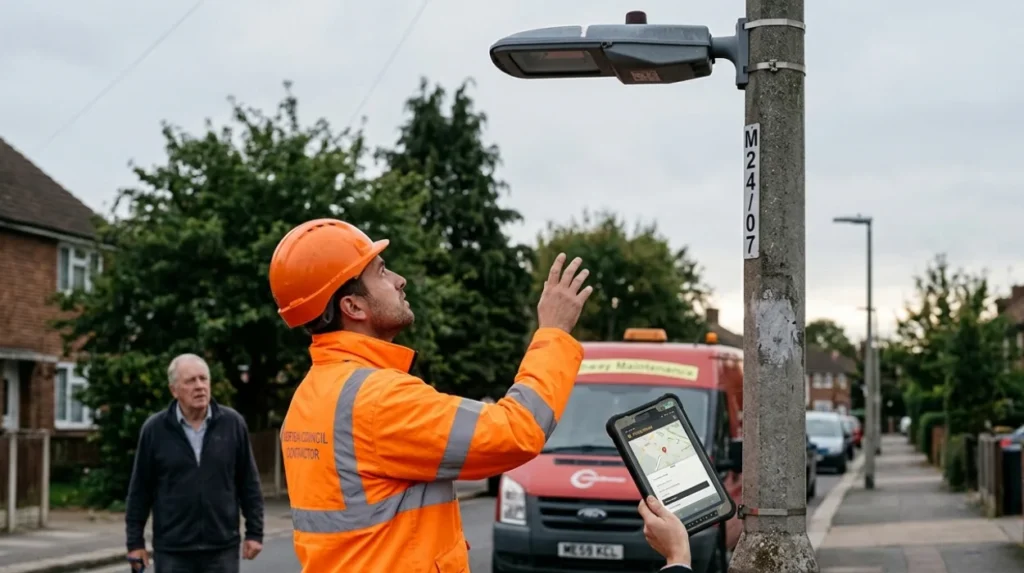
Effective reporting requires the exact street address or nearest house number, a clear description of the defect, and optional visual evidence such as photographs of the malfunctioning light, which helps maintenance teams identify and prepare for the necessary repair.
Providing comprehensive data is the single most important factor in reducing the time between a report and the subsequent repair. When reporting, residents should focus on specific categories of faults, such as lights that are completely dark, lights that cycle on and off, or lights that remain illuminated during daylight hours. Including a photograph is beneficial, particularly for identifying physical damage like a missing inspection door, a leaning pole, or exposed wires. These visual data points allow the council to distinguish between routine bulb replacements and more complex electrical faults that require specialized equipment or safety protocols.
If the lamp post has a unique identification number—usually a metal plate attached to the pole—including this number in the report is highly recommended. This identifier acts as a precise asset tag in the council’s maintenance management system, removing ambiguity regarding the specific light that requires attention. While the reporting form is intuitive, accuracy in these fields ensures that the maintenance contractor can plan the necessary logistics, such as the height of the vehicle required or the type of replacement components needed, before arriving at the site.
What are the emergency reporting procedures for dangerous lighting?
For street lighting issues that pose an immediate risk to public safety, such as exposed electrical wires, smoking or sparking equipment, or leaning and fallen poles, do not use the standard online reporting form but instead contact Merton Council immediately.
Emergency situations require an accelerated response protocol that bypasses standard online reporting queues. Exposed wiring or sparking components present a severe electrical hazard and potential fire risk, requiring immediate intervention by trained electricians. Similarly, a leaning or fallen pole creates a significant physical obstruction and a clear danger to pedestrians and motorists. In these scenarios, the primary objective is to cordon off the area and ensure that public access is restricted until council-approved emergency crews can arrive to neutralize the hazard.
Residents should retain the contact information for the council’s emergency reporting services. During normal working hours, this involves direct phone contact with the street lighting department. Outside of business hours, local authorities maintain emergency standby arrangements to handle critical infrastructure failures. When encountering these conditions, residents are advised to remain at a safe distance and prevent children or pets from approaching the damaged infrastructure. Following these emergency-specific procedures is essential to preventing injury and managing the liability associated with hazardous public assets.
How are street light repairs prioritised by the council?
Merton Council prioritises street light repairs based on a combination of safety risk assessments, the total number of non-functional units in a specific area, and the logistical feasibility of accessing the faulty infrastructure with specialised maintenance vehicles.
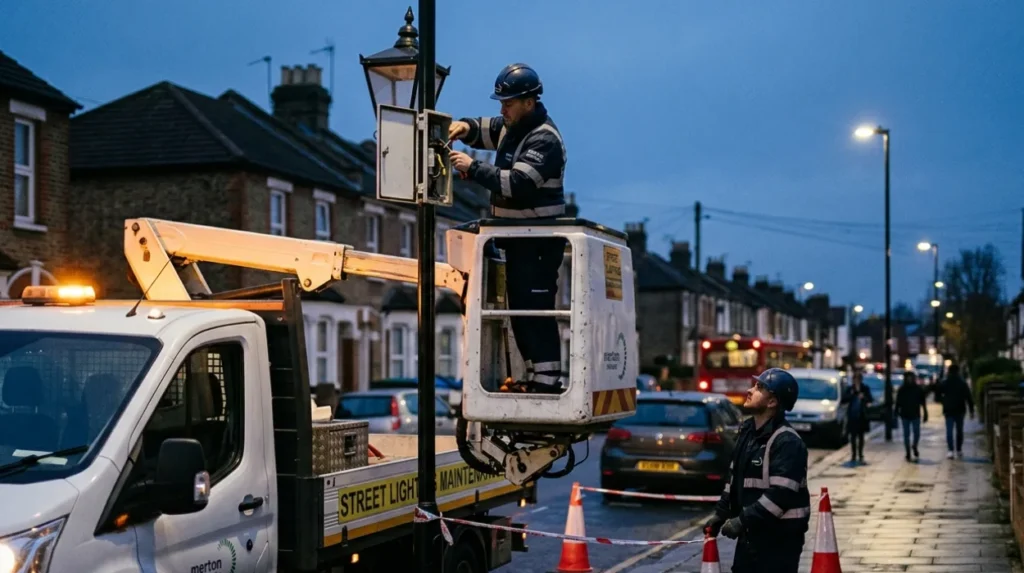
The maintenance of street lighting involves a multi-tier prioritisation logic. Repairs that impact public safety—such as exposed wiring—are categorized as high-priority and are typically addressed within a strict window, often within 24 hours of notification. General outages are processed alongside scheduled maintenance activities, such as bulk lamp changes, lantern cleaning, and electrical inspections. This approach balances the necessity of rapid response for dangerous faults with the operational efficiency of grouping routine repairs geographically, which minimizes travel time for maintenance crews and reduces the overall energy footprint of the service vehicles.
The lifecycle management of the lighting network also dictates priority. Older or failing components that show signs of systemic deterioration are often scheduled for renewal or upgrade as part of the council’s capital works program. By integrating reactive repairs with proactive capital projects, the council ensures that resources are allocated not just to keep existing assets functional, but to improve the energy efficiency and resilience of the entire borough’s lighting network. Data from the FixMyStreet platform is analysed regularly to inform these decisions, providing the council with clear insights into which streets and asset types require the most frequent intervention.
What is the role of street lighting in South London’s infrastructure?
Street lighting functions as a vital element of South London’s public infrastructure, serving to enhance road safety for motorists, provide security for pedestrians in residential areas, and support the economic vibrancy of local town centers during evening hours.
Beyond simple visibility, street lighting is intrinsically linked to the socio-political health of the London Borough of Merton. Well-lit streets have a documented correlation with reduced crime rates and increased feelings of personal security among the local population. Furthermore, consistent lighting is a legal requirement for public highways to ensure that traffic signals, pedestrian crossings, and road hazards are visible to all road users at night. This infrastructure is a dynamic system, subject to regular testing for structural integrity, electrical safety, and lighting performance, all of which are documented to ensure compliance with national standards.
The management of these assets in South London is governed by complex contracts that specify performance indicators, such as the maximum allowable time for a light to remain faulty. These contracts also encompass modern requirements like energy reduction schemes, which have led to the widespread adoption of LED technology. This shift not only lowers energy expenditure but also reduces the frequency of maintenance, as LED components typically have a much longer operational life than traditional high-pressure sodium lamps. The ongoing commitment to maintaining this infrastructure is a testament to its role in preserving the quality of life within the suburban environment.
How do I report a broken street light in Merton?
Go to the Merton FixMyStreet portal, search your street or postcode, select the exact location on the map, and submit a fault report.