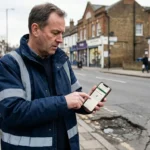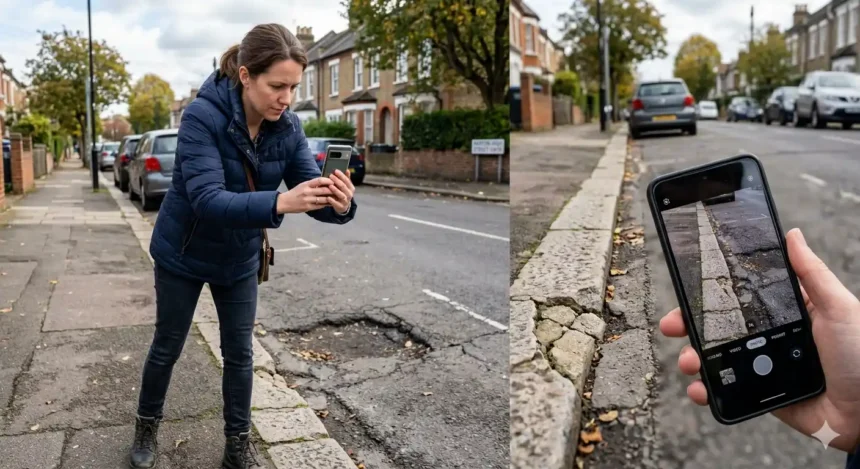
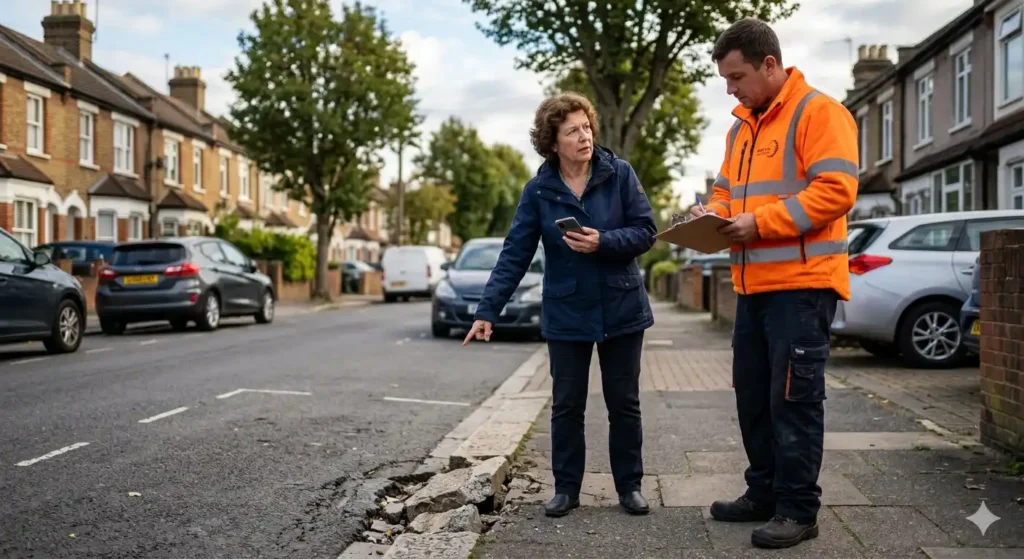
If you spot damaged road surfaces or broken kerbs in Merton, the quickest way to get them fixed is to report them online using your council’s reporting form or a reputable street-reporting platform, giving a clear location, photos, and a short description. The council’s highways team will then inspect the defect and, if it meets safety criteria, schedule repairs in line with UK highway maintenance standards. You should always report serious trip hazards or damage that could injure pedestrians or cyclists as soon as you notice them.
- Why road and kerb problems matter to local residents
- Which council service handles Merton road repairs and broken kerbs
- Step‑by‑step actions to solve the problem
- Information and documents you should prepare
- Expected response times
- What to do if you need a follow‑up
- Rights and responsibilities under UK rules
- Practical tips to avoid problems in future
Why road and kerb problems matter to local residents
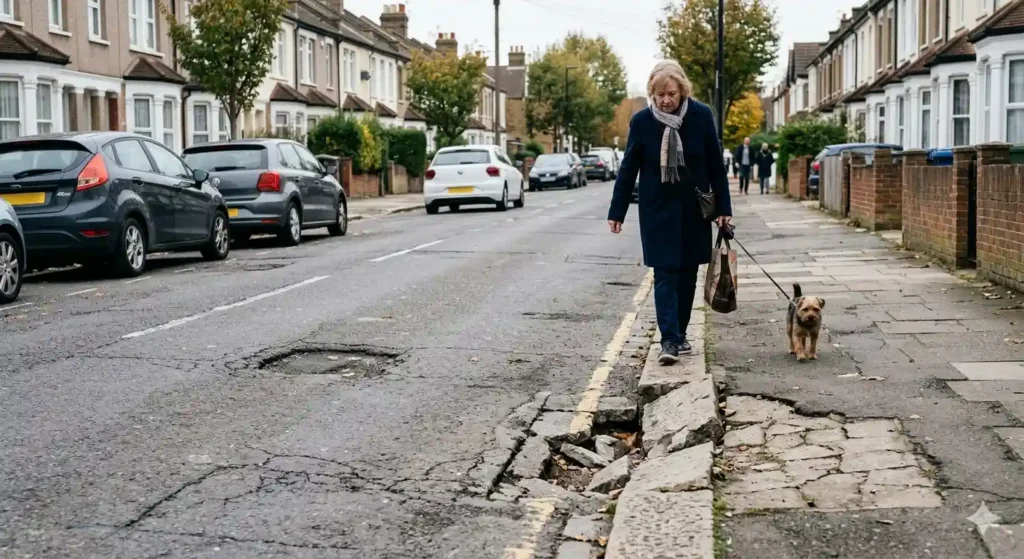
Damaged roads and broken kerbs are more than just an eyesore: they can cause trips, falls, and damage to vehicles, particularly on busy residential streets in boroughs such as Bexley, Bromley, Lewisham, Southwark, Greenwich, Croydon and Merton. Under UK health and safety and highway maintenance duties, councils must take reasonable steps to keep pavements and carriageways safe, but they depend on local residents to report faults promptly so inspectors know where to focus. Poorly maintained kerbs can also affect drainage, leading to puddles and ice in winter, which can increase risk for pedestrians, wheelchair users, and people with buggies.
For many South London council areas, logged reports help build a picture of where investment is needed over time, not just for emergency patch repairs. Well‑maintained roads and kerbs support local businesses, improve accessibility for disabled residents, and reduce the likelihood of legal claims arising from avoidable accidents. Reporting problems is therefore a simple way to contribute to safer neighbourhoods without cost to you.
Which council service handles Merton road repairs and broken kerbs
For ordinary local streets in Merton, responsibility usually sits with the council’s highways or streets and roads service, sometimes labelled “highway maintenance” or “street environment”. On major “red route” roads, Transport for London may be responsible instead, so the online reporting map will usually indicate who maintains that stretch once you select the location. The same principle applies across South London council areas: Bexley Council, Lewisham Council, Bromley, Southwark, Greenwich and Croydon each have a highways or street services team dealing with potholes, broken paving, and damaged kerbs.
When you report Merton road repairs and broken kerbs, your report is typically routed automatically to the correct internal team based on the map location you provide. If the fault is on private land, a service road, or supermarket car park, the council will generally not repair it and may advise you to contact the landowner or managing agent instead. Where utilities (gas, water, telecoms) have recently dug up the road or footway, responsibility may lie with that utility company, but the council will normally liaise with them once your report is logged.
Step‑by‑step actions to solve the problem
Follow these practical steps to report Merton road repairs and broken kerbs effectively from anywhere in South London:
- Check the exact location
- Note the street name and nearest house number or landmark.
- If possible, use your smartphone’s location or postcode to pinpoint the defect on an online map.
- Take clear photos
- Photograph the damaged kerb or road from:
- close up (to show the crack, hole, or loose slab), and
- further back (to show context, such as nearby crossings or junctions).
- Take photos in daylight where possible and avoid including identifiable faces or number plates.
- Photograph the damaged kerb or road from:
- Visit your council’s online reporting page or a recognised reporting platform
- Select the category that best fits (e.g. pothole, damaged kerb, broken pavement, uneven surface).
- For Merton road repairs and broken kerbs, ensure you choose an option that clearly relates to roads or pavements.
- Drop the map pin accurately
- Use the interactive map to place the marker exactly where the defect is.
- Check you are on a council‑maintained section of highway; if the system says it is not adopted highway, you may be advised differently.
- Describe the problem clearly
- Briefly explain:
- what is damaged (kerb, tarmac, paving slab),
- how severe it is (depth of hole, wobbling kerb, loose slab),
- any risk (trip hazard, near school entrance, bus stop, crossing).
- Mention if someone has already been injured or if the defect affects wheelchairs or buggies.
- Briefly explain:
- Upload photos and submit your details
- Attach your photos if the form allows.
- Provide your contact email so you can receive updates, or submit anonymously if that option is offered.
- Keep your reference number
- When your report is submitted, note the case or reference number.
- This number is essential if you need to chase, update, or use the information later.
This process is similar across other South London council areas, so Bexley Council, Lewisham Council and others will usually ask you to complete the same steps: location, description, and photos via an online form.
Information and documents you should prepare
Having the right information ready makes it quicker to report Merton road repairs and broken kerbs and helps the council assess risk properly.
Useful details include:
- Exact location
- Street name, nearest door number or junction.
- Postcode if known.
- Landmarks (e.g. outside the library, near bus stop in direction of town centre).
- Description of the defect
- Type (broken kerb, pothole, sunken inspection cover, loose slab).
- Approximate measurements (for example, a pothole 5 cm deep and 30 cm wide).
- How long it has been there, if you know.
- Photos or short video
- At least one clear photo from above and one from the side.
- If safe, include something like a shoe or coin for scale.
- Your contact details (optional but recommended)
- Name and email address.
- Whether you are reporting as a resident, local business, or on behalf of someone else.
You do not usually need formal documents such as proof of identity, but if you later make a claim for damage or injury, you may need medical reports, repair invoices, and evidence of the defect at the time of the incident.
Expected response times
Response time depends on how serious the problem is and how busy the highways team are, but most South London council highways services work to published timescales.
Typically:
- Emergency or high‑risk defects
- Examples: large potholes on main roads, severely broken kerbs at crossings, or defects causing immediate danger.
- Aim: inspection within a few working days or sooner, with temporary make‑safe work where needed.
- Non‑urgent defects
- Examples: minor surface breaks, shallow potholes, chipped kerbs that are not a clear trip hazard.
- Aim: inspection within a set period, often around 10–20 working days, and repairs scheduled into routine works.
- Planned maintenance
- If the defect sits within a wider area of worn surfacing, the council may schedule it as part of future resurfacing rather than a quick patch.
In practice, timescales vary between Bexley, Bromley, Lewisham, Southwark, Greenwich, Croydon and Merton, so you should check any automated email or webpage notes when you submit your report for Merton road repairs and broken kerbs. You may be able to track your case online, especially if you used a map‑based reporting tool.
What to do if you need a follow‑up
If you feel nothing has happened after you report Merton road repairs and broken kerbs, it is reasonable to follow up politely.
You can:
- Use your reference number
- Log back into the reporting portal and check the status.
- Look for notes such as “inspected – no further action”, “scheduled for repair”, or “referred to utility company”.
- Update the report
- Add new photos if the defect has worsened.
- Explain briefly if the risk has increased (for example, more people tripping, or the hole has grown).
- Submit a fresh report (if needed)
- If the platform has closed the original case and the problem remains, create a new report referencing the earlier case number.
- Use the formal complaints route
- If you believe the South London council has not followed its own procedure or timescales, you can use the council’s complaints process.
- This is about service standards, not compensation, and follows a set staged process.
If someone has been injured or property has been damaged and you think the council has been negligent (for example, failing to act after repeated reports), you may wish to seek independent legal advice before considering a formal claim.
Rights and responsibilities under UK rules
In the UK, local highway authorities must take “reasonable care” to maintain roads and pavements, but they are not expected to repair every defect instantly. They manage risk through regular inspections and by acting on reports from local residents. When you report Merton road repairs and broken kerbs, you are supporting that system and helping the council show it has a process in place.
Your key rights and responsibilities include:
- Your rights
- To report hazards and expect a reasonable, timely response based on risk.
- To receive clear information on what action will be taken.
- To use the council’s complaints procedure if you are unhappy with how your report has been handled.
- To seek legal advice if you have suffered injury or loss and believe there was negligence.
- Your responsibilities
- To report defects honestly and as accurately as possible.
- To avoid putting yourself or others at risk when gathering evidence (for example, do not stand in the road).
- To recognise that councils must prioritise the most serious hazards first and work within budget and legal frameworks.
Broken kerbs and road defects that are genuinely dangerous should always be reported promptly. Repeated reports from several residents in Bexley, Lewisham, Croydon, or any other borough can sometimes help highlight persistent issues and support targeted repairs.
Practical tips to avoid problems in future
Although you cannot control how quickly a South London council completes every repair, there are sensible steps you can take to reduce future risk and keep your neighbourhood safer.
- Report small problems early
- A minor crack or loosened kerb can become a major trip hazard if left unattended.
- Early reports make it more likely that issues can be addressed within routine maintenance rather than emergency works.
- Encourage neighbours to report too
- If several local residents in a street in Merton or Lewisham all notice the same defect, each person can submit a separate report.
- Multiple reports signal that a problem is affecting more than one household.
- Keep a simple record
- Make a note of when you reported, reference numbers, and any updates.
- This can be useful if the defect worsens or if you need to raise a complaint later.
- Use official and reputable channels
- Stick to the official reporting systems for Bexley Council, Merton, Southwark, Greenwich, Bromley or Croydon, or trusted reporting platforms linked directly to councils.
- This reduces the risk of your report getting lost and ensures it reaches the correct highways team.
- Be clear and concise
- When describing Merton road repairs and broken kerbs, short, factual language helps inspectors decide quickly how to categorise the risk.
- Avoid speculation and focus on what you can see: size, location, and impact on people using the street.
By following these steps, South London residents can help keep their streets, pavements and kerbs in better condition, making daily journeys safer and more comfortable for everyone.
How do I report a pothole to Merton Council?
To report a pothole, broken kerb, or road damage, submit a report through the online highways reporting form on the Merton Council website. Pin the exact location on the map, describe the issue, and upload photos if possible so the council can assess and schedule repairs.