Key Points
- Lambeth Council has secured significant transport funding to support initiatives for walking, cycling, bus journey improvements, air pollution reduction, and safer streets for pedestrians.
- The funding boost is part of broader Transport for London (TfL) investments, including £94.8 million across London boroughs for safer, greener streets in 2026-27.
- Specific aims include speeding up bus journeys through Bus Priority Corridors targeting 10-13 mph average speeds, as per Mayor Sadiq Khan’s plan.
- Lane Rental Scheme approved by the Department for Transport, charging up to £2,500 per day for roadworks in traffic-sensitive areas, with revenues funding pothole repairs.
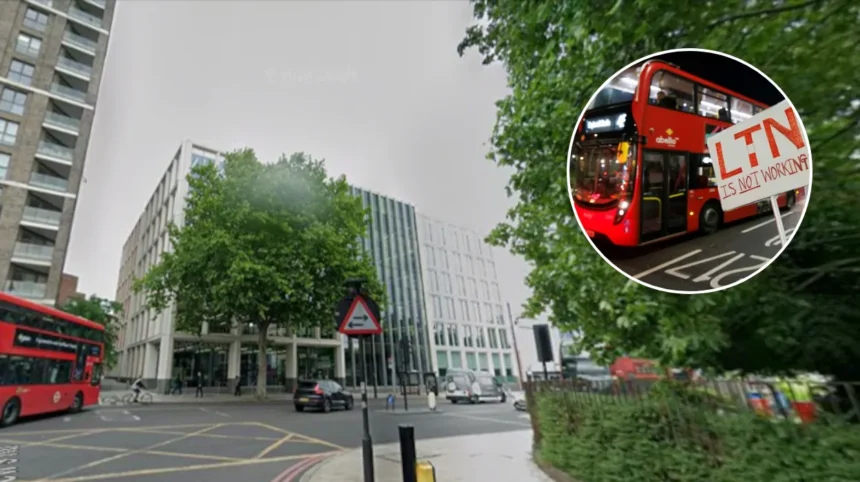
- Past funding examples include £2.6 million emergency funds for low traffic neighbourhoods (LTNs) in Brixton and Oval to Stockwell, plus cycleway enhancements.
- Cllr Claire Holland, Deputy Leader for Sustainable Transport, Environment & Clean Air, emphasised making streets safer for non-car users, noting 60% of residents lack cars.
- Ongoing projects involve TfL replacing roundabouts at Lambeth Bridge ends with traffic lights, with completion by summer 2026.
- Kerbside Strategy progress: 189 e-bike bays, 2.3km protected cycle tracks, parklets in 6 wards, 1.8km EV charging bays.
- Historical TfL funding to Lambeth includes £5.2m and £4.27m for local improvements.
Lambeth (South London News) March 18, 2026 – Lambeth Council has secured a major transport funding boost to advance initiatives promoting walking and cycling, accelerating bus journeys, cleansing polluted air, and enhancing pedestrian safety across the borough’s streets. This development, announced via the official Love Lambeth platform, aligns with Transport for London’s (TfL) wider investments, including a £94.8 million allocation to London boroughs for safer, greener streets in 2026-27. The funding supports Lambeth’s ongoing efforts to tackle congestion, improve public transport reliability, and reduce environmental impacts, amid rising demands for sustainable urban mobility.
What Funding Has Lambeth Secured for Transport Improvements?
Lambeth’s transport funding boost forms part of TfL’s strategic investments, with the borough benefiting from shared allocations aimed at delivering comprehensive upgrades. As detailed on the Love Lambeth website, the secured funds target multiple pillars: bolstering active travel modes like walking and cycling, expediting bus services, mitigating air pollution, and fortifying pedestrian safety.
In a related TfL announcement covered by London Daily News, the £94.8 million pot for 2026-27 underscores collaborative efforts between TfL and boroughs like Lambeth to create “safer, greener streets,” with specific emphases on reducing traffic dominance and enhancing non-motorised options. Historical precedents include TfL’s £5.2 million grant confirmed by the Mayor of London for Lambeth’s local transport enhancements, as reported in a 2010 TfL press release, and a further £4.27 million boost announced in 2006. These infusions have consistently supported infrastructure vital to Lambeth’s densely populated areas.
How Will the Funding Boost Walking and Cycling in Lambeth?
The funding directly fuels Lambeth’s active travel agenda, echoing successful prior schemes. As reported on the Love Lambeth site, initiatives to “support walking and cycling” will expand safe routes and reduce car dependency. Cllr Claire Holland, Lambeth Council’s Deputy Leader for Sustainable Transport, Environment & Clean Air, stated in coverage by Citi Magazine:
“We are ambitious for our borough and want to help all our residents embrace walking and cycling. Around 60% of our residents don’t own a car, yet cars have dominated our streets for too long making it unsafe to walk and cycle and worsening our children’s health.”
Further details from a 2020 Love Lambeth article reinforce this, noting £2.6 million in TfL emergency funding—the largest in the capital—deployed for low traffic neighbourhoods (LTNs) around Brixton’s Railton Road, the Oval to Stockwell triangle, and Windmill Drive on Clapham Common to improve Cycleway 5. Planters were installed for visual appeal and clarity. Cllr Holland added:
“Our changes aim to redress this balance, making it safer for people to walk and cycle so that those without a car have genuine transport options whilst leaving our road clear for those that absolutely have to use them.”
Recent kerbside progress, per Lambeth Climate Partnership, includes 189 e-bike/scooter bays, 2.3km of protected cycle tracks, parklets in six wards, and 1.8km of EV charging.
What Measures Are Speeding Up Bus Journeys in Lambeth?
Bus reliability stands central to the funding’s impact. Lambeth Council is advancing a Bus Priority Corridor programme with TfL, targeting roads below Mayor Sadiq Khan’s average speed benchmarks of 10-13 mph, as outlined in a February 2026 Love Lambeth update. The Mayor’s Bus Action Plan seeks a 10% speed increase by 2030 to boost public transport uptake.
This complements the new Lane Rental Scheme, greenlit by the Department for Transport, charging utilities up to £2,500 daily on 15.9% of Lambeth’s traffic-sensitive roads (including South Bank and Waterloo footways at £350/day). Developed with TfL and councils like Camden, Enfield, and Merton, surplus funds will repair potholes and maintain highways—London’s first such scheme including footways, supporting three million monthly South Bank visitors and 70 million Waterloo passengers. As per Love Lambeth:
“Lambeth is pushing ahead with two new transport schemes, designed to tackle congestion and keep the borough’s roads moving.”
How Is Lambeth Tackling Air Pollution and Street Safety?
Air quality improvements are integral, with funding enabling shifts from polluting vehicles. Love Lambeth highlights “clean[ing] our polluted air,” building on lockdown gains where three in four residents noted better quality and demanded permanence. Cllr Holland remarked:
“As the coronavirus lockdown eases our residents have told us they don’t want to go back to the old normal where Lambeth had some of the worst air pollution in Europe. We have a chance now to make a real difference.”
Safety enhancements prioritise pedestrians, aligning with TfL’s Lambeth Bridge project replacing roundabouts with signals, plus pedestrian/cyclist upgrades, set for summer 2026 completion—entailing narrow lanes and night closures. Broader strategies from Lambeth’s Transport Strategy emphasise Healthy Routes, zero-emission buses, and public realm works at Vauxhall Cross, Waterloo IMAX, Streatham Hill, and Tulse Hill gyratory. The London Cycling Campaign advocates six Healthy Routes and kerbside prioritisation for active travel.
What Is the Broader Context of TfL’s Support for Lambeth?
TfL’s role amplifies Lambeth’s efforts. The £94.8m investment signals sustained commitment, per London Daily News. Older TfL releases detail funding precedents, while Lambeth’s Local Implementation Plan (LIP) outlines three-year spends from Mayor’s grants for Mayor’s Transport Strategy goals. Cllr Holland’s consistent advocacy underscores community focus:
“I know this is new and different, and we are determined to bring all our communities with us in this push for a cleaner and safer borough because we will all benefit.”
Neighbouring Southwark’s £10m Better Bus Partnerships funding, welcomed locally, highlights regional momentum. Lambeth’s ambitions extend to rail devolution lobbying and metroisation for better services. These layered investments position Lambeth as a leader in sustainable transport, fostering equitable access amid urban growth pressures.