To report night-time noise in Southwark fast, call the council’s rapid response team on their dedicated line if it’s happening now—available daily from 8am to 4am. For ongoing issues, use the online form for a response within three working days. This quick action helps local residents in Southwark, Bexley, Bromley, Lewisham, Greenwich, and Croydon resolve disturbances legally through their South London council.
Why Night-Time Noise Matters
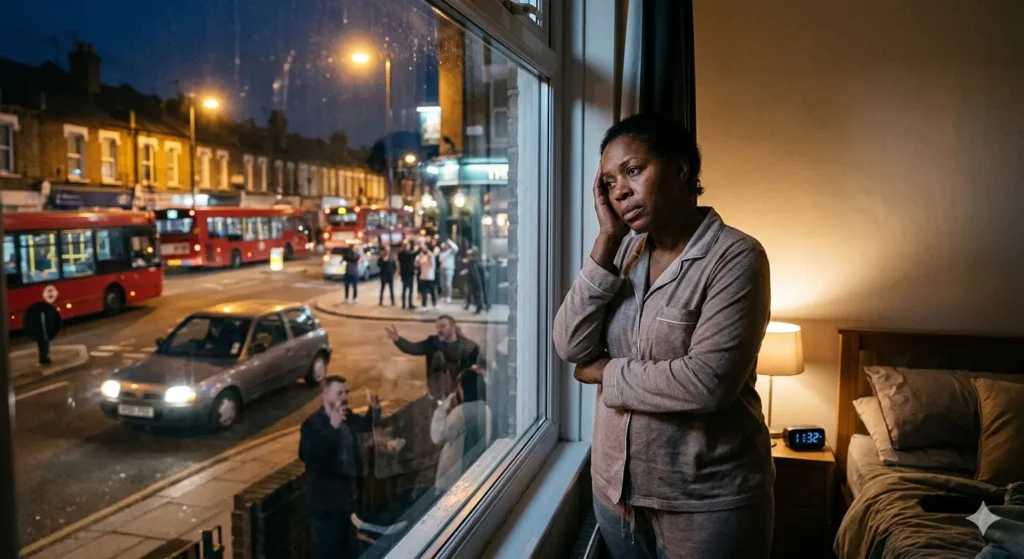
Night-time noise disrupts sleep and daily life for many local residents. In busy South London areas like Southwark, it can lead to stress, reduced wellbeing, and lower productivity the next day. Councils recognise this as a key quality-of-life issue, handling thousands of reports yearly to protect communities.
Persistent disturbances from music, shouting, or vehicles affect families across Bexley, Bromley, Lewisham, Greenwich, Croydon, and Southwark. Quiet nights support health, especially for children, shift workers, and the elderly. Addressing it promptly prevents escalation into bigger neighbourhood problems.
Step-by-Step Actions
Follow these clear steps to report night-time noise effectively.
- If the noise is occurring right now during service hours (8am to 4am), contact the rapid response team immediately for the fastest action.
- Provide your location, a description of the noise, and when it started to help officers respond quickly.
- For noise outside these hours or ongoing issues, submit details via the council’s online reporting form.
- Keep a log of incidents, noting dates, times, and impacts, to strengthen your case if needed.
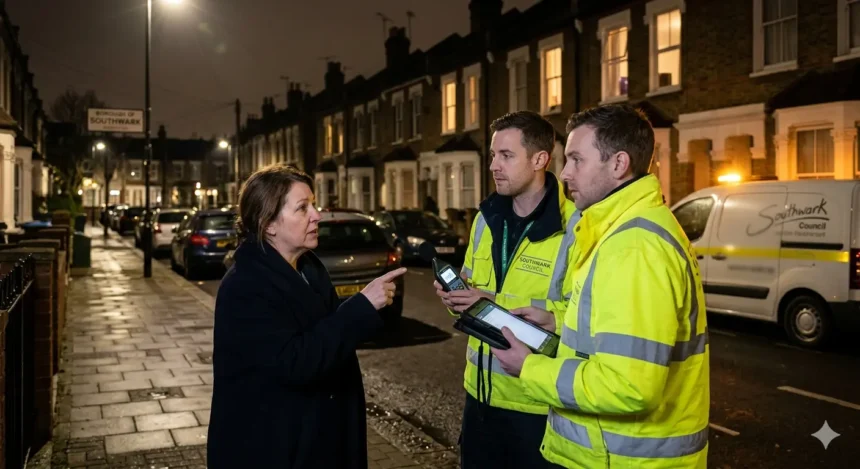
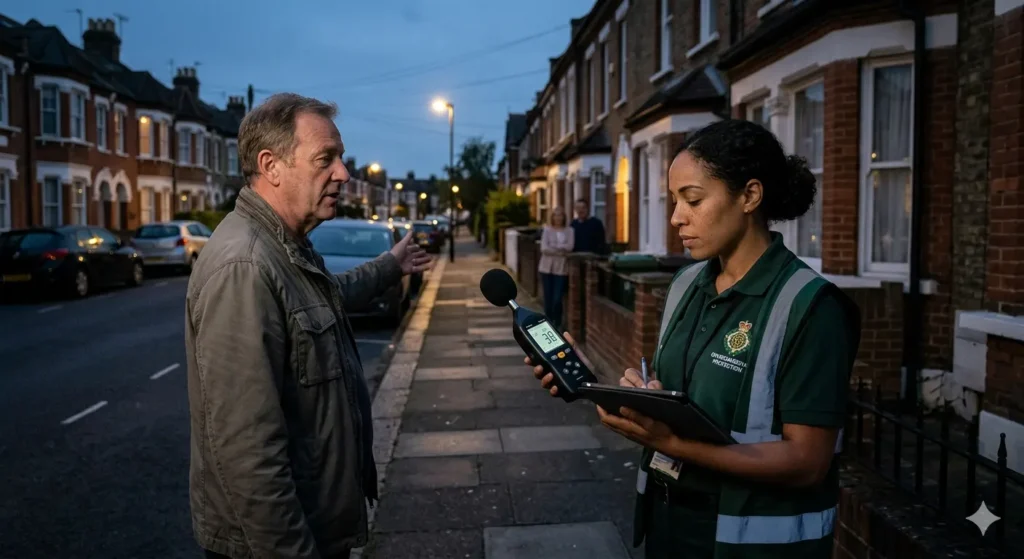
- Cooperate with any follow-up visits from council officers, who carry ID badges.
These steps align with procedures in Southwark and similar South London councils like Bexley council and Lewisham council. Acting fast ensures legal compliance and quicker resolution.
Council Service Handling Reports
Southwark Council’s noise and nuisance team manages night-time noise complaints. This dedicated unit assesses disturbances and takes enforcement action if justified. They operate as part of environmental health services, available nearly around the clock.
In neighbouring boroughs, equivalent teams exist—Bromley council’s environmental health, Greenwich council’s noise service, Croydon council’s antisocial behaviour unit, Bexley council’s pollution control, and Lewisham council’s neighbourhood services. All follow UK-wide standards under the Environmental Protection Act 1990. Local residents should use their specific South London council channel for best results.
Information Needed
Prepare these details before reporting to speed up the process.
Your full address and contact details help officers reach you. Describe the noise source (e.g., loud music from a flat, barking dogs, or vehicles), its location, and how it affects you (e.g., prevents sleep). Note the exact time it starts and stops, plus frequency if recurring.
Evidence like dated photos, videos, or a noise diary strengthens reports. Councils like Southwark may install monitoring equipment later. No formal documents are required upfront, but accuracy matters under UK rules.
Expected Response Time
Southwark’s rapid response team aims to act within one hour for live night-time noise during 8am-4am hours. Officers call back to confirm details and arrange visits if viable. The service pauses briefly over Christmas (midnight 24 December to 5pm 26 December).
For online forms on non-urgent issues, expect contact within three working days. South London councils like Bexley council and Lewisham council offer similar timelines, varying slightly by volume. Delays can occur during peaks, but logging helps prioritise.
Follow-Up Actions
If initial response does not resolve the issue, request an update from the noise team. Provide your reference number and additional logs. Officers may revisit, warn the source, or escalate to formal notices.
Escalation follows council stages: informal resolution first, then abatement notices under law. Contact the team again for persistent problems. In Southwark and nearby like Greenwich or Croydon, complain formally via the council’s procedure if service falls short—stage one response typically within 10 days.
Rights and Responsibilities
Under UK law, residents have the right to a reasonable quiet environment, protected by the Environmental Protection Act 1990. Councils must investigate “statutory nuisances”—noise likely to harm health or disturb residents. Night hours (11pm-7am) have stricter limits, around 34 decibels adjusted where background is low.
Your responsibility includes reporting promptly and accurately, without harassment. Those causing noise must comply with warnings; failure risks fines up to £5,000 for homes or £20,000 for businesses. Mediation is encouraged first in South London councils. Local residents balance rights by cooperating fully.
Practical Tips for Prevention
Gather neighbours’ support to report collectively, amplifying impact. Install thick curtains or secondary glazing to dampen external sounds temporarily. Discuss politely with sources during daytime if safe, suggesting solutions like earplugs or volume checks.
Use white noise machines or fans for sleep aid. Support community efforts like Bexley council clean-ups that reduce related disturbances. Time reports precisely to build evidence patterns. These steps minimise future night-time noise issues across Southwark, Bromley, Lewisham, Greenwich, Croydon, and Bexley.
Night-time noise need not ruin rest—structured reporting empowers local residents. South London councils equip you with tools for swift, legal fixes. Stay informed on your Southwark procedures for ongoing peace.
How do I complain about noise in Southwark?
Report night-time noise in Southwark quickly by contacting the council’s out-of-hours noise service (usually available evenings and weekends). You can submit a report online, call the noise team, or use the local reporting app if available. Provide details like the address, type of noise, and time it’s happening for faster action.