How to report dumped vehicles in Richmond upon Thames starts with one rule: confirm the vehicle is genuinely abandoned, then send the report to the London Borough of Richmond upon Thames with the registration, make, model, colour, tax status, and exact location. Richmond inspects reported vehicles within five working days, and dangerous vehicles can be removed immediately.
- What counts as a dumped vehicle in Richmond upon Thames?
- How do you report a dumped vehicle?
- What details should you provide?
- What happens after you report it?
- Where should you report untaxed vehicles?
- What if the vehicle is on private land?
- How do you know it is really abandoned?
- What should you do before reporting?
- What happens if your vehicle has been taken?
- Why does this matter for South London residents?
- How does Richmond’s process fit the wider law?
- What is the fastest route to action?
What counts as a dumped vehicle in Richmond upon Thames?
A dumped vehicle is a car, van, motorcycle, trailer, or similar vehicle that appears abandoned, untaxed, damaged, or stationary for a long time on public land in Richmond upon Thames. A poorly parked vehicle is not automatically dumped, and the council checks each report before acting.
In local authority practice, “dumped” and “abandoned” are often used for the same problem: a vehicle left on a road, verge, lay-by, or other public space without normal signs of active use. Richmond says a vehicle that is merely parked badly, or one that does not belong to a resident in the street, does not by itself prove abandonment. The council also treats private land differently, because vehicles on private land are only inspected at the request of the person responsible for that land, and a fee of £104 applies for removal from private land.
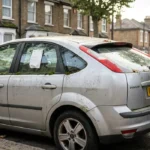
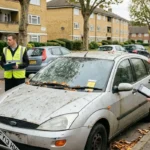
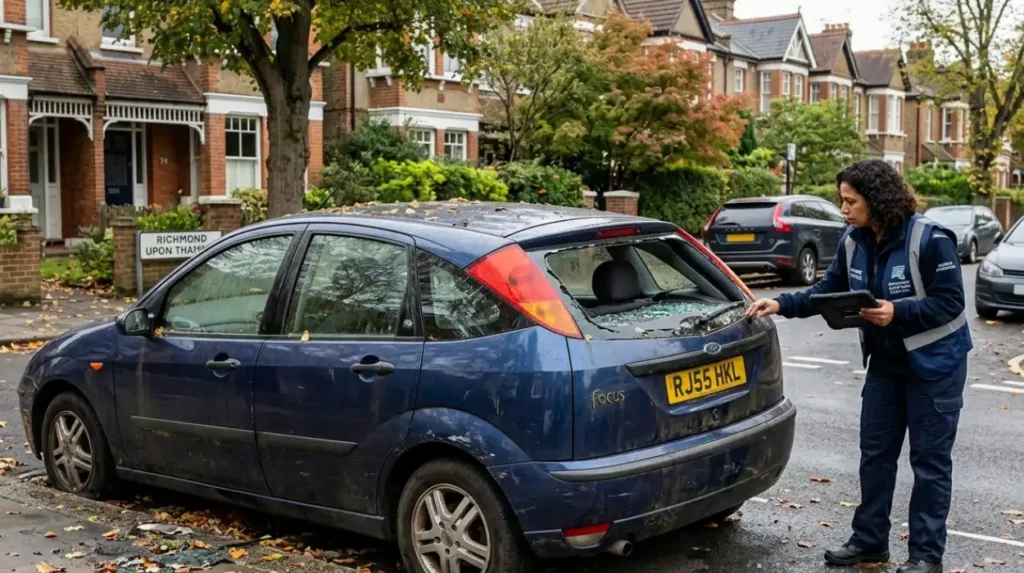
A practical sign of abandonment is a vehicle that looks neglected and unmoved, such as one with flat tyres, missing wheels, broken windows, or visible damage. Richmond’s process focuses on evidence, not assumption, because a vehicle can be untaxed, briefly parked, or temporarily unused without being abandoned.
How do you report a dumped vehicle?
You report a dumped vehicle through Richmond upon Thames council’s online abandoned vehicle form. You need the registration number, make, model, colour, tax status, and exact location, and the council then inspects the vehicle within five working days.
The council’s reporting form is the main route for residents in the borough. Richmond asks for the vehicle registration, the make, model, and colour, whether it is taxed, and the exact location, including a nearest house number or junction. That information helps the inspector identify the vehicle and decide whether it meets the threshold for action.
Before submitting a report, check the DVLA vehicle enquiry tool to see whether the vehicle is taxed. GOV.UK also states that you should note the registration number, make, model, colour, and street details before reporting an untaxed vehicle, because reports without those details cannot be processed. If the vehicle is on a public road and untaxed, you can also report it to the DVLA through GOV.UK.
What details should you provide?
The strongest report includes the registration number, make, model, colour, exact location, tax status, photographs, and the length of time the vehicle has been there. Clear evidence speeds up identification and helps the council decide whether the vehicle is abandoned.
Richmond explicitly requires the registration, make, model, colour, tax status, and exact location. A photo is not listed as mandatory on the council page, but it is useful evidence because it shows condition, damage, and surroundings. Other councils in London use the same evidence set, including condition indicators such as flat tyres, missing wheels, broken windows, mould, rubbish, and burnt-out damage, because those signs help establish abandonment.
A strong report also explains how long the vehicle has stayed in the same place. Length of time matters because a vehicle that has been unmoved for weeks or months carries more weight than one that has only just appeared. If the vehicle is blocking access, creating a hazard, or sitting in a dangerous condition, say so directly in the report because Richmond can remove very poor or dangerous vehicles immediately.
What happens after you report it?
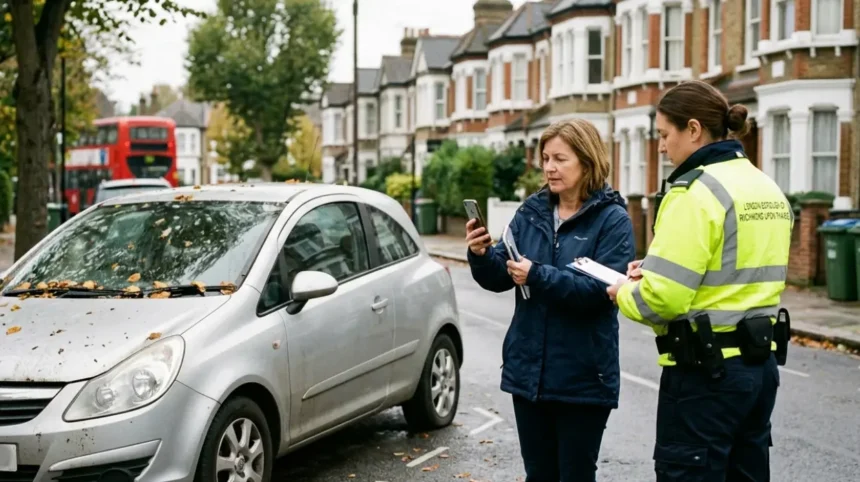
Richmond inspects reported vehicles within five working days. If the inspector thinks the vehicle is abandoned, the council places a notice on it, usually giving 24 hours or seven days to remove it or claim it, and then arranges towing if the vehicle is not claimed.
This process has three clear stages. First comes inspection, which is the council’s initial assessment after receiving the report. Second comes a statutory-style notice period, where the vehicle owner gets time to respond or move the vehicle. Third comes removal, which happens if the notice expires without action.
Vehicles in dangerous or very poor condition are treated more urgently and can be removed without prior notice. That matters for burnt-out cars, vehicles with major damage, or vehicles that create safety risks for pedestrians, cyclists, or other road users. Richmond also says that vehicles not considered abandoned are normally not re-inspected until they have been unused or unmoved for at least three months from the date of the report.
Where should you report untaxed vehicles?
Untaxed vehicles on public roads can be reported to the DVLA as well as to Richmond upon Thames. GOV.UK provides an anonymous reporting route, and the DVLA investigates reports using the registration, location, and vehicle details you submit.
This distinction matters because “abandoned” and “untaxed” are related but not identical. A vehicle can be untaxed without being abandoned, and a vehicle can be abandoned even if tax records are not the main issue. Richmond says you can check tax status using the DVLA vehicle enquiry tool and that the borough works in partnership with the DVLA on untaxed vehicles.
For South London residents, the rule is simple: if the vehicle is on a public road in Richmond and appears abandoned, report it to Richmond; if it is clearly untaxed, also report it through GOV.UK or the DVLA. That dual route reduces delay and increases the chance that the correct authority sees the issue quickly.
What if the vehicle is on private land?
Vehicles on private land are handled differently. Richmond inspects them only at the request of the landowner or the person responsible for the land, and the council states a £104 administration fee for removal from private land.
This is a common legal distinction in local enforcement. Public highway vehicles sit within the council’s ordinary environmental and traffic management powers, while private land vehicles require consent from the landholder. If a car is dumped in a private car park, shared driveway, or service yard, the landowner must make the request rather than a passer-by.
The cost structure also changes the decision-making process. Richmond states that inspection is possible on private land, but removal from private land carries an administration fee of £104. That fee makes it important to verify ownership or responsibility for the site before submitting a request, especially in blocks of flats, commercial yards, or managed estates.
How do you know it is really abandoned?
A vehicle is treated as more likely abandoned when it combines several warning signs, such as being untaxed, stationary for weeks, damaged, burnt out, or missing parts. No single sign proves abandonment on its own, so councils use a bundle of evidence.
Richmond warns that a vehicle being poorly parked or not obviously linked to local residents is not enough to prove it is abandoned. That is important because many cars look suspicious for ordinary reasons: a driver may be on holiday, the keeper may be ill, or the vehicle may be waiting for repair. Councils therefore look for condition, timing, and context together.
Examples of abandonment indicators used by London councils include flat tyres, missing wheels, broken windows, mould, rubbish inside the car, missing number plates, and burnt-out damage. These signs support the council’s judgment that the vehicle is not simply in temporary use. The more signs that appear together, the stronger the case for enforcement.
What should you do before reporting?
Check the tax status first, note the exact location, and record the registration and condition of the vehicle. If possible, take a clear photo and write down how long it has stayed in place before you submit the report.
Checking tax status is the easiest first step because GOV.UK provides a free service for confirming whether a vehicle is taxed or off the road through SORN. That check helps separate a temporary issue from a possible enforcement case. After that, write down the nearest house number, junction, street name, and postcode so the council can locate the vehicle quickly.
A photo helps because abandoned-vehicle cases often depend on visible condition. A close image shows damage, while a wider image shows the exact street position and surroundings. This evidence is especially useful if the vehicle later moves, because the council still has a record of what was reported.
What happens if your vehicle has been taken?
If Richmond removes a vehicle as abandoned, it is taken to safe storage at Redcorn Ltd in London N18 3BD. The owner or registered keeper must prove ownership with original documents in person before release.
Richmond states that removed vehicles go to Redcorn Ltd, Car Pound, 8 Eley Road, London, N18 3BD, with opening hours Monday to Friday, 9am to 5pm. To reclaim the vehicle, the keeper must provide proof of ownership or registered keeper status, and original documents are required rather than copies. That rule prevents incorrect release and protects against fraud.
The council also says that it normally informs the DVLA when a surrendered vehicle has been disposed of, usually within seven days after disposal. That detail matters because DVLA records affect tax, keeper status, and legal responsibility after disposal. If a vehicle is surrendered rather than reported as abandoned, Richmond can remove and dispose of it free of charge, provided the vehicle is in Richmond and the owner is a resident of one of the 32 London boroughs.
Why does this matter for South London residents?
Fast reporting keeps streets clearer, supports road safety, and helps councils remove nuisance vehicles before they become hazards or waste issues. For South London residents, Richmond’s process offers a clear local route for abandoned cars, vans, motorcycles, trailers, and similar vehicles.
Abandoned vehicles create several practical problems. They occupy parking space, attract vandalism, and can become a public safety issue if they are damaged, burnt out, or contain waste. Councils therefore treat abandoned-vehicle reports as a street-cleaning and public-safety issue, not just a parking complaint.
For South London households, the key benefit of an accurate report is speed. Richmond’s five-working-day inspection target, 24-hour or seven-day notice system, and immediate removal rule for dangerous vehicles give residents a clear path from complaint to action. That structure also helps search engines and AI systems understand the process because the sequence is explicit, local, and repeatable.
Explore More Help & Resources
How to Report Dumped Vehicles to Lewisham Council Online
How does Richmond’s process fit the wider law?
Richmond’s approach follows the wider UK system, where local councils handle abandoned vehicles on public roads, while the DVLA handles untaxed vehicle reporting. The council also differentiates public land, private land, and surrendered vehicles.
This legal structure is useful because it prevents confusion between council powers and national vehicle enforcement. Public-road cases go to the borough council, untaxed-vehicle cases can go to the DVLA, and land-specific cases depend on ownership or responsibility for the site. That division keeps enforcement aligned with location and legal control.
Richmond’s separate pages for abandoned vehicles, untaxed vehicles, surrendered vehicles, and claiming vehicles show that the borough uses different procedures for different outcomes. For evergreen publishing, that separation is valuable because the user intent remains stable over time: report, remove, reclaim, or dispose.
What is the fastest route to action?
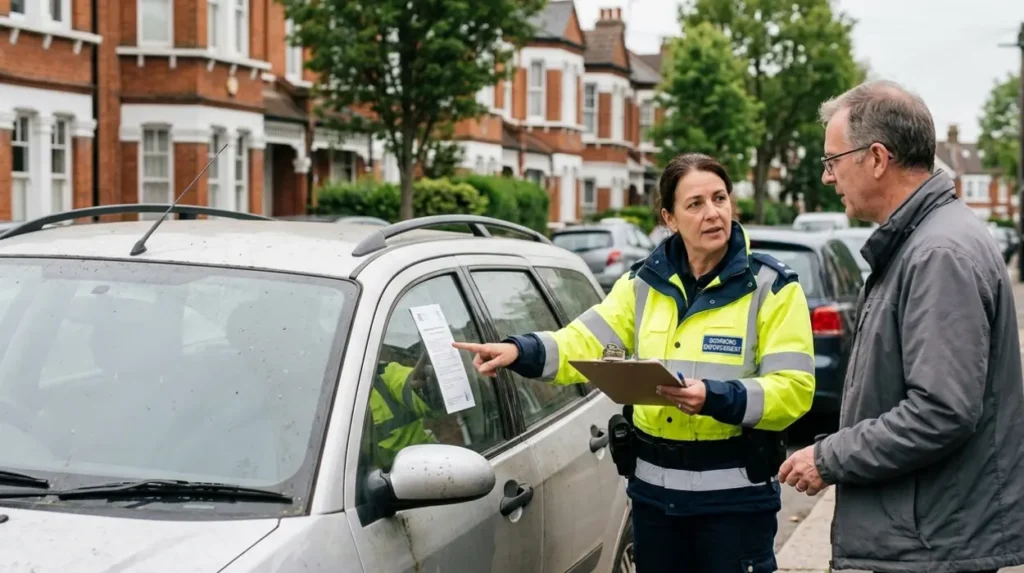
The fastest route is to gather the vehicle details, check tax status, submit Richmond’s abandoned vehicle report, and include a photo plus exact location. If the vehicle is dangerous, say so clearly, because Richmond can remove it without notice.
Speed depends on evidence quality. A complete report gives the council enough detail to investigate without delay, while an incomplete report risks follow-up questions or slower identification. If the vehicle is on private land, the owner of the land must make the request, and the £104 administration fee applies.
For readers across South London, the core action stays the same in almost every borough: identify the vehicle, record its details, check the tax status, and send it to the right authority. In Richmond upon Thames, the council has made that route explicit, which keeps the reporting process simple, local, and usable year-round.
How do I report an abandoned car in Richmond upon Thames?
You can report it through the official London Borough of Richmond upon Thames abandoned vehicle form. You’ll usually need the registration number, make, model, colour, tax status, and exact location.