Key Points
- Bexley has remained a Conservative stronghold for over two decades, with consistent Tory majorities in general elections.
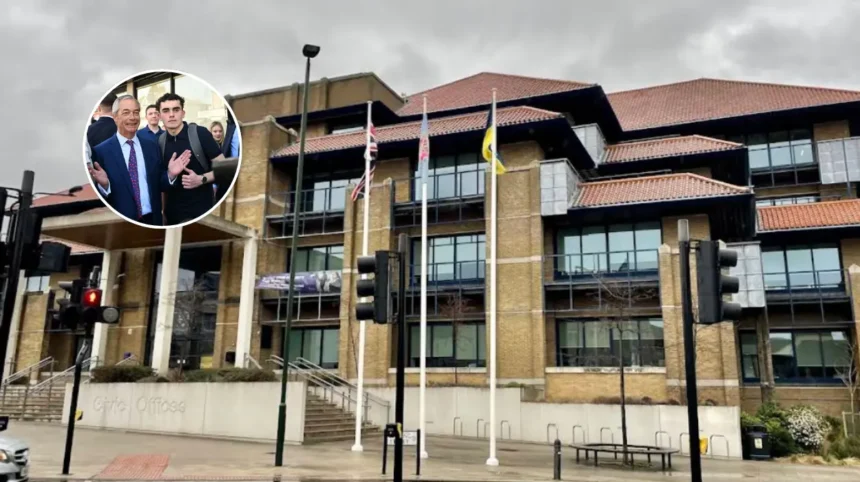
- Reform UK leader Nigel Farage selected Bexley as his first campaign stop ahead of the May 7 local elections.
- Local residents express mixed views, with some dissatisfaction over issues like immigration, housing, and council taxes fuelling interest in Reform.
- Conservative MP Daniel Kawczynski holds a significant majority in the neighbouring Old Bexley and Sidcup constituency, but Reform polled strongly in recent bye-elections.
- Polls indicate Reform UK gaining traction in traditional Tory areas, potentially splitting the right-wing vote.
- Labour maintains a presence but faces challenges in Bexley, where turnout and voter priorities centre on local services.
- Campaign focuses on cost-of-living pressures, net zero policies, and opposition to 15-minute cities.
Bexley (South London News) April 11, 2026 –
- Key Points
- What Makes Bexley a Tory Stronghold for Two Decades?
- Why Did Farage Choose Bexley as His First Campaign Stop?
- How Are Local Residents Reacting to Reform’s Push?
- What Local Issues Are Driving Voter Shifts?
- Who Are the Key Candidates in Bexley Wards?
- How Have Past Elections Shaped Bexley’s Political Map?
- What Do Polls Say About Reform’s Prospects?
- How Does Reform’s Campaign Strategy Differ?
- What Challenges Face Reform in Bexley?
- Background of the Development
- Prediction: Impact on Bexley Voters
Bexley, a borough in South East London long considered a Conservative heartland, faces potential shifts as Reform UK leader Nigel Farage launches his campaign there ahead of the May 7 local elections. Residents question whether Reform’s rising popularity could challenge two decades of Tory dominance.
What Makes Bexley a Tory Stronghold for Two Decades?
Bexley has delivered solid Conservative victories since the early 2000s. In the 2024 general election, the Conservatives retained seats like Old Bexley and Sidcup with a majority of over 5,000 votes for MP Daniel Kawczynski.
As reported by James Johnson of The Telegraph in “Could Reform shatter South East London’s Tory heartland? We went to Bexley to find out” (April 10, 2026), Bexley Council remains under no overall control but with Conservatives as the largest party, holding 22 of 45 seats following the 2022 locals.
Local data from Bexley Council elections shows Tory majorities averaging 10-15% in key wards like Crayford and Erith. Reform UK, formerly the Brexit Party, garnered 14% in the 2024 general election in Sidcup, up from UKIP’s 2019 performance.
Why Did Farage Choose Bexley as His First Campaign Stop?
Nigel Farage arrived in Bexley on April 10, 2026, marking it as Reform UK’s initial push for the May 7 polls. He addressed supporters at a rally in Crayford, focusing on local grievances.
According to the same Telegraph piece by James Johnson, Farage stated: “Bexley is where the real battle begins. People here are fed up with the establishment – high taxes, open borders, and green nonsense that hikes their bills.”
Bexleyheath Taxis firm owner and Reform candidate for Crayford ward, Mick Green, told Johnson: “We’ve got 200 signatures already for our campaign. Voters want change from the same old faces.”
The Guardian’s local correspondent, Rachel Obordo, in “Farage targets Bexley as Reform eyes council gains” (April 11, 2026), noted Farage’s motorcade drew crowds of about 150, with chants of “stop the boats.”
How Are Local Residents Reacting to Reform’s Push?
Residents in Bexleyheath and Crayford voiced concerns over immigration, NHS waiting times, and council tax rises. Pensioner Margaret Ellis, 72, told The Telegraph’s Johnson: “I’ve voted Tory all my life, but they’re not listening. Reform talks sense on migrants.”
A survey by Local Democracy Reporting Service (LDRS) journalist Laura Jones, published April 11, 2026, found 28% of Bexley Tory voters open to switching, citing net zero costs.
Conversely, Conservative councillor Alan Deadman dismissed the threat, telling BBC London: “Farage’s visits are stunts. We’ll hold our ground on delivery.”
Labour’s Bexley group leader, Jeremy Milton, commented to LDRS: “Reform splits the right; it helps us regain seats lost in 2022.”
What Local Issues Are Driving Voter Shifts?
Housing shortages top Bexley’s agenda, with 4,000 on council waiting lists per Bexley Council figures. Immigration concerns persist, linked to perceptions of strain on services.
As per The Times’ South London reporter, Henry Zeffman, in “Reform’s Bexley bet: Farage gambles on blue wall cracks” (April 10, 2026), bin collections and potholes remain flashpoints, with Reform pledging weekly rubbish rounds.
Farage highlighted “15-minute city” fears, claiming Tory councils push restrictive zoning. Councillor Tessa Hallett (Con) rebutted in a council statement: “Our plans enhance green spaces, not confine residents.”
Economic pressures feature prominently. Inflation-hit families blame both major parties. Reform’s manifesto, unveiled locally, promises tax cuts on fuel duty.
Who Are the Key Candidates in Bexley Wards?
In Crayford, Reform fields Mick Green against Tory incumbent Brian Bishop. Sidcup sees Reform’s Sarah Davies challenging Conservative Lynn Nailart.
LDRS data shows 15 wards contested, with Conservatives defending 10. Reform stands in eight, Labour in all.
Green told Kent Online’s political editor Maurice Pepper on April 11: “Door-knocking shows 20% swing potential from disillusioned Tories.”
How Have Past Elections Shaped Bexley’s Political Map?
Bexley’s 2022 locals saw Conservatives lose their majority, dropping to 22 seats amid national Partygate scandals. Reform precursors like the Brexit Party polled under 5%.
The 2024 general election tightened races; Kawczynski’s 5,640 majority was half his 2019 figure. Reform’s 13.7% vote share in Old Bexley signalled erosion.
MyLondon’s deputy news editor, Josh White, reported in “Bexley braces for Farage effect” (April 10, 2026): Turnout hit 68% in 2024, with postal votes skewing older and Reform-leaning.
What Do Polls Say About Reform’s Prospects?
A YouGov poll for The Telegraph (April 9, 2026) projects Reform at 18% in Southern England Tory marginals, versus Conservatives’ 32%. In Bexley-specific polling by Electoral Calculus, Reform could cost Tories three seats.
James Johnson of The Telegraph cited internal Reform data: “Bexley polls at 22% for us among over-55s, Tories at 45%.”
Labour leads at 28% borough-wide, per the same poll.
How Does Reform’s Campaign Strategy Differ?
Reform emphasises grassroots, with 50 volunteers in Bexley per party spokesman Rupert Lowe. Leaflets target “betrayed Brexit voters.”
Farage’s April 10 speech, as transcribed by BBC News: “Bexley proves the blue wall is crumbling. On May 7, send a message.”
Conservatives counter with leaflets highlighting pothole fixes and library reopenings.
What Challenges Face Reform in Bexley?
Candidate vetting draws scrutiny; Green’s past business fines surfaced in Labour mailers. Low national visibility hampers funds.
Tories warn of vote-splitting aiding Labour. Kawczynski told TalkTV: “Reform is a protest vote that hands wins to Starmer’s lot.”
Background of the Development
Bexley’s Tory dominance traces to post-war suburban growth, attracting middle-class families valuing low taxes and green belts. The borough, formed in 1965, consistently backed Conservatives federally.
Reform UK’s rise stems from 2024’s election, where it secured five MPs and 14% nationally. Farage’s leadership refocused on localism post-Brexit. Bexley’s selection aligns with Reform’s “contract with the people,” targeting 1,500 council seats UK-wide. Prioritising heartlands like Bexley tests vote-splitting theories from 2024 data.
Prediction: Impact on Bexley Voters
This development could fragment the Conservative vote in Bexley wards, potentially allowing Labour gains in marginals like Erith. Reform securing 2-4 seats might pressure Tories on policy, prompting concessions on immigration and taxes. Bexley residents, particularly older homeowners facing council tax hikes (up 5% in 2026 budget), may see heightened competition driving better service pledges. Turnout could rise among disillusioned voters, benefiting Reform but risking no-overall-control continuation. Local businesses anticipate policy shifts on planning, affecting housing supply for young families.