Key Points
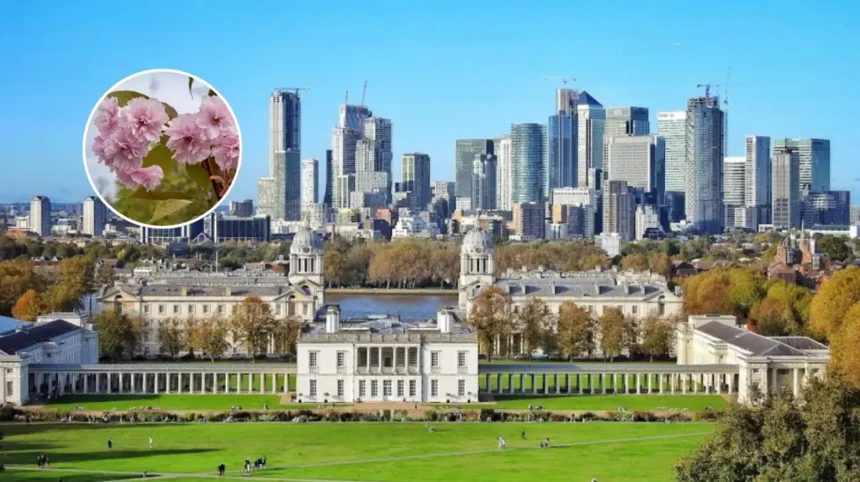
- Greenwich Park in South London has planted 130 new Prunus ‘Sekiyama’ cherry trees sourced from Japan, creating a new ‘valley of blossom’ along the hillside between the Grand Ascent to the Royal Observatory and One Tree Hill.
- The trees were donated by the Sakura Cherry Tree Project, which has supported similar plantings across the UK since 2019 to symbolise UK-Japan friendship.
- The park already features Cherry Tree Avenue with 28 mature Prunus ‘Pink Perfection’ trees near the Rose Garden, blooming every April and May since the 1950s.
- New trees are young saplings to aid establishment on gravelly soils; they will grow to 12 metres high and 8 metres wide, taller than the existing Pink Perfection trees (4-8 metres).
- Full blooms from the new trees will take time, but the park’s cherry blossoms are already noted as blooming as of 13 April 2026.
Greenwich (South London News) April 15, 2026 –
- Key Points
- Why Has Greenwich Park Planted 130 New Cherry Trees?
- Where Exactly Are the New Cherry Trees Located?
- What Is the Difference Between Sekiyama and Pink Perfection Trees?
- What Is Greenwich Park’s History with Cherry Blossoms?
- Who Supported the Sakura Cherry Tree Project?
- When Will the New Trees Bloom?
- Background of the Development
- Prediction: How This Can Affect Local Residents and Visitors
Greenwich Park has received 130 new cherry blossom trees from Japan, forming a ‘valley of blossom’ that will enhance spring displays along a key hillside path. The Prunus ‘Sekiyama’ trees have been planted between the Grand Ascent – the climb to the Royal Observatory – and One Tree Hill. This addition builds on the park’s longstanding Cherry Tree Avenue.
Why Has Greenwich Park Planted 130 New Cherry Trees?
The planting aims to create a spectacular new feature in the park’s landscape. As reported by Time Out London, the path up to one of Greenwich Park’s viewpoints will burst with petals every spring thanks to this ‘valley of blossom’. The Royal Parks charity announced the development, stating it is celebrating the addition of 130 Prunus ‘Sekiyama’ cherry trees thanks to the support of the Sakura Cherry Tree Project.
The Sakura Cherry Tree Project has donated thousands of Japanese cherry trees to sites across the UK since 2019. This initiative symbolises friendship between the UK and Japan. The new trees in Greenwich Park continue this effort.
Where Exactly Are the New Cherry Trees Located?
The 130 new shrubs are positioned along the hillside between the Grand Ascent and One Tree Hill. The Grand Ascent provides access to the Royal Observatory, a major attraction in the park. One Tree Hill offers panoramic views across London.
This location complements existing features. Greenwich Park has hosted Cherry Tree Avenue since the 1950s on the path to the Rose Garden on the west side. That avenue features 28 fully-grown Prunus ‘Pink Perfection’ cherry trees that bloom every April and May.
What Is the Difference Between Sekiyama and Pink Perfection Trees?
Prunus ‘Sekiyama’ trees, the new variety, grow to 12 metres in height and 8 metres in spread. Prunus ‘Pink Perfection’ trees, the existing ones, reach 4 to 8 metres. The new saplings were planted young to help them establish on the park’s gravelly soils. Visitors should not expect immediate vibrant pink blooms in the coming weeks.
The Royal Museums Greenwich notes that the park’s cherry blossom avenue is one of London’s best spots for viewing, typically flowering in April, depending on temperature – milder weather leads to earlier blooms.
What Is Greenwich Park’s History with Cherry Blossoms?
Cherry blossoms have been a highlight of Greenwich Park for decades. The Cherry Tree Avenue near the Rose Garden and Ranger’s House bursts into colour annually. As of 13 April 2026, the cherry blossom was reported as blooming, with different varieties flowering at varying times, often lasting about two weeks.
The park, managed by The Royal Parks charity, spans historic grounds near the National Maritime Museum, Queen’s House, and Royal Observatory. It includes features like the Flower Garden, Queen’s Orchard with heritage fruit trees including cherries, and the Rose Garden planted in 1960.
Time Out London highlighted that a quick trip to SE10 – Greenwich’s postcode – can now satisfy the cherry blossom viewing urge traditionally associated with Japan.
Who Supported the Sakura Cherry Tree Project?
The Sakura Cherry Tree Project provided the trees. This project has planted thousands across the UK since 2019. The Royal Parks charity specifically thanked the project for its support in Greenwich Park.
No direct quotes from project representatives or park officials were included in the primary reports, but the charity’s media release emphasised the “spectacular addition to the landscape”.
When Will the New Trees Bloom?
The new Sekiyama trees require time to mature after planting as saplings. Existing Pink Perfection trees bloom in April and May. Royal Museums Greenwich confirmed blooms as of 13 April 2026, with timing influenced by spring temperatures.
https://www.timeout.com/london/news/this-south-london-park-just-got-130-new-cherry-blossom-trees-041526Visitors can find the main cherry tunnel by walking down Blackheath Avenue towards the Rose Garden and Ranger’s House. Additional cherry trees are scattered throughout the park.
Background of the Development
Greenwich Park, one of London’s eight Royal Parks, covers 183 acres and has been a public space since 1833. It originated as royal hunting grounds in the 15th century under Henry VIII. Key developments include the Royal Observatory (1675), National Maritime Museum (1937), and ongoing enhancements like deer return in 2025 and playground upgrades.
The Rose Garden dates to 1960, complementing Cherry Tree Avenue from the 1950s. The Sakura Cherry Tree Project emerged post-2019 to foster UK-Japan ties through cultural plantings. Similar donations have gone to sites like St James’s Park. This Greenwich planting aligns with The Royal Parks’ efforts to enrich biodiversity and visitor experiences amid urban green space demands.
Prediction: How This Can Affect Local Residents and Visitors
The new valley of blossom can draw more visitors to Greenwich Park during spring, increasing footfall along the hillside path and viewpoints. Local residents may experience enhanced recreational opportunities with extended blossom displays, potentially boosting community events like hanami picnics. Park maintenance needs could rise temporarily for sapling care, while mature growth may improve biodiversity by supporting pollinators.