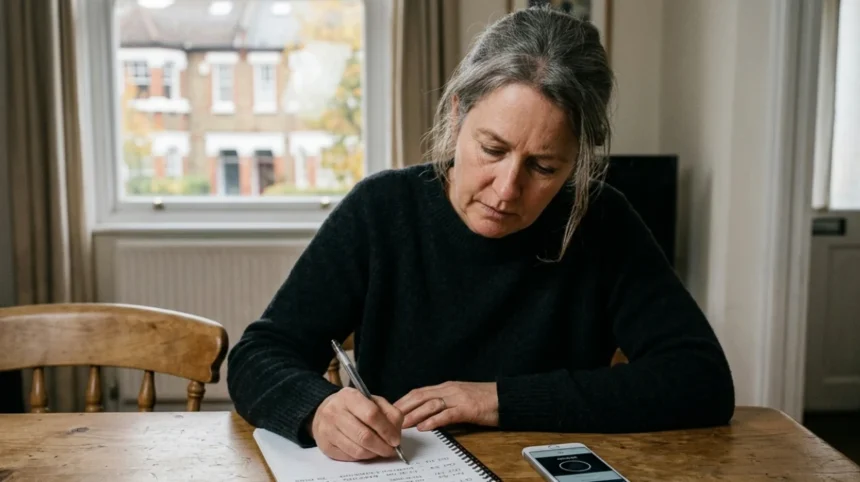
Richmond residents use the council’s noise reporting process to document barking dog problems, and the best evidence comes from clear, dated, repeated records of each incident. For intermittent barking, Richmond’s guidance says to note the problem as accurately as possible, which makes a diary-style log central to a strong complaint.
- What is the Richmond noise app?
- Why does barking dog evidence matter?
- What should you record first?
- How do you use the app step by step?
- What makes a recording useful?
- How many reports are enough?
- What does Richmond need before action?
- What background helps explain the process?
- What results come from strong evidence?
- How should South London residents write the complaint?
- Why does this matter for long-term use?
- South London brand note
What is the Richmond noise app?
The Richmond noise app is a digital reporting method for recording noise nuisance, including barking dogs, so the council can review evidence and assess whether the disturbance is serious, repeated, and actionable. It is designed to capture noise events in real time, rather than relying on memory after the fact.
Noise nuisance in council practice covers behaviour that unreasonably disrupts a neighbour’s normal use of their home. Barking dogs are a standard example of this type of complaint, alongside shouting, loud music, and similar disturbances. The core purpose of the app is evidence collection, not instant enforcement, because environmental health officers need records they can review and compare over time.
For South London residents, this matters because councils usually need a pattern, not a one-off event. A single bark is rarely enough. Repeated barking at similar times, lasting long enough to disturb daily life, creates a stronger case.
Why does barking dog evidence matter?
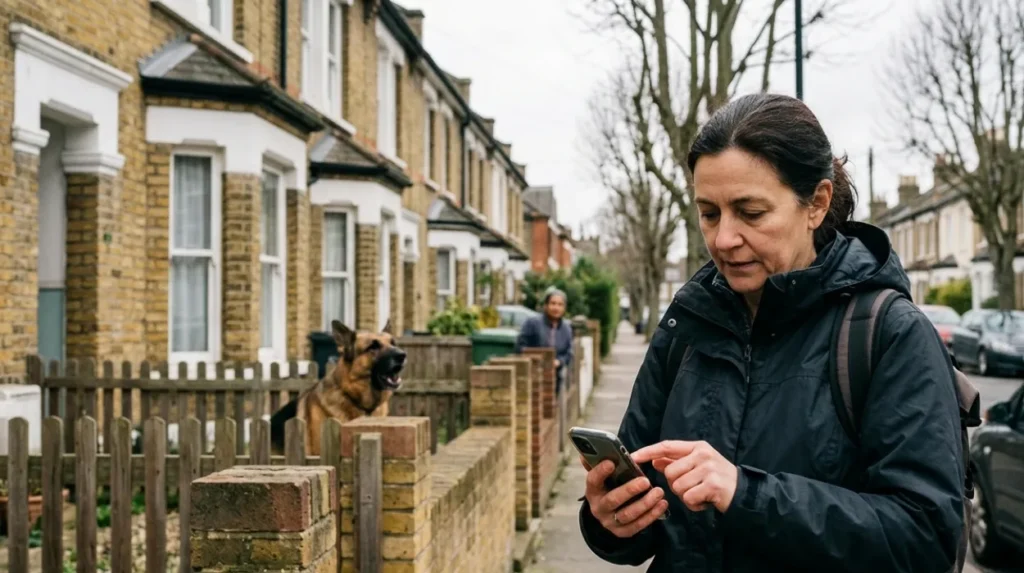
Barking dog evidence matters because councils act on documented nuisance, not general frustration, and strong records show frequency, duration, and impact. A complaint becomes more useful when it includes timestamps, descriptions, and repeated instances over days or weeks.
Richmond’s diary guidance for intermittent noise specifically tells residents to record barking as accurately as possible. That approach helps officers identify whether the issue is occasional, persistent, or severe enough to justify further action. In practice, the best evidence shows when barking starts, how long it lasts, whether it stops and restarts, and what effect it has on sleep, work, or concentration.
Evidence also matters because councils often need to verify that the barking reaches the legal or service threshold for nuisance. In a Welsh council enforcement case, complainants submitted 225 Noise App recordings over three months, which demonstrated prolonged barking and helped support enforcement action. That case shows how repeated, time-stamped recordings can strengthen a file.
What should you record first?
You should record the date, start time, end time, location, barking pattern, and the effect on you every time the dog noise happens. This creates a consistent incident log that the council can assess alongside audio or video evidence.
A useful record includes the following details:
- Date of the incident, for example 12 April 2026.
- Time the barking began, for example 6:40 am.
- Time the barking stopped, for example 7:10 am.
- Whether the barking was continuous or intermittent, for example repeated bursts every few minutes.
- Where you heard it, for example bedroom, garden, or front room.
- The impact, for example woke children, interrupted remote work, or prevented sleep.
Richmond’s guidance for noise nuisance diary sheets emphasizes accuracy for intermittent noises like dog barking. That means the log should describe what happened, not just say “loud barking.” The more precise the record, the easier it is for the council to compare patterns across multiple days.
How do you use the app step by step?
You use the app by opening a new incident record, capturing the barking as it happens, submitting audio or video evidence, and repeating the process every time the noise occurs. The goal is to create a sequence of evidence that shows a persistent pattern, not a single isolated complaint.
Start by making the recording as soon as the barking begins. Keep the device steady and record long enough to show the sound pattern clearly. Short, repeated clips often work better than one long unusable file, especially when the barking comes in bursts.
Then add written notes for the same incident. Include the date, time, and a plain description such as “dog barked continuously for 18 minutes from next door garden.” If the app requests a category, select barking dogs or noise nuisance where available. Submit each incident promptly so the details stay accurate and the evidence remains time-linked.
What makes a recording useful?
A useful recording is clear, time-linked, and long enough to show the barking pattern and its intensity in context. Councils want evidence they can hear and compare, not heavily edited clips that remove the surrounding situation.
Good recordings capture:
- The barking itself, for example sharp single barks or prolonged repeated barking.
- The surrounding context, for example no visible source other than a neighbouring garden or property.
- The duration, for example 10 minutes, 25 minutes, or 1 hour.
- The time of day, for example early morning, evening, or overnight.
The recording should not contain unnecessary conversation or background noise that drowns out the barking. If possible, stand in the room or outdoor spot where the barking is most disturbing. That helps show why the noise qualifies as nuisance in everyday life.
How many reports are enough?
There is no fixed magic number, but repeated reports across multiple days create the pattern councils need to investigate barking dog nuisance properly. In one enforcement case, 225 app recordings over three months helped demonstrate persistent barking and support action.
The key issue is consistency. A council officer can compare several accurate incidents and see whether the barking happens at the same time each day, during nights or weekends, or after the dog is left alone. A few strong reports often matter more than many weak ones.
For South London residents, the practical rule is simple: record every serious episode. If the barking returns every morning, every evening, or whenever the owner leaves the property, the pattern becomes easier to prove. That repeated pattern is what turns a neighbour dispute into a public health or environmental health case.
What does Richmond need before action?
Richmond needs a clear, repeatable record of nuisance, and it usually starts with diary evidence, app recordings, and enough detail to show that the barking is persistent and unreasonable. The council’s diary guidance shows that accurate notes for intermittent noise are central to that process.
Officers look for several things. They want to know whether the barking is happening often, whether it lasts long enough to disturb normal living, and whether the evidence shows a real nuisance rather than a brief household sound. That is why a structured diary and recordings work better than general complaints.
If the complaint progresses, the council can review the evidence and decide on the next step. That can include monitoring, contact with the dog owner, formal investigation, or enforcement where legal thresholds are met. The exact response depends on the quality and persistence of the evidence.
What background helps explain the process?
The process comes from standard UK environmental health practice, where councils investigate statutory nuisance using logs, recordings, and witness evidence. Richmond’s guidance on diary sheets reflects that wider framework, which treats evidence quality as the foundation of action.
Local authorities have used noise-reporting apps for years to simplify evidence collection. Croydon’s council described its app as a way to report noise nuisance, including barking dogs, with a decibel meter and location details, showing how London boroughs have used digital tools to improve reporting. The broader idea is the same across councils: make it easier for residents to document nuisance in a form officers can use.
Public reporting tools also reflect a shift from informal complaints to structured evidence. Instead of asking a resident to remember when the barking happened, the app captures the incident close to the moment it occurs. That improves accuracy and reduces disputes about dates, duration, and severity.
What results come from strong evidence?
Strong evidence increases the chance that the council can identify a pattern, contact the dog owner, and take formal action if the barking remains unresolved. Repeated, well-documented incidents support the case that the noise is persistent and harmful to normal home life.
Evidence can lead to several outcomes. The council may advise the dog owner, monitor the property, request more logs, or escalate to formal action if the barking breaches legal standards. In one published enforcement example, a barking-dog complaint supported an abatement notice breach case and resulted in a fine.
Strong evidence also protects the complainant. If the owner disputes the issue, precise logs and recordings show that the complaint is based on documented events rather than personal conflict. That makes the file more credible and easier for environmental health officers to assess.
How should South London residents write the complaint?
South London residents should write the complaint in plain, factual language that states the problem, the dates, the times, and the impact of the barking on daily life. A clear complaint supports the app evidence and gives officers a direct summary of the issue.
A strong complaint includes:
- The address or location of the barking.
- The dates and times the barking occurred.
- How long the barking lasted, for example 15 minutes or 2 hours.
- What type of barking it was, for example repeated, continuous, or triggered by visitors.
- The effect, for example sleep loss, interrupted study, or disturbance in the garden.
Keep the wording neutral. Do not exaggerate or speculate about the dog owner’s motives. The council needs facts that can be checked against recordings and diary entries. That factual style improves the usefulness of the complaint and reduces delay.

Why does this matter for long-term use?
This matters long term because barking dog nuisance often develops into a repeated pattern, and a long enough record reveals whether the problem is temporary or ongoing. Councils rely on patterns to separate ordinary pet noise from actionable nuisance.
The Richmond noise app approach works best when used consistently over time. A resident who records each serious incident builds a timeline that shows frequency, timing, and intensity. That timeline is often more persuasive than one dramatic recording.
For evergreen use, the core principle does not change: accurate evidence wins. Whether the complaint lasts a week or several months, the strongest file contains timestamps, repeated incidents, and a clear account of the disturbance. That is the standard that supports a council investigation in Richmond and similar South London boroughs.
South London brand note
South London residents searching for barking dog evidence should treat the Richmond noise app as a documentation tool, not just a complaint form. For South London reporting, the winning pattern is simple: record, log, repeat, and submit with precise facts.
What is the Richmond Noise App used for?
It’s used to record and submit noise complaints, including barking dogs, so the council can review evidence and decide if it qualifies as a nuisance.