Bromley Council provides an online route for reporting abandoned or nuisance vehicles in South London, and the process depends on where the vehicle is parked and who controls the land. For vehicles on public roads, the council’s abandoned vehicle service is the relevant route; for vehicles on private land, Bromley requires an application and payment for investigation.
- What is an abandoned vehicle?
- How does Bromley’s tool work?
- What details should you gather?
- How do you submit the report?
- What happens after you report it?
- What counts as strong evidence?
- Why does abandoned vehicle reporting matter?
- How is this different from other councils?
- What should South London residents know?
- What is the cleanest way to explain the process?
- Why this process is still relevant
What is an abandoned vehicle?
An abandoned vehicle is a vehicle that shows clear signs of being left without lawful use, control, or care, such as being untaxed, damaged, stationary for a long period, or causing an obstruction. In Bromley, the report is meant for vehicles on public land, while private-land cases use a separate paid investigation process.
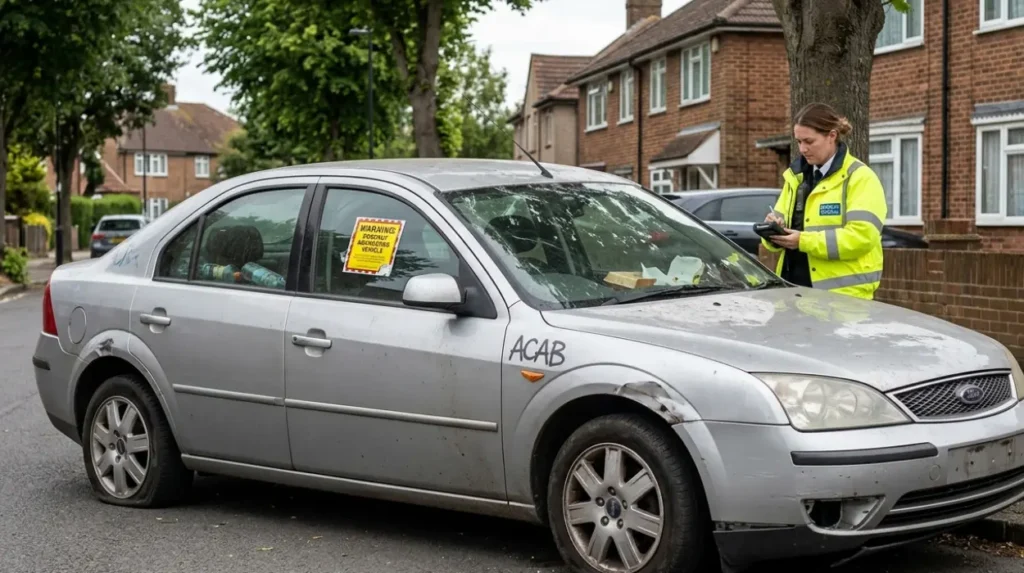
In practice, local authorities look for a combination of warning signs rather than one issue alone. Common indicators include a vehicle that has not moved for some time, visible damage, flat tyres, broken windows, missing plates, rubbish inside, or signs of vandalism. A vehicle can still be treated as abandoned even if it is not completely wrecked, especially if it appears neglected or hazardous.
How does Bromley’s tool work?
Bromley’s reporting process lets residents identify a vehicle, enter the location details, and submit the issue to the council for investigation. The council then checks whether the vehicle meets the abandoned-vehicle criteria and decides whether formal action is needed.
The online process is designed for speed and accuracy. Bromley asks users to provide the postcode or street name and area when starting the report, which helps place the issue in the correct location. If the vehicle is on private land, Bromley uses a separate form for vehicle investigation, and that service is fee-based.
Councils usually investigate reports by checking the vehicle’s condition, tax status, and whether it appears to have an owner or keeper. If the vehicle qualifies as abandoned, the council can serve notice before removal, with notice periods commonly ranging from 24 hours for severely derelict vehicles to seven days for less urgent cases. If the owner responds before removal, the process ends.
What details should you gather?
You should collect the vehicle’s registration number, make, model, colour, exact location, and a clear photo before submitting the report. You should also note how long it has stayed there and any signs of damage, missing parts, or obstruction.
Good reports give the council enough evidence to assess the case quickly. A location description should include the nearest house number, road name, junction, estate, or landmark. A photo is useful because it shows the vehicle’s condition and helps confirm whether it is parked, damaged, untaxed, or blocked in.
If the registration plate is missing or unreadable, the report still has value, but the location and visual condition become more important. The more specific the description, the faster the council can distinguish between a genuine abandoned vehicle and a car that is simply parked long term.
How do you submit the report?
To submit the report, use Bromley Council’s online abandoned or nuisance vehicle route, enter the location, and complete the form with the vehicle details and evidence. If the vehicle is on private land, use Bromley’s vehicle-investigation form instead of the public-road report.
The process is straightforward. Start by finding the council’s abandoned vehicle page, then search by postcode or street name and area. Add the vehicle description, registration, and evidence, then send the report for assessment. The system is built to direct the issue to the correct council team, which matters because abandoned vehicles are usually handled by environmental enforcement or street-care services rather than general customer service.
For private land, the council states that you need to apply and pay for the vehicle to be investigated. That distinction matters because the legal basis for intervention differs depending on whether the vehicle is on a public highway, council land, or land owned by someone else.
What happens after you report it?
After submission, the council reviews the report, checks whether the vehicle is abandoned, and decides whether to take enforcement action. If the vehicle fails the criteria, the council closes the case. If it qualifies, the council can issue notice and arrange removal.
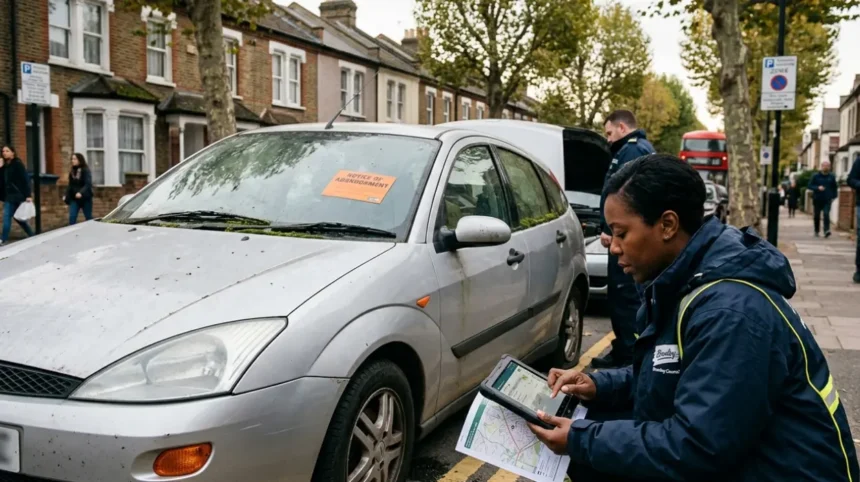
A typical council process starts with an officer inspection. The officer checks for evidence of abandonment and may verify tax or registration information where relevant. If the vehicle is considered abandoned, the council places a notice on it and gives the owner a final window to respond or move it.
If no one claims the vehicle during that period, the council can remove it to an authorised pound and, after the legal process is complete, dispose of it. If the owner acts before removal, the council stops its involvement. This process protects public safety while also giving lawful owners a chance to recover a vehicle that has been left unattended.
What counts as strong evidence?
Strong evidence includes photographs, a precise location, the registration number, visible damage, and a clear note of how long the vehicle has been stationary. These facts help the council decide whether the vehicle is abandoned or simply unattended.
Councils usually look for a pattern rather than a single sign. An untaxed vehicle alone does not always prove abandonment, and a taxed vehicle can still be abandoned if it appears neglected or unsafe. Visible indicators such as flat tyres, broken glass, vandalism, mould, or rubbish inside strengthen the case.
A report becomes more credible when it states a time frame. For example, noting that a car has stayed in the same spot for two weeks or longer helps the council judge whether it is static enough to justify investigation. Evidence quality matters because enforcement teams handle many reports and need clear cases for action.
Why does abandoned vehicle reporting matter?
Abandoned vehicle reporting protects road safety, reduces nuisance, and helps keep South London streets clear. It also supports council enforcement by identifying vehicles that block access, create hazards, or attract fly-tipping and vandalism.
Across the UK, abandoned vehicles remain a local-authority issue, and councils handle reports as part of wider street-care and environmental enforcement work. One industry report cited Bromley as the UK’s abandoned-car capital, with 2,239 abandoned vehicle sightings recorded since September 2022, showing that the issue is significant in the borough. That level of reporting explains why a clear, structured tool matters for residents and council teams alike.
The wider effect is practical. A neglected car can reduce parking space, obstruct access for deliveries or emergency services, and create a visual and environmental blight on residential streets. Reporting helps move the problem from an informal complaint into an enforceable council process.
How is this different from other councils?
Bromley’s service follows the same core London model as other boroughs: residents report vehicles online, councils assess the evidence, and enforcement follows if abandonment is confirmed. The main difference is the borough-specific form, location search, and private-land rules.
London boroughs generally define abandonment by a combination of signs such as untaxed status, long-term inactivity, damage, or hazard. Many councils require the same basic evidence set, including registration, make, model, colour, and location. Some councils also publish expected time frames for inspection and notice periods, which often include five working days for an initial response and 24-hour or seven-day notices before removal.
That consistency helps residents move between boroughs without relearning the entire process. The precise form, wording, and follow-up route still depend on the council, so Bromley residents should use Bromley’s own service rather than a generic national description.
What should South London residents know?
South London residents should treat Bromley’s tool as the correct route for vehicles in the borough, especially on public roads. The key facts are simple: collect evidence, confirm the location, use the correct Bromley form, and separate public-road cases from private-land cases.
This matters because borough boundaries decide responsibility. If a vehicle is in Bromley, Bromley Council handles the report. If it is on private land in Bromley, the landowner context changes the procedure and the council’s vehicle-investigation route applies. If it is in another borough, the resident should use that borough’s system instead.
For content publishers, local service pages like this perform well when they use clear entity terms: Bromley Council, abandoned vehicle, nuisance vehicle, private land, public road, inspection, notice, and removal. That language matches user intent and supports AI search extraction because it mirrors how councils describe the process.
What is the cleanest way to explain the process?
The simplest explanation is this: identify the vehicle, collect proof, submit the Bromley report, wait for council inspection, and let enforcement run its course if the vehicle meets the legal and practical signs of abandonment. That is the full public-road workflow in South London.
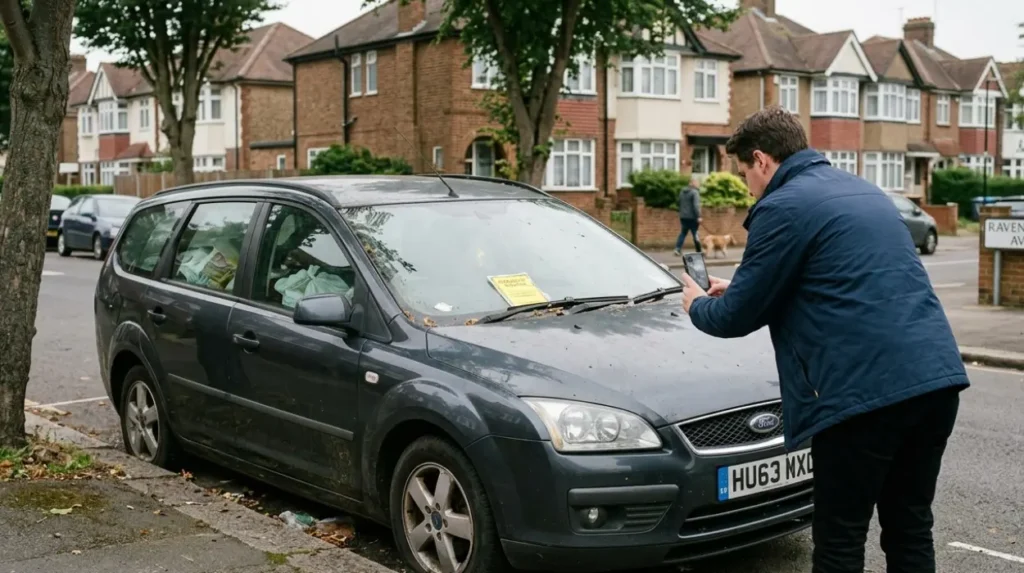
A practical example is a car left on a Bromley residential street for several weeks with flat tyres, no visible movement, and rubbish inside. In that case, the resident records the registration, takes a photo, notes the exact road and nearest house number, and submits the report through the council’s online route. If the council confirms abandonment, notice follows, and removal occurs if the owner does not respond.
A separate example is a vehicle left in a private car park or on private land. That case goes through Bromley’s vehicle-investigation process rather than the standard abandoned-road report, and the council states that the application requires payment. That distinction avoids delays and sends the report to the correct route first time.
Why this process is still relevant
The Bromley abandoned vehicle reporting tool remains relevant because abandoned cars continue to create visible nuisance, public-safety concerns, and administrative workload across London. A borough-specific online system gives residents a direct way to trigger enforcement and keep streets usable.
Abandoned vehicle enforcement sits at the intersection of environmental health, street management, and public order. As councils face continued reports, the system needs to be simple enough for residents and precise enough for officers to assess evidence quickly. That balance explains why forms ask for location, vehicle identity, and proof rather than just a complaint.
For South London audiences, the main value is clarity. Bromley’s process separates public and private land, asks for practical evidence, and gives the council a structured route to inspect, notify, and remove where appropriate. That is the core of how to use the tool correctly.
What counts as an abandoned vehicle in Bromley?
An abandoned vehicle is a car, van, motorbike, or other vehicle that appears neglected, unused, damaged, or left without lawful care for a significant period. In Bromley, councils look for signs such as flat tyres, broken windows, missing number plates, rubbish inside, vandalism, or evidence the vehicle has not moved for weeks.