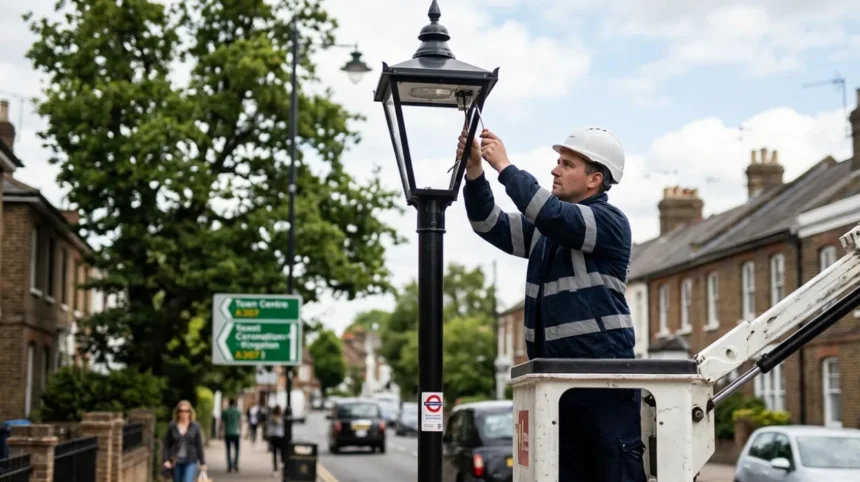
Faulty street lights in Kingston upon Thames are reported to the local council when the road is council-maintained, because councils are responsible for street light installation and maintenance in England and Wales. In South London, the reporting route depends on where the light sits: council roads go to the council, while certain major roads can fall under Transport for London or national road authorities.
- What counts as a faulty street light in Kingston upon Thames?
- Who is responsible for repairs in Kingston upon Thames?
- How do you report a faulty street light in Kingston upon Thames?
- What details should you include in the report?
- What happens after you submit the report?
- When is a street light issue urgent?
- Why does street lighting matter in South London?
- What should residents know about major roads?
- How can you make a report faster to resolve?
- What is the best evergreen takeaway for Kingston upon Thames?
What counts as a faulty street light in Kingston upon Thames?
A faulty street light is any public light that does not work properly, has damaged parts, or creates a safety issue. In Kingston upon Thames, this includes lights that are dark, flickering, leaning, broken, or unsafe. The correct reporting route depends on who manages the road.
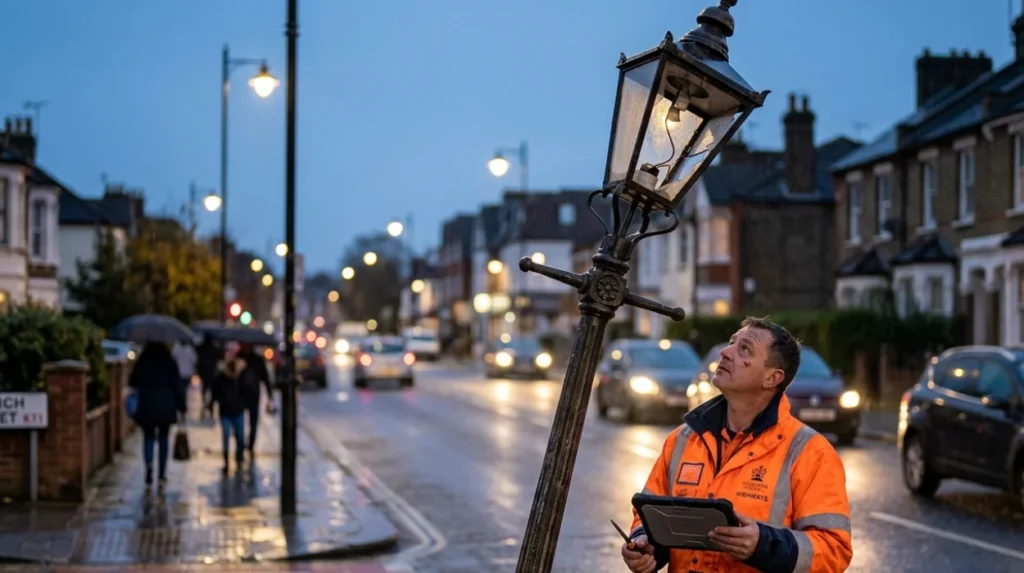
A street light fault is usually visible and specific. Common examples include a lamp that is completely off, a light that switches on and off, a damaged column, exposed wiring, broken lanterns, or a light that stays on during daylight. These faults matter because street lighting supports road safety, pedestrian visibility, and personal security after dark.
In Kingston upon Thames, the first step is to identify the road type. If the light is on a council road, the local council is the responsible authority. If it is on a motorway or an A road managed by national roads authorities, the report goes elsewhere. If the issue is on a TfL-managed street or road in London, TfL directs people to its Streetcare route for most street and road issues.
Who is responsible for repairs in Kingston upon Thames?
Responsibility sits with the road authority, not the resident. Kingston Council handles many local street lights, while TfL or national road authorities handle some major routes. This division determines where the report goes and how quickly it enters the repair system.
Public street lighting in England and Wales is generally a council responsibility. That means the local authority manages the asset, logs the fault, and arranges inspection or repair. In London, some roads fall under Transport for London, especially strategic routes and certain red routes, and TfL provides a separate contact path for street and road issues.
This distinction matters because the same-looking lamp can sit on different road networks. A residential road in Kingston upon Thames usually belongs to the borough council. A busier trunk route may sit outside council control. Correct reporting saves time and reduces duplication.
A practical example is a dark lamp on a quiet estate road versus a dark lamp beside a major arterial route. The first usually goes to the borough. The second can require TfL or another highways authority, depending on the road classification.
How do you report a faulty street light in Kingston upon Thames?
Report the fault to the authority that manages the road. For council roads, use the local council reporting route. For TfL-managed roads, use Streetcare. For major roads managed by national authorities, use the relevant highways contact instead.
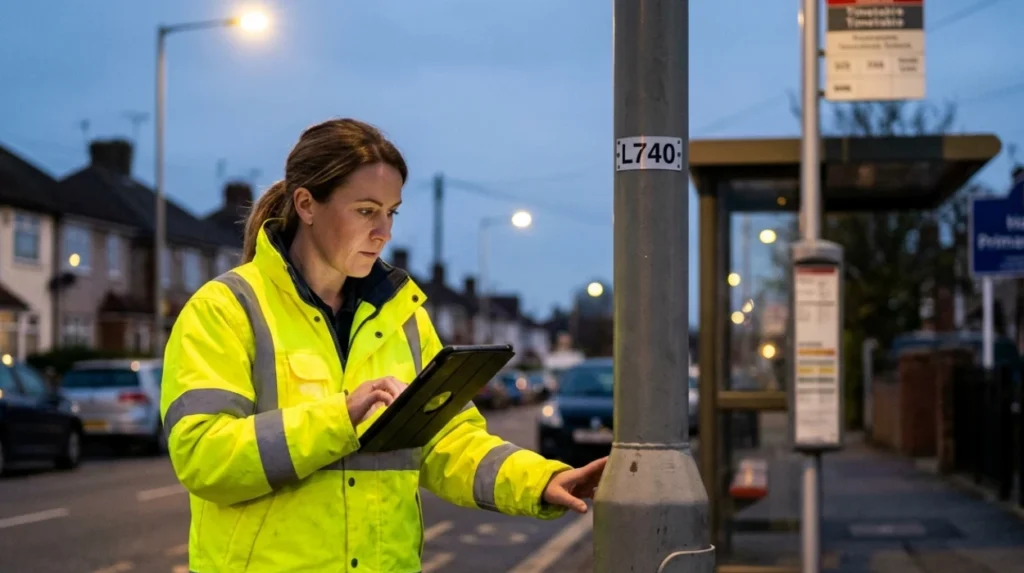
The reporting process is straightforward. You identify the exact location, describe the fault, and submit it through the correct service. The report should include the street name, nearest house number, landmark, and the lamp column number if visible. That helps the repair team find the correct asset quickly.
If the street light is on a road managed by Kingston upon Thames council, the borough’s online reporting route is the normal starting point. If the light is on a TfL-managed street or road issue in London, TfL says Streetcare is the quickest way to report it and lets users check whether the issue has already been reported. If the light is on a motorway or a managed A road, national roads authorities handle the fault instead.
For a strong report, include:
- The exact road name and postcode.
- Whether the light is completely off, flickering, damaged, or unsafe.
- The column number, if visible.
- The nearest junction, shop, school, bus stop, or landmark.
- Whether the issue affects one lamp or several lamps in a row.
What details should you include in the report?
Include the exact location, the nature of the fault, and any safety risk. Clear location details reduce delays, help crews identify the right column, and make it easier to prioritise hazards.
A useful report contains only factual information. State the road name, side of the street, and the nearest visible reference point. If the street light has a printed asset number, include that number. If the lamp is near a crossing, school entrance, park path, or bus stop, say so.
You should also describe the fault type in plain language. For example, “light not working,” “light flickering every few seconds,” “column leaning,” or “lamp cover broken.” If the issue creates an immediate danger, such as exposed cables or a fallen column, treat it as urgent and contact the relevant authority without delay.
Good reporting also avoids vague wording. “Broken light somewhere near the road” gives little help. “Street light outside 24 Clarence Road, Kingston upon Thames, opposite the bus stop, not working since 22 April” gives the maintenance team a precise target.
What happens after you submit the report?
After submission, the issue enters the authority’s fault management system for checking, prioritising, and repair. The council or highways team can inspect the light, confirm the defect, and schedule a fix based on safety and workload.
Most street light reports go through a triage process. The authority confirms whether the light is within its network, checks whether the fault is already known, and decides whether the issue needs inspection or direct repair. TfL says its Streetcare tool also helps users see whether a problem has already been reported.
The next stage depends on the defect. A simple lamp failure is usually easier to resolve than a column strike, electrical fault, or underground cable issue. If the problem affects a route used by pedestrians, cyclists, schoolchildren, or public transport users, it can receive higher operational attention because lighting affects visibility and safety.
In practical terms, a resident report often becomes one item in a maintenance queue. The more accurately the location is described, the faster the team can identify the asset and decide whether the issue is isolated or part of a larger outage pattern.
When is a street light issue urgent?
A street light issue is urgent when it creates a direct safety risk. Fallen columns, exposed wiring, sparks, smoke, or damaged equipment need immediate escalation because they present electrical and public safety hazards.
Not every faulty light is an emergency. A single dark lamp on a residential road usually requires routine repair. A lamp head hanging loose, a broken column, or exposed live parts change the risk level. The correct response is to report the hazard as dangerous and avoid touching the equipment.
Urgent reporting is especially important near schools, crossings, parks, stairways, and bus stops. Darkness in these places affects visibility for pedestrians and drivers, and damaged hardware can injure people nearby. If there is any sign of immediate danger, use the emergency contact route provided by the relevant authority rather than waiting for routine processing.
A useful rule is simple: report all faults, but escalate hazards. That keeps the reporting system focused on both service quality and public safety.
Why does street lighting matter in South London?
Street lighting supports visibility, road safety, and public confidence after dark. In dense urban areas such as South London, a working lamp network helps people walk, cycle, and travel more safely on local streets.
Street lighting is part of essential urban infrastructure. It helps drivers detect pedestrians and cyclists, especially at junctions and crossings. It also improves the experience of walking to stations, shops, schools, and homes during darker months. In boroughs such as Kingston upon Thames, where residential streets, town centres, parks, and transport links sit close together, consistent lighting matters across many different journeys.
The issue is not only convenience. Poor lighting can affect trip safety, neighbourhood confidence, and the perceived security of public space. That is why councils and transport authorities maintain reporting systems and repair processes for faulty lights.
For residents, the practical impact is clear. A single broken lamp can make a path feel less usable, while several failed lights in one stretch can affect an entire route. Reporting problems helps authorities map faults faster and keep the network functioning.
What should residents know about major roads?
Major roads follow different reporting rules from local streets. In England, motorways and some A roads are handled by national road authorities, while TfL manages certain London roads through its own system.
This matters in Kingston upon Thames because the borough contains different road types within the same area. A resident can live on a council street, walk onto a TfL corridor, and then reach a national route. The authority changes as the road classification changes. That means the reporting channel changes too.
GOV.UK states that councils are responsible for street light installation and maintenance in England and Wales, but major roads need separate handling. TfL states that its Streetcare tool is the quickest way to report most streets and road issues it handles. The correct route depends on the exact location of the light.
This structure prevents misdirected reports. It also helps explain why two neighbours with similar faults can end up using different reporting systems if their street lights sit on different road networks.
How can you make a report faster to resolve?
A report resolves faster when it is precise, complete, and location-rich. The best reports name the road, describe the fault clearly, and include visible reference details such as a column number or nearby landmark.
Accurate location data is the most important factor. Maintenance teams need to identify a specific asset, not a general area. If you can see the lamp column number, include it. If not, use a nearby address, postcode, junction, or public feature such as a school gate or bus stop.
Clear fault descriptions also help. “Not working” is useful. “Working intermittently after rain” is better. “Column leaning after vehicle impact” is a hazard report, not just a service request. That distinction affects prioritisation and inspection routing.
Residents can also check whether the issue has already been reported when the authority offers that option, which reduces duplicate submissions. That is helpful in busy corridors where multiple people notice the same outage.
What is the best evergreen takeaway for Kingston upon Thames?
The best approach is simple: identify the road owner, report the fault through the correct channel, and include precise location details. In Kingston upon Thames, that usually means the council for local roads, TfL for some London roads, and national authorities for major routes.
This topic stays relevant because street lights are essential public infrastructure and faults happen all year. The process does not change much: find the authority, describe the problem, and report it accurately. Residents who know the road network save time and improve the chance of a quick fix.
For South London readers, the key benefit is clarity. Once the right reporting route is known, faulty street lights become a routine maintenance issue rather than a confusing search. That keeps local streets safer and makes public spaces more usable after dark.
How do I report a faulty street light in Kingston upon Thames?
Report it to the correct authority based on the road type—use the council’s reporting system for local roads, TfL’s Streetcare for major London roads, or the relevant highways authority for motorways and major A roads.