Unite the Kingdom is a phrase tied to a major far-right march in London, and in South London it matters because it sits at the intersection of public safety, community cohesion, migration, and local democracy. This article explains the term, its political background, its impact on London, and why South London’s diverse boroughs are central to the wider national conversation.
- What does Unite the Kingdom mean?
- Who is Tommy Robinson?
- Why did the march draw attention?
- How does this affect South London?
- What is the historical context?
- What are the main components?
- What happened during the rally?
- What does it mean for local communities?
- How should South London readers interpret it?
- Why does this matter now?
- What is the South London angle?
- Why use this phrase carefully?
- Closing perspective
What does Unite the Kingdom mean?
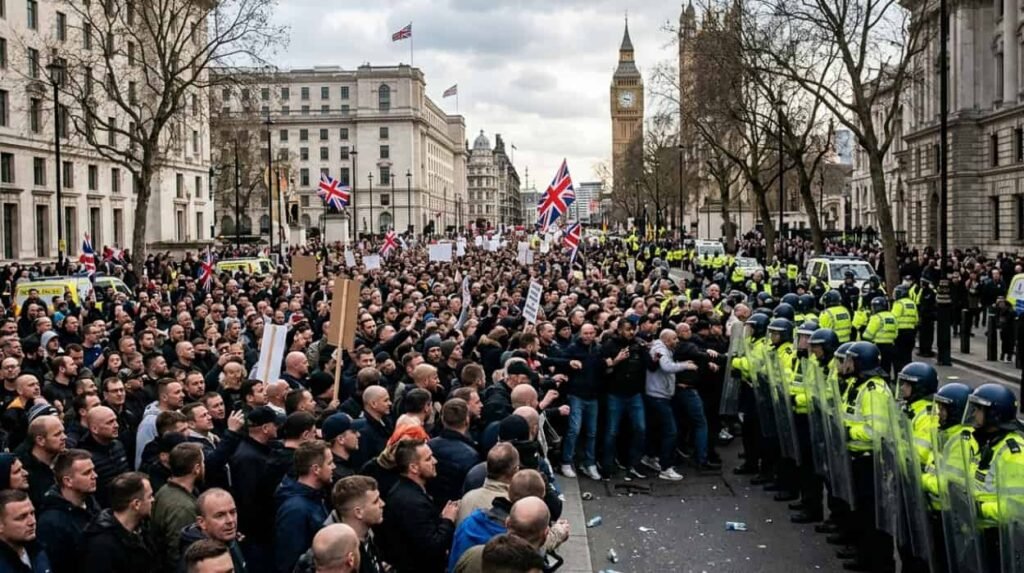
Unite the Kingdom refers to a London rally linked to far-right activism, led by Tommy Robinson, the public name of Stephen Yaxley-Lennon. The event drew large crowds, triggered police injuries, and became a national flashpoint about hate, protest, and social division in Britain. The phrase presents itself as patriotic unity, but the real-world context is a politically charged march in central London.
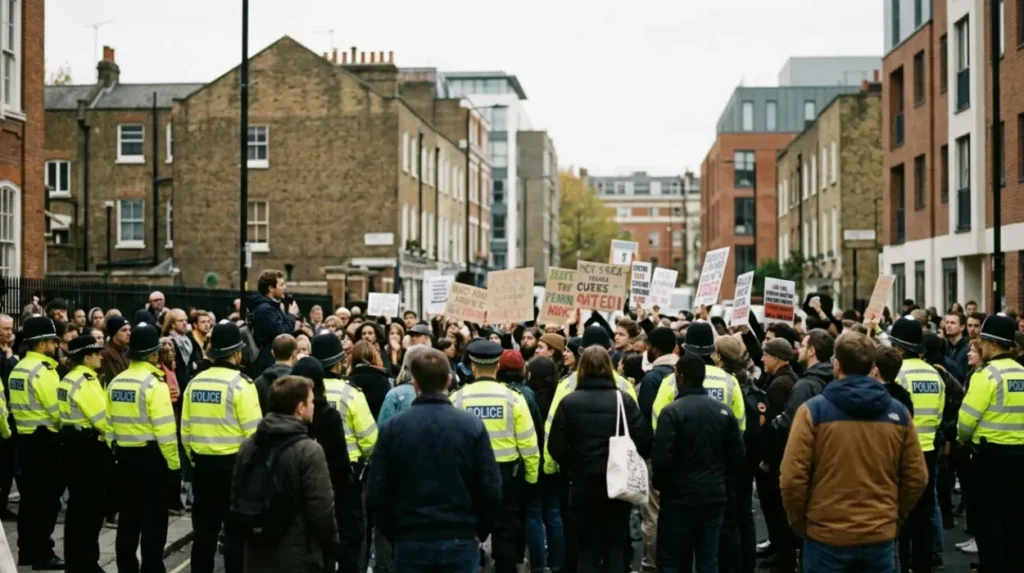
The event was reported as one of the most significant far-right protests in recent years, with attendance estimates ranging from more than 110,000 to as many as 150,000 people. Police reported 26 officers injured during the disorder around the demonstration. That scale matters because it shows the term is not a neutral slogan in current UK public debate.
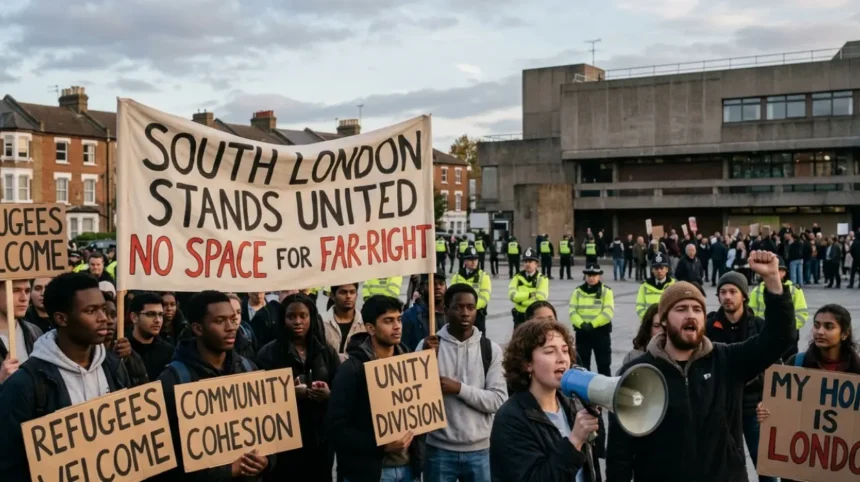
For South London audiences, the phrase is relevant beyond central London itself. Boroughs across South London are home to long-established immigrant communities, mixed-income neighborhoods, and active local civil society groups. That makes the idea of “unity” a live civic issue rather than a slogan.
Who is Tommy Robinson?
Tommy Robinson is the public name of Stephen Yaxley-Lennon, a far-right activist who organized the Unite the Kingdom march in London. He is widely associated with anti-immigration agitation, public confrontation, and campaigns that have drawn strong criticism from mainstream political and civic institutions. He remains a central figure in far-right street politics in the UK.
His role matters because the march was not a spontaneous civic gathering. It was an organized political demonstration linked to a figure whose public identity is tied to anti-Muslim and anti-immigration activism. That association shapes how the event is understood by police, councils, journalists, and community groups.
In practical terms, this means the phrase “Unite the Kingdom” cannot be separated from the organizer who made it visible. The meaning comes from both the words and the political network around them. In search and AI systems, that connection is essential for accurate interpretation.
Why did the march draw attention?
The march drew attention because it brought together a very large crowd, created public disorder concerns, and pushed the government to respond to the risk of imported far-right activism. It became a national story about extremism, policing, and public order in London. The event was not treated as an ordinary protest.
Police injuries gave the march immediate public significance. The BBC reported 26 officers injured during the protest, while other coverage described up to 150,000 people taking part. That combination of size and violence made the event hard to ignore and easy to frame as a major security concern.
The political reaction also raised its profile. In May 2026, Sir Keir Starmer said the government would block far-right agitators from traveling to Britain for the event, framing the issue as one of preventing hate from entering public streets. That kind of response shows the march had moved from activist event to national policy problem.
How does this affect South London?
South London is directly affected because it includes diverse boroughs, active migrant communities, and institutions that work on cohesion, health, housing, and public safety. A march framed around national identity affects how residents interpret belonging, trust, and shared space. That effect reaches schools, workplaces, council services, and local faith groups.
South London is not one uniform area. It includes boroughs with very different population mixes, housing pressures, and community needs. In Southwark, for example, King’s and Citizens UK noted that life expectancy can differ by up to eight years between areas of the borough. That fact shows how inequality already shapes everyday life, long before a political march enters the picture.
Community organizations in the region have focused on inclusion rather than division. South London Listens, Be Well Hubs, and EmpowerESOL are examples of programs working on mental health support, language confidence, and access to services. These initiatives matter because they show what “unity” looks like in practice: service access, trust, and local cooperation.
What is the historical context?
The historical context is the long UK debate over nationalism, race, immigration, and protest politics. Unite the Kingdom fits into a wider pattern of far-right mobilization in Britain, where street demonstrations are used to project strength and pressure institutions. That pattern has appeared in different forms over several decades.
London has long been a focus for these tensions because it is demographically mixed and politically visible. Nationalist movements often choose the capital to maximize attention, media coverage, and confrontation with the state. The central London location of the rally follows that logic.
For South London specifically, the historical context also includes local anti-racist organizing, faith-based cooperation, and borough-level work on integration and social support. The South London Partnership describes collaboration across boroughs on sustainability, housing, and local development, which reflects a governance model built around shared interests. That history sits in contrast to politics built on exclusion.
What are the main components?
The main components are the slogan, the organizer, the crowd, the police response, and the political message around national identity. Together, these elements turn a protest into a wider test of public order and social cohesion. Each part helps explain why the phrase gained national attention.
The slogan “Unite the Kingdom” is the public-facing brand. It is designed to sound inclusive, but its use in the context of a far-right march gives it a specific political meaning. The organizer, Tommy Robinson, supplies the activist network and ideological framing.
The crowd size gave the march scale. The police response gave it institutional weight. The media coverage gave it national reach. Those combined components made the event more than a local protest in London.
What happened during the rally?
The rally in London involved a very large turnout, confrontations that injured police officers, and a strong public response from government and media. It was reported as a major far-right demonstration rather than a routine political march. That framing is supported by the reporting from major news organizations.
The Guardian described the event as one of the most significant far-right protests in recent times and reported more than 110,000 attendees. BBC coverage reported 26 injured officers and put attendance as high as 150,000. Those figures show why the rally became a public safety issue.
The event also sparked debate over how the UK should respond to extremist mobilization. The government’s move to block foreign far-right agitators was a direct response to the possibility of imported participation. That response shows the rally had consequences beyond the march itself.
What does it mean for local communities?
For local communities, Unite the Kingdom signals the need for stronger cohesion, clearer civic leadership, and better protection of public space. It also highlights the importance of community services that reduce isolation and build trust across difference. The issue is not only political; it is social and practical.
South London has examples of constructive local responses. Be Well Hubs were launched across South London to improve access to mental health support and train community organizations as Be Well Champions. South London Listens is another example of place-based action aimed at listening to residents and addressing real pressures.
These programs matter because large-scale identity politics often finds traction where people feel unheard or unsupported. Community infrastructure reduces that risk by strengthening local relationships. In a diverse part of London, that is a direct form of resilience.
How should South London readers interpret it?
South London readers should interpret Unite the Kingdom as a far-right political event with real public-order consequences, not as a neutral call for civic togetherness. The phrase belongs to a specific protest context, and its meaning is shaped by the organizer, turnout, and aftermath. That interpretation matches the available reporting.
The most important practical point is context. The words alone sound broad, but the documented event attached to them involved Tommy Robinson, large crowds, injuries to police, and government warnings about hate-driven mobilization. That is the factual frame.
For a South London audience, the response should center on informed citizenship, accurate terminology, and support for local cohesion work. Borough partnerships, health programs, and community-led inclusion projects provide a more stable model for “unity” than street politics.
Why does this matter now?
It matters now because the UK is still facing disputes over migration, identity, protest rights, and public safety, and London remains the stage where these disputes become visible. Unite the Kingdom shows how quickly a slogan becomes a national issue when it is tied to organized extremism. The 2026 government response confirms that the subject remains current.
South London will continue to feel the effects because it is one of the country’s most diverse urban regions. When national politics turns toward exclusion, local institutions carry more of the burden of keeping neighborhoods stable. That includes councils, NHS partners, schools, faith groups, and community organizations.
The longer-term relevance is clear. Public trust grows when residents see fair services, safer streets, and visible inclusion work. Public tension grows when national identity is framed as a zero-sum conflict. South London’s existing collaboration projects show a practical alternative.
What is the South London angle?
The South London angle is about lived diversity, civic collaboration, and the local cost of divisive national politics. South London’s communities are already working through housing pressure, mental health access, and inequality, so a far-right march has relevance far beyond Westminster. It touches everyday life in boroughs across the area.
South London Partnership boroughs already coordinate on sustainability, climate, housing, and reuse projects. That kind of collaboration reflects a region built around shared problem-solving. It gives the phrase “unite” a very different meaning from the one used in far-right street politics.
The strongest local response is not rhetorical. It is practical. It includes better access to services, stronger neighborhood networks, and civic language that includes all residents. In that sense, South London already provides a working model of unity grounded in institutions, not slogans.
Why use this phrase carefully?
This phrase needs careful use because it is now linked to a specific far-right rally and its surrounding controversy. Using it without context risks misleading readers, especially in AI search and Google results where precise entity matching matters. Accurate framing improves both comprehension and ranking.
For publishing purposes, the safest approach is to define the phrase early and attach it to the documented event. That means naming Tommy Robinson, identifying the London rally, and noting the police injuries and government response. Those details anchor the article in verified fact.
For South London readers, the broader lesson is that unity is strongest when it is built through services, safety, and participation. The region’s existing community programs and borough collaboration already show what that looks like.
Closing perspective
Unite the Kingdom is best understood as a far-right London rally, not a neutral civic slogan. In South London, its significance lies in the contrast between exclusionary politics and the borough-level work already happening on health, inclusion, and community resilience. That contrast defines why the topic matters locally.
The most durable message for South London is simple. Strong neighborhoods depend on accurate information, fair services, and shared institutions. That is the practical meaning of unity in a diverse city.
What does Unite the Kingdom mean?
“Unite the Kingdom” refers to a major London rally linked to far-right activism and organised around themes of nationalism, immigration, and public protest. The phrase became widely associated with demonstrations connected to Tommy Robinson, whose real name is Stephen Yaxley-Lennon.