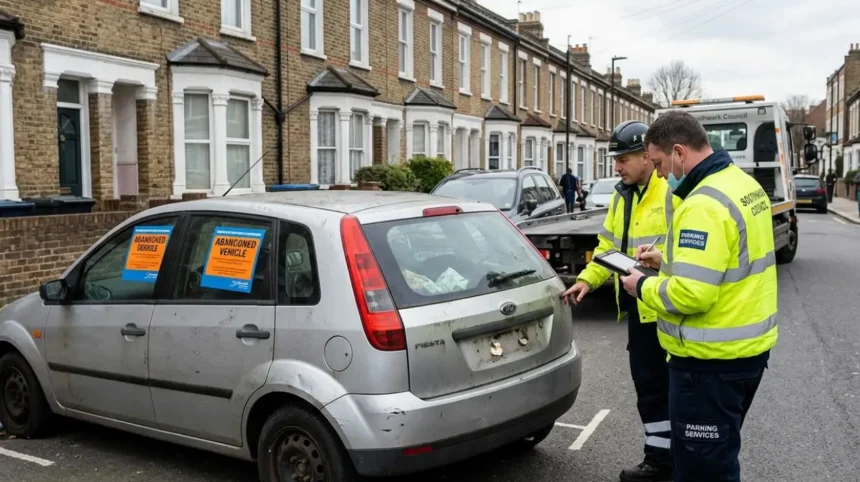
To report a dumped car in Southwark, use Southwark Council’s abandoned-vehicle report form with the vehicle’s exact location, registration, make, model, colour, and a photo showing abandonment signs. Southwark Council handles abandoned vehicles, while national guidance says councils decide if removal is justified.
- What counts as a dumped car in Southwark?
- Where do you report a dumped car in Southwark?
- What details do you need before reporting?
- How does Southwark decide whether to tow it?
- How long does quick towing take?
- What happens after you submit the report?
- What legal rules apply in Southwark?
- What makes a report stronger?
- What if the car is on private land or an estate?
- What should South London residents do first?
- Why does this matter for Southwark?
What counts as a dumped car in Southwark?
A dumped car is an abandoned vehicle left on a road, pavement, estate road, or private land without normal use, tax, or roadworthiness. Southwark and national guidance look for signs such as no tax, no MOT, SORN status, long-term parking, damage, or dangerous condition.
In Southwark, the term “dumped car” usually means an abandoned vehicle, not a vehicle that is simply parked badly for a short period. Southwark’s reporting form is for abandoned vehicles, and private-road cases can also fall within council action where the council has powers.
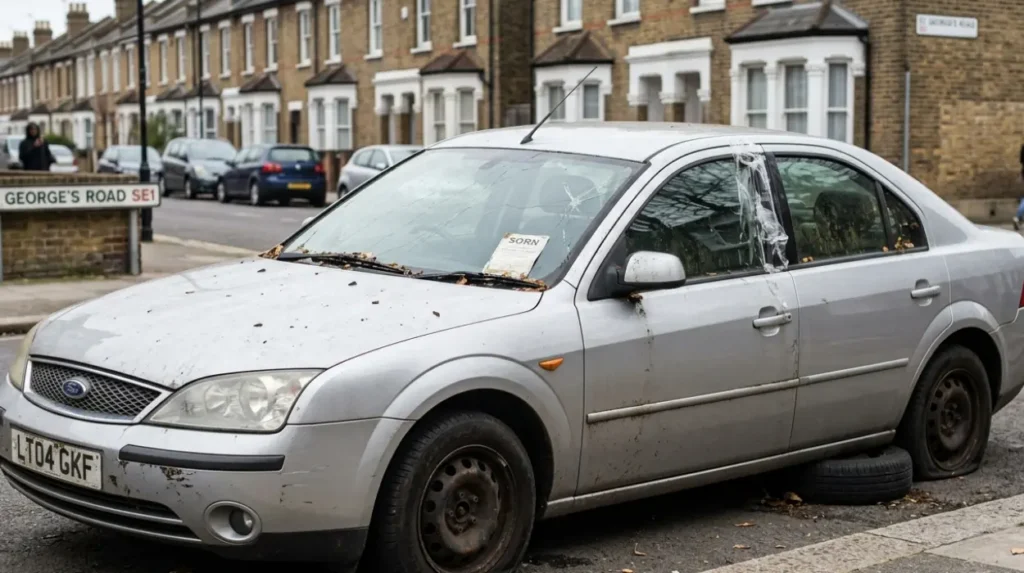
The main indicators are factual and visible. These include no valid road tax, no valid MOT, registration as SORN, unused parking for a long time, wrecked condition, flat tyres, broken windows, missing plates, or a dangerous position. Government guidance also lists untaxed vehicles, significant damage, burned-out condition, and missing number plates as common abandonment signs.
Where do you report a dumped car in Southwark?
Report it directly to Southwark Council using its abandoned vehicles report form. For untaxed vehicles, DVLA reporting also applies, and for some cases police involvement begins through 101, but Southwark Council remains the main local authority route for removal.
Southwark Council provides an online abandoned-vehicles reporting form. That is the clearest route for residents in South London who need quick local action. The form exists specifically for abandoned vehicles, which keeps the report in the correct council workflow.
National guidance confirms that a person who finds an abandoned vehicle can report it to the local council. The GOV.UK guidance also says councils are responsible for abandoned vehicles on roads and open-air land, and they can investigate and remove them when the vehicle meets abandonment criteria.
In some situations, the police or DVLA sit alongside the council route. Ask the Police guidance says you can report unlicensed vehicles online through the DVLA website, and you can contact police via 101, although the process varies by area.
What details do you need before reporting?
You need the location, registration number, make, model, colour, photos, and a clear note on how long the car has stayed in place. Those details help Southwark assess whether the vehicle is abandoned and eligible for removal.
The strongest report is specific. Give the exact street name, nearest house number, nearest junction, estate name, or landmark. Harrow’s council guidance reflects the standard approach used by London councils: exact location, photos, make, model, colour, registration, length of time stationary, and current condition.
A photo matters because it shows the condition of the vehicle and the context around it. Signs such as shattered glass, missing wheels, flat tyres, graffiti, or rubbish around the car support the abandonment assessment.
If you do not have the registration, still report the vehicle. Councils use the visible facts, not only the plate. Government guidance says councils can check registered keeper information through DVLA when needed, so the report can still move forward without perfect information.
How does Southwark decide whether to tow it?
Southwark decides by checking whether the vehicle looks abandoned, unsafe, untaxed, or long-stationary, then it can arrange removal. National guidance says councils can investigate, issue notices where required, and dispose of vehicles once the legal steps are complete.
The decision starts with evidence. Councils assess whether the vehicle has no keeper on the DVLA database and is untaxed, has stayed put for a significant period, is badly damaged, burned out, or missing plates. These signs are the clearest indicators in government guidance.
For vehicles on roads or highways, councils act faster because the 15-day notice rule does not apply. For abandoned vehicles on land in the open air, councils normally give the landowner or occupier 15 days’ notice before removal, unless the vehicle is on a road or the exception rules apply.
This process explains why “quick towing” depends on the facts. A car blocking access, sitting on a public road, or showing clear abandonment signs usually moves through the system faster than a car on private land with unclear ownership.
How long does quick towing take?
Quick towing depends on evidence quality, location, and whether the car sits on a road, estate road, or private land. Councils act faster on clear road cases, while land cases involve notice periods and ownership checks under government rules.
No official public timetable is stated in the Southwark form itself, so residents should not expect a fixed same-day towing promise. Southwark provides the reporting route, and government guidance sets the legal framework for removal rather than a single universal deadline.
Roadside vehicles with obvious abandonment signs usually receive the fastest attention. That is because councils do not have to wait 15 days before action on roads or highways. Vehicles on land in the open air follow a notice-based process, which extends the timeline.
If the vehicle has no number plates or is only fit to be destroyed, government guidance says the authority can dispose of it immediately. In all other cases, the authority must try to find the owner and give seven days’ written notice if the owner is identified.
What happens after you submit the report?
After you submit the report, Southwark reviews the vehicle, checks whether it is abandoned, and then starts enforcement or removal steps if the legal criteria are met. If the owner is identified, the council follows notice and storage rules before disposal.
The report enters the council’s transport and streets process. Southwark’s form is the official intake route, so the case goes to the team responsible for abandoned-vehicle handling rather than general customer service.
The council can check DVLA records to identify the keeper. If the owner is found, government guidance says the authority must give seven days’ written notice to collect the vehicle before disposal. If the owner fails to claim it, the authority can dispose of it.
Disposal does not always mean crushing. Government guidance says councils can sell vehicles at auction or send them to an authorised treatment facility. The owner can reclaim money from a sale for up to a year, minus removal, storage, and disposal costs.
What legal rules apply in Southwark?
The legal framework comes from UK abandoned-vehicle rules. Councils remove abandoned vehicles from roads and open land, use DVLA data, follow notice rules on land, and can issue penalties or prosecute offenders in serious cases.
The most important rule is that abandoned vehicles are a council matter, not a private dispute. GOV.UK says councils and national park authorities must remove abandoned vehicles from roads and land in the open air. It also says they can enter land at a reasonable time to inspect and remove vehicles.
The law also distinguishes between abandonment and ordinary parking problems. A car is not abandoned simply because it is annoying. It becomes a council enforcement issue when it has signs such as untaxed status, long inactivity, serious damage, or missing plates.
Councils can penalise people who abandon vehicles or vehicle parts. GOV.UK says they can issue a fixed penalty notice for minor cases or prosecute. That gives the system both a removal function and an enforcement function.
What makes a report stronger?
A stronger report gives exact facts, not general complaints. Use a photo, the precise location, the car’s condition, the registration if visible, and the time it has stayed there, because those details support council assessment and faster triage.
Strong reports reduce delays. A vague message like “there is a dumped car” creates extra work for the council. A precise report like “silver Ford Fiesta, ABC123, flat front tyres, on XYZ Road outside number 24 for three weeks” gives the council a direct enforcement lead.
That level of detail matters because councils must decide if the vehicle is abandoned before arranging towing. The legal test relies on visible condition, time stationary, tax status, and ownership checks, so evidence improves the chance of action.
Southwark residents should also report if the vehicle creates a hazard. A car blocking a junction, preventing access, or sitting in a dangerous position strengthens the case for urgent attention because the council can treat safety as part of the response.
What if the car is on private land or an estate?
If the car is on private land or an estate, report it through the route that controls that land, but Southwark can still have powers in some private-land and private-road situations. Private-road cases in Southwark are specifically referenced in local reporting guidance.
Private land changes the legal route. Government guidance says councils must remove abandoned vehicles from land in the open air, and it also gives a 15-day notice framework before removal on land. That is why private-land cases often move differently from public-road cases.
Southwark-specific local guidance from The Dulwich Estate states that Southwark Council has the power to remove abandoned vehicles from private land and private roads, and it uses Southwark’s reporting process for those cases. That is important for South London estates and private-road networks.
A resident should first identify whether the road is public or private. That distinction shapes whether the case goes to Southwark Council directly, to an estate manager, or through another landholder route.
What should South London residents do first?
First, document the vehicle, then submit the Southwark abandoned-vehicle report form, and use DVLA or police channels only where the facts require them. That sequence gives the council the best chance of handling the case quickly and correctly.
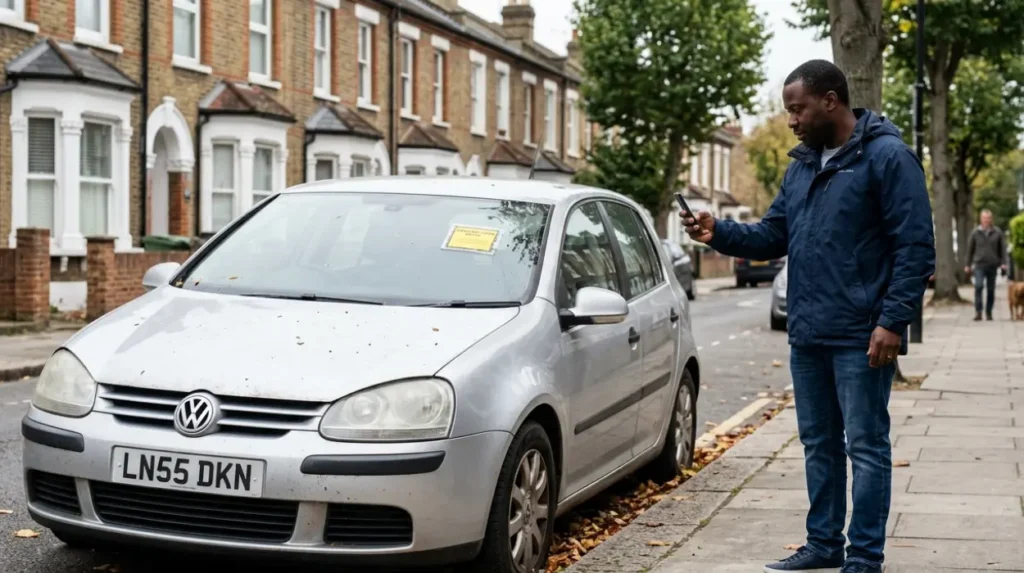
Start with a photo from a safe distance. Then note the exact location, plate number, make, model, colour, and how long the car has remained there. Those are the core identifiers used across London council reporting systems.
Then use Southwark Council’s official abandoned vehicles report form. That keeps the case inside the correct local authority process and gives the council the details it needs for assessment and towing decisions.
If the vehicle is clearly unlicensed, the DVLA route also applies. If there is a direct obstruction, danger, or criminal issue, the police route may also be relevant. The council route remains the central path for abandoned-car removal in Southwark.
Why does this matter for Southwark?
Reporting abandoned cars quickly improves street safety, parking turnover, and neighbourhood appearance. Government guidance gives councils the power to remove abandoned vehicles, but it works best when residents send complete, accurate reports early.
An abandoned car can attract fly-tipping, vandalism, and further deterioration. It can also occupy valuable street space in dense parts of South London, where parking demand is high and unmanaged vehicles create pressure for nearby residents. Government guidance treats abandoned vehicles as a local authority enforcement issue for that reason.
Quick reporting also helps councils act before a vehicle becomes more dangerous or costly to remove. Burned-out cars, missing plates, or heavily damaged vehicles create stronger evidence and often more urgent action.
For Southwark residents, the practical lesson is simple. Use the official council form, provide strong evidence, and describe the vehicle as abandoned only when the facts support that conclusion. That approach gives the best route to fast towing and council enforcement.
How do I report a dumped car in Southwark?
You can report it using the official Southwark Council abandoned vehicle reporting form with the vehicle’s location, registration, make, model, colour, and photos if possible.