Key Points
- Historic Control Shift: The Green Party has successfully won full political control of Lewisham London Borough Council, ending decades of historic Labour dominance.
- Dramatic Seat Realignment: The Green Party gained 40 seats to secure a commanding majority of 40 councillors, while Labour lost 40 seats, reducing their representation to just 14 councillors.
- First Green Mayor Elected: Green Party candidate Liam Shrivastava secured the Lewisham mayoralty with 35,265 votes ($40.4\%$), marking the first time a non-Labour candidate has held the post since its inception in 2002.
- Defection and Defeat: The victorious Green Mayor, Liam Shrivastava, previously served as a local Labour councillor before defecting to the Green Party in 2025.
- Wider London Wave: The result coincides with broader municipal shifts across London, including a parallel Green Party mayoral victory in the neighbouring borough of Hackney.
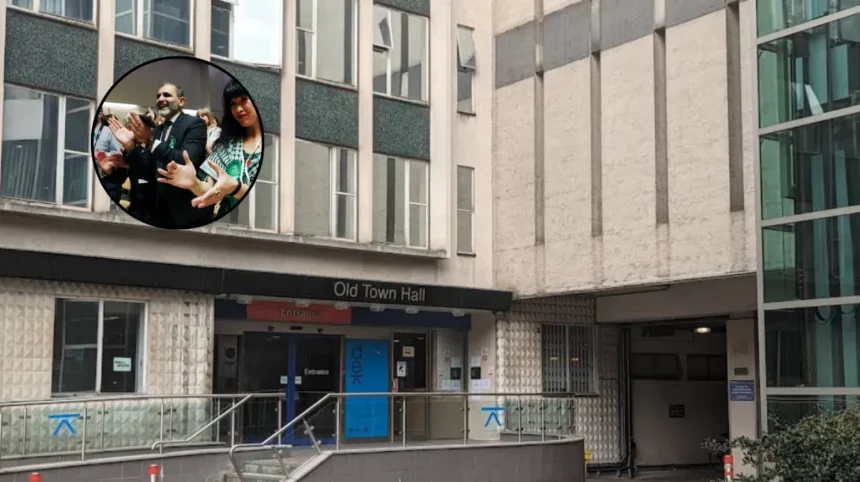
Lewisham (South London News) May 18, 2026 – In a historic political shift that has transformed the political landscape of inner south-east London, the Green Party has overturned decades of solid Labour majorities to secure absolute control of both the Lewisham Borough Council and its executive mayoralty. The local authority, which had been a traditional stronghold for the Labour Party for generations, saw its previous composition entirely upended following the declaration of the municipal ballots cast by residents across the borough’s electoral wards.
- Key Points
- What were the final results for the Lewisham Council seat declarations?
- Who won the Lewisham executive mayoral election?
- What happened in the Bellingham ward?
- What happened in the Blackheath ward?
- What happened in the Brockley ward?
- What happened in the Catford South ward?
- How did professional journalists and media outlets cover the results?
- When were the 2026 local elections in London?
- Background of the Lewisham political development
- Prediction for the future administration of Lewisham
What were the final results for the Lewisham Council seat declarations?
The comprehensive seat declarations for the 54-member local authority revealed an unprecedented structural reversal between the two leading political organisations. According to the certified data compiled and released by the Lewisham Council returning officer, the distribution of the local authority seats concluded as follows:
- Green Party: 40 seats ($+40$ change relative to the 2022 baseline)
- Labour Party: 14 seats ($-40$ change relative to the 2022 baseline)
Prior to the formal dissolution of the previous council term, Labour held an absolute legislative monopoly over the local authority, having captured all 54 council seats during the 2018 and 2022 standard local election cycles. The newly completed counts confirm that 28 seats are required for a functioning operational majority, placing the Green Party firmly in command of the municipal administration with a 12-seat buffer over the required threshold.
Who won the Lewisham executive mayoral election?
Simultaneously conducted alongside the legislative council races, the executive mayoral election resulted in the declaration of a Green Party mayor for the first time since the creation of the directly elected office twenty-four years ago.
The certified vote counts for all nominated mayoral candidates were officially recorded as follows:
- Liam Shrivastava (Green Party): 35,265 votes ($40.4\%$)
- Amanda De Ryk (Labour Party): 30,374 votes ($34.8\%$)
- Pete Newman (Reform UK): 7,288 votes ($8.4\%$)
- Josh Matthews (Liberal Democrats): 6,323 votes ($7.3\%$)
- Sylbourne Sydial (Conservative and Unionist Party): 4,655 votes ($5.3\%$)
- Kayode Damali (Independent): 2,185 votes ($2.5\%$)
- Jay Coward (Trade Unionist and Socialist Coalition): 721 votes ($0.8\%$)
- Roger Mighton (Independent): 392 votes ($0.4\%$)
The outcome means that Liam Shrivastava will officially assume the executive mayoral responsibilities from the outgoing Labour mayor, Brenda Dacres, who was initially elected to the post during a municipal by-election in 2024.
The micro-level electoral data across the distinct wards within the borough illustrated widespread shifts in voter sentiment, with the Green Party picking up seats in several areas that had historically returned unchallenged Labour majorities.
What happened in the Bellingham ward?
In the Bellingham ward, a mixed representation emerged as Labour managed a narrow defense against an advancing Green slate. The recorded figures showed:
- Gavin Moore (Labour Co-op): 838 votes ($36.2\%$)
- Nadja Penfold (Green Party): 689 votes ($29.8\%$)
- George Ryan (Labour Co-op): 681 votes ($29.4\%$)
- Stuart Wood (Green Party): 590 votes ($25.5\%$)
- John Pinfold (Reform UK): 352 votes ($15.2\%$)
- Fabio Moro (Reform UK): 333 votes ($14.4\%$)
- Belinda Giddings (Conservative): 164 votes ($7.1\%$)
- Mario Bucolo (Conservative): 161 votes ($7.0\%$)
- Sarah Morris (Liberal Democrats): 155 votes ($6.7\%$)
- James Evans (Independent): 74 votes ($3.2\%$)
- Jane Lawrence (The Motoring Party): 31 votes ($1.3\%$)
The final distribution resulted in one Labour Co-op hold and one clear Green Party gain from Labour due to split candidate preferences among local voters.
What happened in the Blackheath ward?
The affluent Blackheath ward experienced a significant swing, resulting in a dual victory for the Green Party and a single seat retention for Labour:
- Rebecca Jones (Green Party): 1,890 votes ($35.0\%$)
- Pauline Dall (Labour Co-op): 1,626 votes ($30.1\%$)
- Tracey Martin (Green Party): 1,624 votes ($30.1\%$)
- Ben Rand (Green Party): 1,535 votes ($28.5\%$)
- Chris Maines (Liberal Democrats): 1,358 votes ($25.2\%$)
- Luke Warner (Labour Co-op): 1,341 votes ($24.9\%$)
- Jean Branch (Liberal Democrats): 1,331 votes ($24.7\%$)
- Chris Membu (Labour Co-op): 1,281 votes ($23.7\%$)
- Peter Ramrayka (Liberal Democrats): 1,144 votes ($21.2\%$)
The counting concluded with two separate Green Party gains directly from Labour and one single seat held by incumbent Labour candidates.
What happened in the Brockley ward?
In Brockley, the Green Party achieved a comprehensive clean sweep, winning all three available council seats with clear majorities:
- Ade Adewunmi (Green Party): 2,832 votes ($52.5\%$)
- Rotimi Skyers (Green Party): 2,724 votes ($50.5\%$)
- El Fry (Green Party): 2,721 votes ($50.4\%$)
- Sian Eiles (Labour Co-op): 1,861 votes ($34.5\%$)
- Jay Morton (Labour Co-op): 1,667 votes ($30.9\%$)
- Edward Humphreys (Labour Co-op): 1,516 votes ($28.1\%$)
The result marked a complete three-seat gain for the Green Party from Labour within the ward boundaries.
What happened in the Catford South ward?
Catford South presented one of the closest contests of the night, yielding a highly fragmented result between the competing tickets:
- Briony Edwards (Green Party): 1,580 votes ($33.1\%$)
- Eva Stamirowski (Labour): 1,529 votes ($32.0\%$)
- Oliver Matejka (Labour): 1,524 votes ($31.9\%$)
- Rashid Irshad (Green Party): 1,295 votes ($27.1\%$)
- Robert Williams (Labour): 1,295 votes ($27.1\%$)
The narrow margins culminated in one Green Party gain from Labour alongside two parallel Labour holds.
The Crofton Park ward returned an absolute endorsement for the Green Party slate, with candidates comfortably passing the fifty percent threshold:
- Liam Shrivastava (Green Party): 3,090 votes ($54.1\%$)
- Natalie Thomas (Green Party): 2,991 votes ($52.3\%$)
- Aaron Regisford (Green Party): 2,907 votes ($50.9\%$)
- Anita Gibbons (Labour Co-op): 1,809 votes ($31.7\%$)
- Harcourt Alleyne (Labour Co-op): 1,804 votes ($31.6\%$)
- Alex Brooks (Labour Co-op): 1,709 votes ($29.9\%$)
How did professional journalists and media outlets cover the results?
As reported by Elliot Topham of the Local Government Chronicle (LGC), the historic municipal outcome solidified a challenging period for the national ruling party in London, describing the wider scenario as “Labour’s London elections ‘nightmare’.”
Topham highlighted that the victorious Green mayoral candidate, Liam Shrivastava,
“had previously served as a Labour party councillor before defecting to the Greens last year.”
The LGC analysis emphasized that this development followed another significant regional victory, noting that
“the result follows the Green party winning the race for mayor Hackney LBC earlier today.”
Furthermore, an extensive analytical report published in The Spectator detailed the deeper socio-political transformations underlying the vote shift. The publication noted that the Greens achieved an extraordinary “+24 per cent point swing to topple Labour” in a borough where previously
“Labour dominance felt culturally embedded, not merely political.”
The Spectator analysis argued that the old Labour coalition—built on inherited loyalties, ethnic minority networks, and traditional working-class identifiers—is gradually giving way to a “highly-networked graduate civic class” that increasingly sets the moral and structural tone in inner London communities.
When were the 2026 local elections in London?
The local elections across the capital took place on Thursday, May 7, 2026. More than six million Londoners were eligible to participate in the democratic process, which saw active polling across all 32 distinct London boroughs simultaneously.
The wider regional returns published by The Guardian confirmed that the shifts observed in Lewisham were mirrored in other urban centres, with Labour losing overall control of Lambeth Council to a state of No Overall Control (NOC), alongside the absolute loss of the Hackney council majority and mayoralty to the Green Party.
Background of the Lewisham political development
To understand the magnitude of the 2026 election, it is necessary to examine the modern political history of the London Borough of Lewisham. Since its initial administrative formation in 1965, Lewisham has traditionally been managed by a firm Labour Party majority.
While brief periods of No Overall Control occurred in the late 20th century, the 2018 and 2022 local government elections saw Labour achieve absolute political dominance, winning every single one of the 54 available seats on the council. This total lack of a formal opposition group lasted for several consecutive years.
The first structural cracks in this monopoly appeared mid-way through the recent council term in 2025. Two sitting Labour councillors chose to defect from the party, crossing the chamber floor to join the Green Party. This unexpected realignment formed the first official minority opposition group within Lewisham Council since 2010.
Additionally, internal local tensions and frequent changes at the executive level had previously created friction within the local electorate. Following the resignation of former Mayor Damien Egan in early 2024 to contest a parliamentary seat, Labour’s Brenda Dacres won the subsequent mayoral by-election with a comfortable majority.
However, localised dissatisfaction regarding urban planning, housing management, environmental initiatives, and broader international issues began creating a platform for alternative progressive movements. Armed with an active grassroots infrastructure and tapping into a highly organised demographic of younger professionals and civically involved graduates, the Green Party progressively built a campaign structure capable of turning local discontent into concrete electoral gains, culminating in the 2026 landslide.
Prediction for the future administration of Lewisham
The transition from a total Labour monopoly to an overwhelming Green Party majority is highly likely to alter the operational, legislative, and fiscal priorities of Lewisham Borough Council, directly impacting local residents, public sector workers, and property owners.
Local citizens can expect an immediate and substantial acceleration of environmental mandates within municipal policy. The incoming Green administration is predicted to introduce stricter low-traffic neighbourhoods (LTNs), expanded cycling infrastructure, and aggressive carbon-reduction targets for local public infrastructure. While these changes will please environmental advocates, they may face pushback from local motorists and commercial businesses navigating transport alterations.
From a housing perspective, the new leadership is anticipated to emphasise sustainable construction standards and stricter regulations on private landlords, which could alter rental dynamics across major hubs like Deptford, Brockley, and Catford. Furthermore, the relationship between the local authority and the national Labour government will face a period of strategic adjustment. Mayor Liam Shrivastava will likely utilise his new executive platform to challenge central government decisions on welfare, municipal funding allocations, and public service provisions, positioning Lewisham as a prominent national test case for municipal Green governance.