Key Points
- Greenwich Council has made the west and east Greenwich low traffic neighbourhood scheme permanent after a trial period.
- The scheme was first trialled in November 2024 to reduce congestion, pollution and road danger, and the council said it drew on traffic counts, air quality data, collision statistics and feedback from more than 4,000 residents and stakeholders.
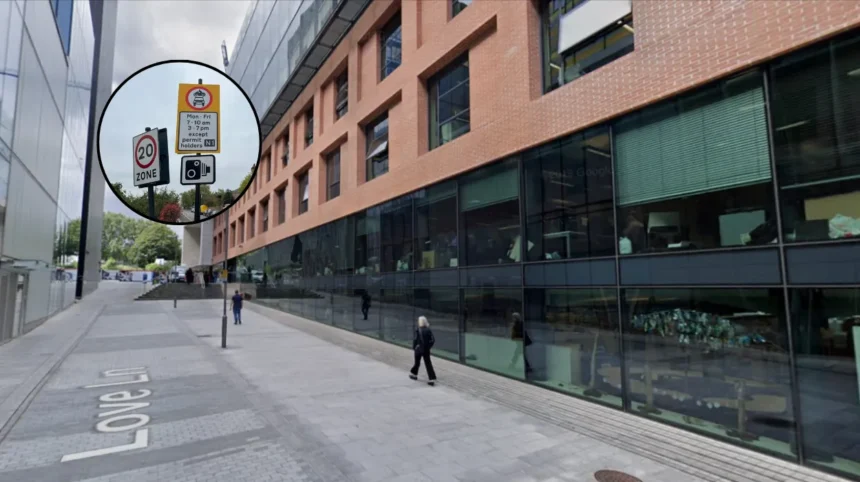
- The scheme uses camera-enforced filters and weekday restrictions between 7am and 10am, and 3pm and 7pm.
- The council said traffic fell across the area by 6 per cent and air quality improved slightly in the LTN areas.
- Greenwich Council rejected claims that its consultation was biased, secretive or that it had “airbrushed” opposition from reports.
- The authority also acknowledged some traffic displacement in Charlton and said targeted mitigation measures may follow, subject to funding and statutory processes.
- Drivers who enter restricted roads outside permitted times can face penalty charge notices.
Greenwich (South London News) May 20, 2026 – Greenwich Council has moved to make its West and East Greenwich neighbourhood management scheme permanent after a trial that began in November 2024 and was later followed by a statutory consultation on the long-term order needed to keep it in place.
Why was it trialled?
As reported by the Royal Borough of Greenwich, the scheme was approved for trial in March 2024 to tackle long-standing concerns about through-traffic and poor air quality in the west and east Greenwich neighbourhoods.
The council said the aim was to create a cleaner, greener and more accessible borough, while also improving road safety and reducing congestion.
The restrictions operate through ANPR camera enforcement on specific streets and at set times on weekdays, with drivers receiving penalty charge notices if they travel through restricted points during those hours.
That operating model places the scheme in the same wider category as other camera-controlled traffic management schemes used to limit rat-running and protect residential streets.
What did the council find?
The Standard reported that Greenwich Council’s earlier assessment found traffic across the wider area had fallen by 6 per cent and that air quality in the LTN areas had slightly improved.
The council also said its conclusion was based on a combination of monitoring work, including traffic counts, air quality data, collision statistics and consultation feedback from thousands of residents and stakeholders.
According to the council’s published material, the decision was not based on one measure alone, but on the wider pattern of evidence gathered during the trial and consultation stages.
The authority said that the evidence supported making the scheme permanent, subject to legal steps required for the Traffic Management Order.
What objections were raised?
The Standard reported that the approval decision was called in by two councillors, leading to a scrutiny committee discussion in November where residents both for and against the scheme gave their views.
Supporters argued that the scheme had made roads safer for pedestrians and cyclists inside the LTN areas, while opponents, particularly some residents in Charlton, said traffic had been displaced onto their streets instead.
The council then faced criticism that it had “selectively reported” consultation feedback or omitted opposition, including a petition said to have gathered more than 5,700 signatures.
Greenwich Council rejected that criticism, saying its reports contained a comprehensive summary of formal representations, open comments and consultation data.
How did Greenwich respond?
Greenwich Council said the petition was not directly referenced in reports because it did not follow the authority’s established submission procedure.
However, the council said the issues raised in that petition, including traffic displacement, air quality, emergency access, accessibility for Blue Badge holders and the consultation process itself, had already been considered at earlier stages.
The authority also increased Blue Badge exemptions to two vehicles per eligible person after initial rounds of public engagement.
It further denied claims that the consultation was “biased, undemocratic or secretive”, insisting that the analysis and findings were set out transparently.
Explore More Greenwich Council News
Morden Wharf: 1,500 Homes Approved in Octagonal Towers, Greenwich 2026
Greenwich Approves 1,500 Homes, Affordable Cut; Greenwich 2026
What happens in Charlton?
The council acknowledged that some roads in Charlton, including Victoria Way and Eastcombe Avenue, experienced increased traffic during the trial.
Residents raised concerns about a narrow junction near Fossdene Primary School, where they said rat-running had created a pinch point and could affect children’s safety.
Greenwich Council said collision data did not show significant adverse safety impacts at or near the school, although it said it would continue to consider mitigation such as turning restrictions, junction improvements and traffic calming measures.
The council added that any such measures would depend on funding availability and the relevant statutory processes.
What changes are proposed?
The Royal Borough of Greenwich said the permanent version will include some adjustments in west Greenwich, including changes to the location of timed closures and a new eastbound one-way section linked to Royal Hill and Greenwich South Street.
It also said there would be no further changes to the camera-enforced filters in the rest of west Greenwich or in east Greenwich.
The current restriction times are set to remain Monday to Friday from 7am to 10am and from 3pm to 7pm.
The council also proposed widening exemptions so Blue Badge holders can have up to two vehicles registered.
Background of the development
The scheme was first introduced as a trial in November 2024 after years of concern about traffic pressure in the area.
Greenwich Council later moved to make it permanent after monitoring suggested the scheme had reduced traffic and slightly improved air quality.
A statutory consultation followed in December 2025 and January 2026 to create the Traffic Management Order required for permanence.
That process is significant because it turns a trial traffic measure into a legally enforceable long-term arrangement.
Prediction
For residents inside the scheme area, the permanent order is likely to mean fewer through-vehicles, less noise and continued pressure for safer walking and cycling conditions.
For drivers who regularly pass through the neighbourhood, the main effect will be continued weekday restrictions and the risk of penalty charges if they use restricted roads at the wrong time.
For people living on boundary roads such as those in Charlton, the key issue will be whether the council follows through on promised mitigation if traffic displacement continues.
For the wider audience, the development may remain a local test case for how London councils balance traffic reduction, air quality and neighbourhood access.