Key Points
- The Green Party won control of Lewisham Council from Labour in the 2026 local elections.
- Greens won 40 seats, while Labour won 14 seats.
- Lewisham now has a Green mayor for the first time.
- Liam Shrivastava won the mayoral race with 35,265 votes, or 40.4%.
- Labour’s Amanda De Ryk came second with 30,374 votes, or 34.8%.
- The election also saw votes for Reform UK, the Liberal Democrats, the Conservatives, two Independent candidates, and the Trade Unionist and Socialist Coalition.
- The local elections across London were held on Thursday 7 May 2026.
- All 32 London boroughs were up for election, and five boroughs also held mayoral contests.
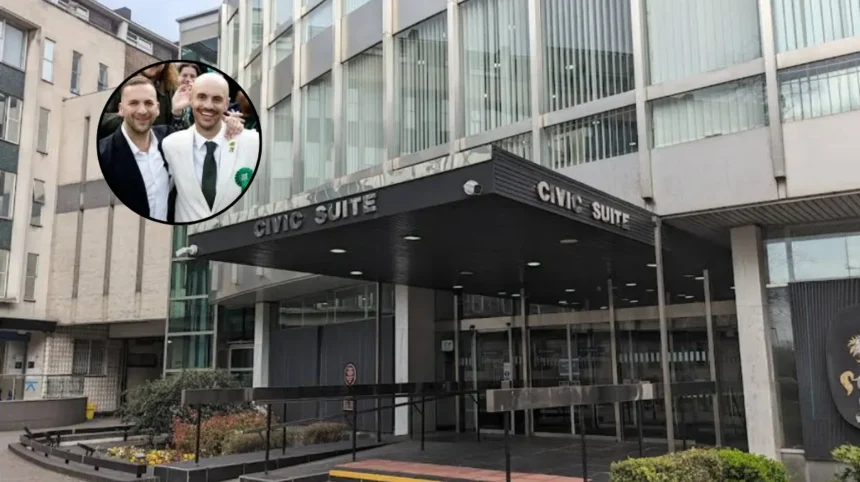
Lewisham (South London News) May 20, 2026 – The Green Party has taken control of Lewisham Council from Labour in the 2026 local elections, while the borough has also elected its first Green mayor, marking a major shift in local political control in south London on Thursday 7 May 2026.
What happened in Lewisham?
The result gives the Greens a clear majority on Lewisham Council after Labour lost the authority it had previously held. The Greens won 40 seats, while Labour won 14 seats, producing a decisive change in the balance of power in the borough.
The mayoral contest also produced a first for the borough, with Lewisham electing a Green mayor for the first time since the post was created in 2002.
As reported by the election results you provided, Liam Shrivastava won the mayoral race with 35,265 votes, which represented 40.4% of the vote. Labour’s Amanda De Ryk finished second with 30,374 votes, or 34.8%.
Who were the mayoral candidates?
The mayoral ballot in Lewisham featured candidates from several parties and independent platforms. Pete Newman of Reform UK received 7,288 votes, or 8.4%, while Josh Matthews of the Liberal Democrats received 6,323 votes, or 7.3%.
The other candidates were Sylbourne Sydial of the Conservative Party with 4,655 votes, or 5.3%, Kayode Damali as an Independent with 2,185 votes, or 2.5%, Jay Coward of the Trade Unionist and Socialist Coalition with 721 votes, or 0.8%, and Roger Mighton as an Independent with 392 votes, or 0.4%.
How did the borough vote?
The council result suggests a sharp change in local voter preference. Labour suffered the loss of all 40 seats it had previously held, while the Greens gained 40 seats in one election and took control of the council outright. That scale of change is significant because it alters who will now set policy on local services, planning, housing, environment, and council priorities.
The mayoral result also underlines the political shift, because Labour had held the post since its creation in 2002, but Lewisham now has a Green mayor for the first time.
The figures show that the Green candidate led the contest, but the Labour candidate remained competitive, finishing less than 5,000 votes behind.
What were the London-wide elections?
The Lewisham result came as part of the wider London local elections held on Thursday 7 May 2026. More than six million Londoners were eligible to vote, and all 32 London boroughs were up for election.
There were also mayoral elections in five boroughs: Croydon, Hackney, Lewisham, Newham and Tower Hamlets.
That wider context matters because it shows Lewisham was one of several areas where voters were also choosing directly elected local leaders, not just councillors.
Why does this result matter?
The shift from Labour to the Greens is important because it changes the political direction of the council as well as the borough’s symbolic leadership.
A new controlling party can influence budget choices, local environmental policy, transport priorities, housing decisions and the tone of council governance.
The mayoral result adds to that change because it gives the Green Party control not only of the council chamber but also of the borough’s most visible elected figure.
That can give the administration a stronger mandate when dealing with residents, community groups and other public bodies.
What do the vote totals show?
The numbers show a clear two-party contest at the top of the mayoral race, even though several other candidates were on the ballot. Liam Shrivastava’s 40.4% share put him ahead of Amanda De Ryk’s 34.8%, which indicates a competitive race rather than a landslide.
The remaining vote was split between smaller parties and independents, with Reform UK and the Liberal Democrats securing the largest shares among them.
This pattern suggests that while the contest was decided mainly between the Greens and Labour, a meaningful portion of the vote still went elsewhere.
Who is Liam Shrivastava?
Liam Shrivastava is the Green candidate who won the Lewisham mayoral election. Based on the figures provided, he won 35,265 votes and became the borough’s first Green mayor after Labour had held the role since 2002.
The election result places him at the centre of the borough’s political change, alongside the Green majority on the council.
That means his leadership will likely be closely watched by residents, party members and local organisations as the new administration begins its work.
What happened on election day?
The local elections took place on Thursday 7 May 2026 across London. Lewisham voters were choosing both councillors and, for the first time in this context, a directly elected mayor under the borough’s local election system.
The results indicate that turnout and vote splitting mattered, but the information provided does not include turnout figures, ward-by-ward results or detailed counting dynamics. Even so, the headline outcome is clear: the Greens won both the council and the mayoralty in Lewisham.
Background of the development
Lewisham’s mayoral system dates back to 2002, when Labour first secured the post and kept it until the 2026 vote. The latest election therefore marks the end of a long period of Labour control over the borough’s elected leadership.
The 2026 London local elections were held across all 32 boroughs, with five boroughs also electing mayors. Lewisham’s result is one part of that broader city-wide vote, but it stands out because it delivered a full transfer of control from Labour to the Greens at both council and mayoral level.
Prediction
For Lewisham residents, the immediate effect is likely to be a change in local priorities and in how the council presents itself to the public. A Green-led council with a Green mayor may place stronger emphasis on environmental policy, sustainability and community-focused local services, while still needing to manage housing, budgets and everyday council responsibilities.
For Labour supporters and local opposition groups, the result means they will now operate from a different position in borough politics, with less direct control over decision-making. The next test will be whether the new administration can turn its election mandate into visible changes in council policy and public services.